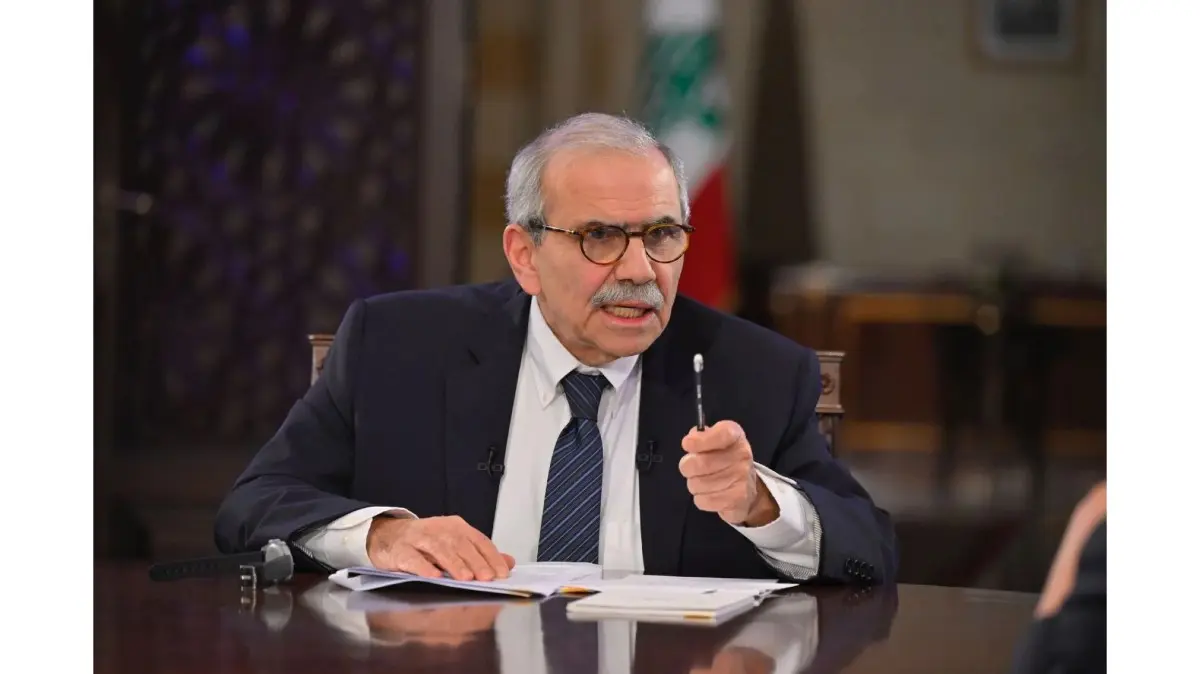
The Council of Ministers approves appointments and approves the retroactive installment of public sector salaries
21:48 · 07 August 2026
20 min read
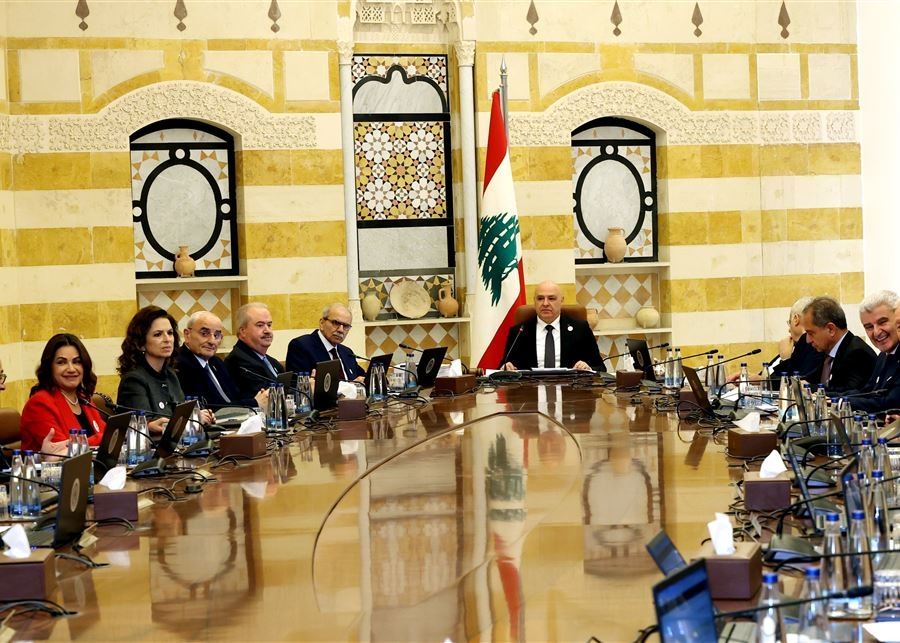
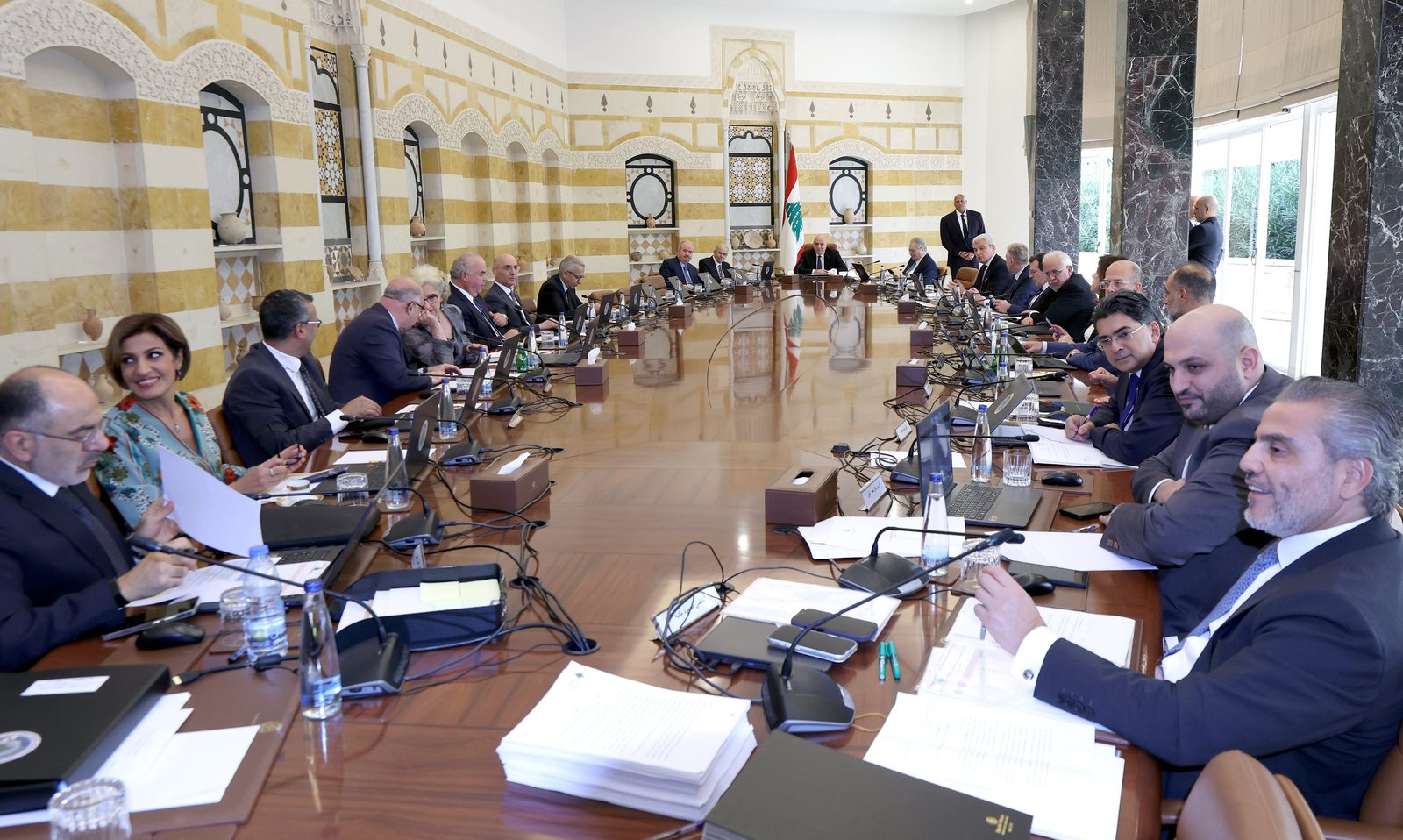
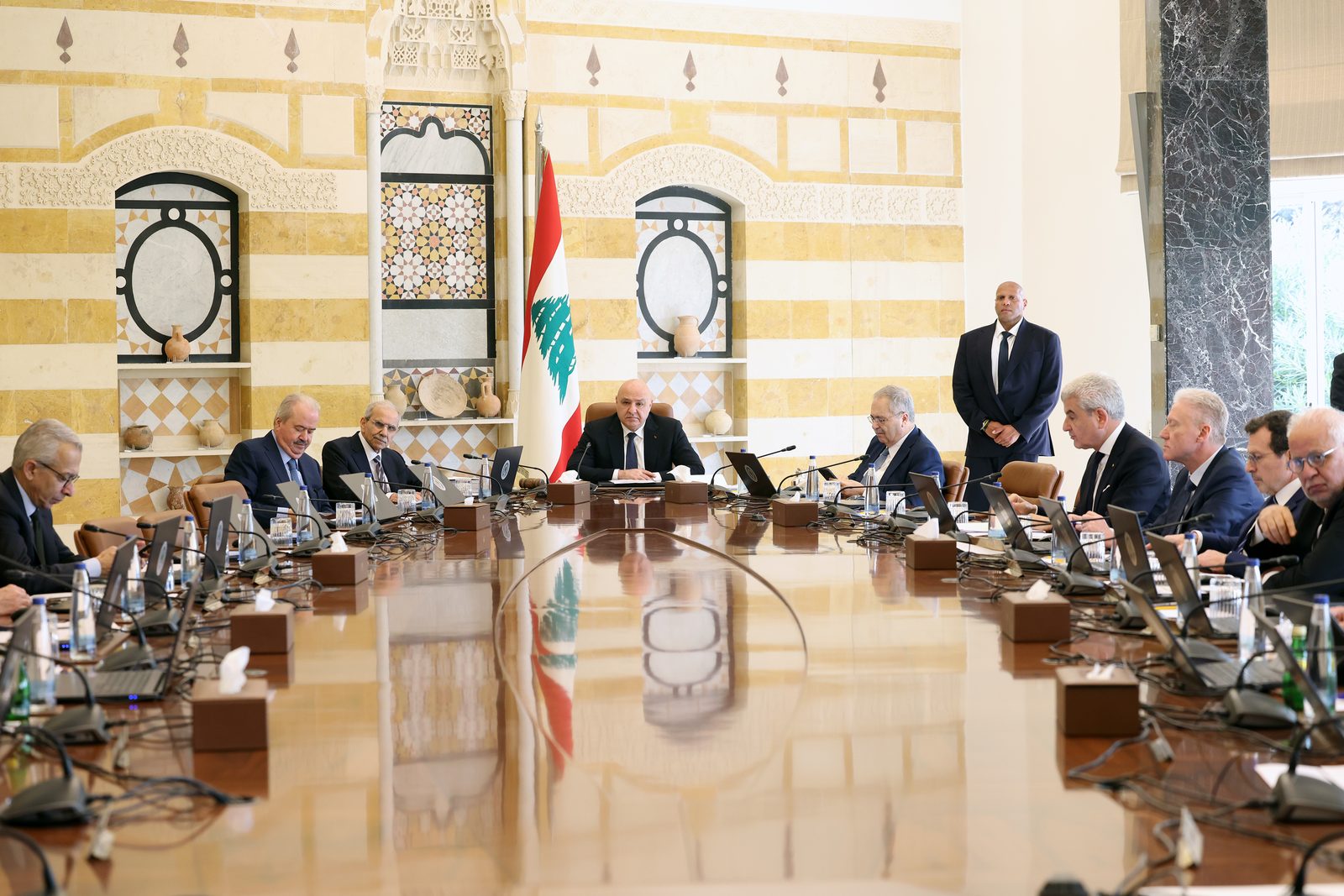
The Council of Ministers approved a series of appointments during its session held this afternoon at the Baabda Presidential Palace, chaired by President of the Republic General Joseph Aoun. The appointments included: the National Competition Authority, the Beirut-Rafic Hariri International Airport company, the Litani River National Authority, the Public Procurement Authority, and the National Social Security Fund.
The Council also tasked the Ministry of Agriculture with banning the establishment and operation of all types of farms and slaughterhouses within a five-kilometer radius of the perimeter of the Rafic Hariri International Airport, in order to prevent risks and accidents resulting from birds colliding with airplanes, which are considered a constant danger to aviation safety.
During the session, President Aoun affirmed that his visit to Washington and his meeting with his American counterpart Donald Trump were successful, despite some people betting on their failure. He explained that work is underway to hold an economic conference in Washington that will be attended by the relevant ministers and headed by the Prime Minister, and that this conference will yield a positive outcome.
President Aoun pointed out that positive progress has been made on the issues of the border and prisoners during the negotiations held in Rome, expressing hope that some practical steps will soon appear in this regard. As for the issue of the ceasefire and the pilot areas, the US administration will work to address them, and US General Joseph Clearyfield will soon arrive in Beirut to follow up on these topics.
The session was preceded by a meeting between President Aoun and Prime Minister Dr. Nawaf Salam, during which they discussed the items on the agenda.
Minister Makarios
After the session concluded, Minister of Information Paul Makarios read out the decisions, saying:
The Council of Ministers held a session at the Baabda Palace this afternoon, chaired by His Excellency the President of the Republic, General Joseph Aoun, and in the presence of Prime Minister Dr. Nawaf Salam, and the ministers, among whom Minister of Education and Higher Education Rima Karami was absent with an excuse. The Director-General of the Presidency of the Republic, Dr. Antoine Choucair, and the Secretary-General of the Council of Ministers, Judge Mahmoud Madi, also attended.
At the beginning of the session, His Excellency the President asked the ministers to observe a minute of silence in mourning for the late former minister Sheikh Michel El Khoury. Then, His Excellency briefed the Council on the atmosphere of his visit to the United States of America and his meeting with US President Donald Trump, and its success despite some people betting on its failure. His Excellency explained that the talks that prevailed during the meeting away from the media were positive, that the US president was understanding of Lebanon's situation and opened many doors, and that the meeting he held with US Secretary of State Marco Rubio, which preceded the meeting with President Trump, revolved around the same points.
The results of the meeting with President Trump were translated into the lifting of the ban on US airlines operating to Lebanon, in the hope that Middle East Airlines planes will land on US territory, especially since the Lebanese company is capable through its air fleet of reaching US airports. He added: Work is underway to hold an economic conference in Washington that will be attended by the relevant ministers and headed by the Prime Minister, and this conference will have a positive outcome. Many other topics were also touched upon, and matters are taking a positive turn and require follow-up from our side.
His Excellency the President also briefed the Council on the results of his visit to Turkey and his meeting with Turkish President Recep Tayyip Erdogan, noting that the meeting was positive, and that Turkey is willing to help in the energy sector (electricity and oil) and to include Lebanon on the "Hejaz Railway line"—a topic previously raised by the Prime Minister during his visit to Turkey. President Erdogan also showed openness in the field of economic partnership. His Excellency said: I sensed the Turkish president's keenness on the stability of Lebanon and Syria, and on preventing any country from interfering in the internal affairs of the other. I also asked him to help work towards extending the mandate of the UNIFIL forces through his international contacts and relations, and he promised to work on that.
His Excellency the President touched upon the negotiations held in the Italian capital, explaining that four points were discussed: the ceasefire, the demolition and bulldozing of houses, the border, the return of prisoners, and the designation of pilot areas. His Excellency pointed out that positive progress has been made on the issues of the border and prisoners, in the hope that some practical steps will soon appear in this framework, while the issue of the ceasefire and pilot areas will be handled by the US administration, and US General Joseph Clearyfield will soon arrive in Beirut to follow up on these matters.
His Excellency the President informed the Council about the return of four laws approved by the Parliament in its last session for reconsideration, which are:
1- The law related to the creation of an information technology directorate within the establishment of the Ministry of Education and Higher Education and holding a restricted competition for an IT technician position (fourth category - first rank) due to the failure to mention the minimum contract duration.
2- The law related to authorizing the Supreme Council of Customs to reinstate officers and non-commissioned officers of the Customs Police who were discharged from service for non-disciplinary reasons.
3- The law related to amending Law No. 659 dated 5-2-2005 (the Consumer Protection Law and its amendments), out of respect for the principle of equality across various ministries and the principle of budget universality, and its violation of the civil servants law.
4- The law related to aquatic fishing and aquaculture, because allocating fines to employees opens the door to constitutional and legal violations.
His Excellency the President renewed his praise for the work and efforts exerted by the ministers, despite the campaigns they are subjected to by some, and called on them to let their work speak for them, and for the necessity of involving economic bodies and consulting with them in everything related to the consumer.
Afterwards, the Prime Minister spoke about the most prominent topics on the agenda of the session.
The session was packed with topics related to developments in addition to routine items and functional affairs.
The Council approved most of the agenda items, most notably:
- Health and environmental protection measures related to aviation safety in the vicinity of the Rafic Hariri International Airport. In this context, the Council decided—in order to avoid risks and accidents resulting from bird strikes on aircraft, which are considered a permanent danger to aviation safety—to task the Ministry of Agriculture with banning the establishment and operation of farms and slaughterhouses of all kinds within a five-kilometer radius from the boundary of the Rafic Hariri International Airport, in a semi-circular shape, and taking immediate measures to close those currently existing within this range, in coordination with the competent local, administrative, and security authorities. The Council also decided to task the Ministries of Interior and Municipalities, and Agriculture, with taking the necessary immediate measures to prevent the keeping or breeding of birds of all kinds, and the provision of any conditions that lead to attracting them within a five-kilometer radius of the boundary of the Rafic Hariri International Airport, to avoid any risks to aviation safety. Finally, it decided to task the Ministries of Interior and Municipalities, Economy and Trade, and Agriculture, within their respective jurisdictions, with facilitating the granting of licenses and the relocation of the institutions referred to in the first item above to places outside the ban zone specified in the body of this decision.
- The second subject I would like to mention from outside the agenda is the Council's approval to unload two shipments of gasoline, based on the urgent market need for gasoline, especially in light of increased demand in the summer season, tightness in the global market, and also in light of the prevailing conditions in the region, after it turned out that the sulfur content in the imported material, i.e., gasoline, is higher than locally adopted standards, but is still within global standards adopted in a large number of countries. This is on condition that each of the two supplying companies provides a guarantee worth one million US dollars for each ship, and the guarantee can be in cash.
Moving on to the appointments, which came as follows:
Regarding the National Competition Authority—and I recall that this authority is concerned with preventing monopoly, unfair competition, combating inflation, and illicit profits—Judge Rola Akoum was appointed as President, Judge Stephanie Saliba as Vice President, and Dr. Mohammed Abou Haidar as Government Commissioner.
In the Board of Directors of the Beirut International Airport Company, Mr. Walid Khaled Choucair, and Messrs. Sleiman Jaber, Daisy Hanna, Adel Hosnideen, and Jalal Haidar were appointed as non-executive members for a period of 5 years.
In the Litani River National Authority, Sami Hassan Alawieh was appointed as a full-time President and General Manager, Mr. Yasser Fadel Abou El Nasr as Vice President, and the non-executive members for a period of 3 years are Joe Louis Aaqiki, Farid Ramez Karam, Maroun Victor Nabhan, Khaled Mohammad Saad, and Naji Ibrahim Berri.
A new board of directors was appointed for the Lebanese Accreditation Council, as well as the president and members of the Public Procurement Authority, as follows: Jean Salim Al-Alia as President, Omar Ahmed Al-Braj, Mahmoud Marwan Seifeddine, Rima Mahmoud Bazzi, and Rana Sami Rizkallah as non-executive members.
The members of the Board of Directors of the National Social Security Fund were appointed as follows: Maroun Saikali, Bassem Halim Ghanem, as full members, and Hussein Ali Nasser as a reserve member. There are also appointments for employers as full members, which came as follows: Mounir Mohammad Kenan Al-Qassar, Asaad George Meizo, Patricia Hashem, Bassam Mohammad Alaik, and Mohammad Abdul Mawla Noun as full members, and Maya Nicolas Bakhazi as a reserve member. As for employees, the following were appointed: Bechara Camille Asmar, Ayad Mahmoud Al-Sebai, Ghina Saadeddine Saqr, and George Elias Al-Alam as full members, and Hilal Jadallah Jaber as a reserve member.
The Council of Ministers also approved most of its agenda items, including—contrary to what was published in the media—the fact that the Council of Ministers does not usually violate the opinions of the Shura Council. There is a difference between the mandatory opinions of the Shura Council when any draft decree is issued, and its opinions in its judicial capacity. The Council of Ministers granted a temporary allowance to all public sector employees and retirees who benefit from a pension, but with the possibility of reducing the installment period when liquidity is available and according to adopted financial policies.
Dialogue
Then the following dialogue took place between Minister Makarios and journalists:
Q: Why violate the decision of the Shura Council on the issue of paying installments for employees' dues?
A: The executive authority is obligated to request the opinion of the Shura Council before approving any draft decree. When this opinion is returned, the authority is not obligated to implement it, even though this government takes this opinion into account.
Regarding the "Solidere" issue, the decision stated the following:
"After deliberation, the Council decided, with reference to the letter of the Lebanese Company for the Development and Reconstruction of Beirut Central District (Solidere) dated 26-2-2026, which includes a request to extend its current duration for a period of twenty-five years, noting that this duration ends in 2029, to inform you that the Lebanese government has reviewed this request, and has evaluated the company's performance since 1994 within the framework of the master plan approved under Law 117/1991 and related regulatory decrees, and accordingly it would like to inform you of the following:
The government acknowledges the contribution made by Solidere in the reconstruction of the historic center of the city of Beirut, and in principle it is open to discussing the extension of the company's duration. However, after more than three decades since the establishment of this company, a large part of the urban areas stipulated in the original master plan remains undeveloped, and a number of commitments undertaken by the company towards the state have not yet been implemented. Furthermore, the ministerial statement of this government, the Government of Reform and Salvation, committed in 2025 to leading Lebanon towards a productive economic model. On this basis, any extension of the company's duration must be consistent with this commitment... Accordingly, before approving any extension and before completing the necessary procedures for its approval, and taking into account legal and procedural rules, the government would like to discuss with the company the five issues outlined below:
1- Audit and Legal Requirements:
Any decision to extend the duration of a company must be preceded by its fulfillment of all legal and procedural requirements governing such a request. In particular, Solidere must submit all documents required by law or requested by the government for this purpose, including:
- A recent tax clearance certificate confirming the settlement of all dues owed to the Lebanese Treasury, if any.
- An audit by an independent entity of the company's accounts, assets, and real estate balance with the aim of reaching a transparent and benchmark evaluation of the company's status.
- A resolution issued by the General Assembly of Solidere requesting the extension of its duration, in accordance with its articles of association and the provisions of Law No. 117, which stipulates that any decree regarding the extension of the company's duration must be based on a request issued by the General Assembly of the company.
These requirements constitute prior procedural conditions that must be met before embarking on any procedures from our side regarding the extension.
2- Key Performance Indicators, Implementation Timelines, and Mechanisms:
The government realizes that the exceptional security, political, and economic conditions that Lebanon has gone through in recent years have affected the pace of implementation of some projects. However, despite this, it does not see it appropriate to grant the company an unconditional and long-term extension. Accordingly, any extension of the company's duration must be linked to a clear system for measuring key performance indicators during the coming period (KPIs), with binding timelines for implementation, and a clear mechanism for that.
On this basis, the government proposes to discuss—for example, but not limited to—the following matters with Solidere:
- Phased extension, such as granting an initial extension for eight years, for example, renewable for an additional six years by the Council of Ministers after verifying the company's compliance with the results of the agreed-upon performance indicators.
- Imposing financial penalties for any delay in implementation, or any material breach of the contract resulting from gross violations, provided that this is applied to the various project phases and the agreed-upon timelines as a basis for the extension.
The government believes that adopting such a mechanism is essential to ensure that the commercial incentives granted to the company are aligned with achieving actual added value for the public interest, by fulfilling agreed-upon commitments on time.
3- Financial and Tax Framework:
Since 1994, Solidere has benefited from various contributions and facilities provided by the state, including reclamation rights on the waterfront, the transfer of land ownership, in addition to a set of tax and financial exemptions. The government believes that these benefits provided by the state have contributed to establishing an added value for the company, which was not matched by a value that appears equivalent or sufficient in terms of the public interest. This should also be accompanied by discussing a mechanism that limits the company's retention of vacant properties, whether for undeveloped land yet, or developed and unexploited properties within the Solidere area, in order to encourage the activation of these assets and accelerate the revival of downtown Beirut as a vibrant urban center.
Moreover, the government believes that any future income-generating activity or project carried out by Solidere, including land sales, leasing, or the execution of new construction projects, must be subject to an updated and appropriate financial and tax framework, including corporate income tax and real estate registration fees, so that it is in line with the standards applied in the rest of the country.
4- Priority Projects:
Solidere's commitment to a specific and binding list of projects that includes clear completion dates and clear measurement criteria constitutes a cornerstone for any extension. Based on the approved master plan and Solidere's previous commitments, especially those not yet completed, the government is keen to discuss the status of the following projects with the company:
a- Public Spaces and the Waterfront
Completing the marine public park (Rafic Hariri Park and the corniche on reclaimed land), including preparing a comprehensive landscape design that takes climate change adaptation into consideration, and developing and implementing a plan for parking lots adjacent to the park, which has an estimated area of about 60,000 square meters, in addition to the necessity of securing continuity of the marine corniche extending from Ramlet al-Baida to the Port of Beirut, passing through Raoucheh, the Military Bath, Manara corniche, Ain el-Mreisseh, and Zaitunay Bay.
b- Martyrs' Square
* Completing the development of Martyrs' Square as an integrated public civic space according to the approved urban plan and the project designed by Renzo Piano, which reaffirms the role of this square as a major center for civic and public life in the city.
* Completing the public parking lot under Martyrs' Square, and if this is not possible for archaeological reasons, Solidere must propose and fund an alternative solution after agreement is reached.
* Preparing and implementing a transportation and pedestrian path plan, in coordination with the concerned authorities, connecting the square to the surrounding neighborhoods and areas.
c- Cultural and Heritage Landmarks
* Establishing and completing the Museum of the History of Beirut and the Archaeological Hill Park in the area extending from the north of Martyrs' Square to the sea and the Phoenician Wall, which is the project that Solidere had previously committed to fully financing its engineering studies, designs, and technical specifications (according to the architectural design prepared by the workshop of the aforementioned artist, and the museological design prepared in this regard).
* Restoring the Grand Theatre (Property No. 891 - Bachoura), which was built in 1929 and is considered one of the most prominent landmarks of the city's cultural memory, after it was damaged during the war and has not been restored to this day.
* Developing the "Garden of Forgiveness" located between Martyrs' Square and Star Square (according to the design of Gustafson Porter), alongside adopting an agreed-upon and cost-effective plan for its long-term maintenance.
The government believes that these sites of cultural and heritage value should have their ownership transferred to the public sector after completing their development, allowing the competent public authorities to operate them and manage the cultural and heritage activities for which they were established.
d- Port Basins and Development of the Eastern Basin
* Completing the development of the Eastern Basin (the tourist port).
* Transferring the ownership of the public parking lot adjacent to the Western Basin to the Municipality of Beirut upon the expiration of the company's duration.
5- A Plan to Promote Culture, Heritage, and Urban Connectivity:
Finally, the government wishes to discuss a comprehensive plan with Solidere to revive downtown Beirut as a vibrant public space connected to the rest of the city. This plan should include:
- Allocating areas or providing incentives to encourage middle-class families, small and medium enterprises, and businesses within the Solidere area.
- Adopting a new traffic connectivity strategy that enhances communication between the various parts of the city center and reduces the divisions caused by the current infrastructure.
- Allocating an area for arts, crafts, design, and fashion, including the establishment of a neighborhood containing affordable workshops and studios for emerging artists and designers.
- Addressing expected traffic congestion, especially along the waterfront.
- Developing spatial and functional links between the Solidere area and the rest of the city, especially the port redevelopment area up to Gemmayzeh and Mar Mikhael, to reintegrate the city center into the urban fabric of Beirut, avoiding it being an isolated area.
* Next Steps:
The government welcomes embarking with the company on an objective discussion regarding the above as soon as possible. It also requests the company to immediately begin completing the procedures mentioned in the first section, and to instruct its technical and financial teams to meet when necessary with whoever is delegated by the committee formed by the government to follow up the discussion with them regarding the technical aspects to start discussing the items mentioned in the second, third, fourth, and fifth sections of this letter.
In conclusion, the government reaffirms its appreciation for the role played by Solidere in the reconstruction of the historic center of Beirut over the past three decades, and praises the quality of urban design achieved in parts of the city center. Given the importance of this file not only for Beirut alone but for all of Lebanon, the government is keen that any extension of Solidere's duration be based on foundations that achieve a real and measurable public benefit, while taking into account the legitimate commercial interests of the company.
The government looks forward to a response from the company to start discussions with it at the earliest opportunity, noting that the ministerial committee can enlist whoever it deems appropriate from among experts and specialists in its discussions with Solidere, provided that the ministerial committee, in coordination with the Ministry of National Defense, discusses with Solidere the issue of the Beirut Naval Base belonging to the Lebanese Army.
Minister Makarios added: This is a framework approved by the government for discussion with Solidere, provided that the Council of Ministers is referred to for a decision in this regard, but these are powers of the specialized ministerial committee which was previously formed, though it was given this direction and framework by the Council of Ministers.
Q: What about the teachers who staged a sit-in today?
A: This file is in the custody of Her Excellency the Minister of Education, who was absent today with an excuse.
Q: During the session, ministers spoke about attacks that took place two days ago in parallel with the negotiations. What is the government's stance on the attacks expanding beyond the so-called yellow line?
A: His Excellency the President spoke about the matter, and asked the Minister of Health about the subject, and his question was answered as stated in what the President of the Republic mentioned.
More from:
Beirut news
← Previous article
President Aoun returned 4 laws to the House of Representatives
Related Articles
Salam in response to fake news promoters: moral bankruptcy added to political bankruptcy.
Here are the decisions of the Council of Ministers
Salam: The exclusivity of weapons in the hands of the state “is no longer up for debate”... and there has been significant progress in the Qatari electricity supply