President Aoun returned 4 laws to the House of Representatives
20:10 · 07 August 2026
10 min read
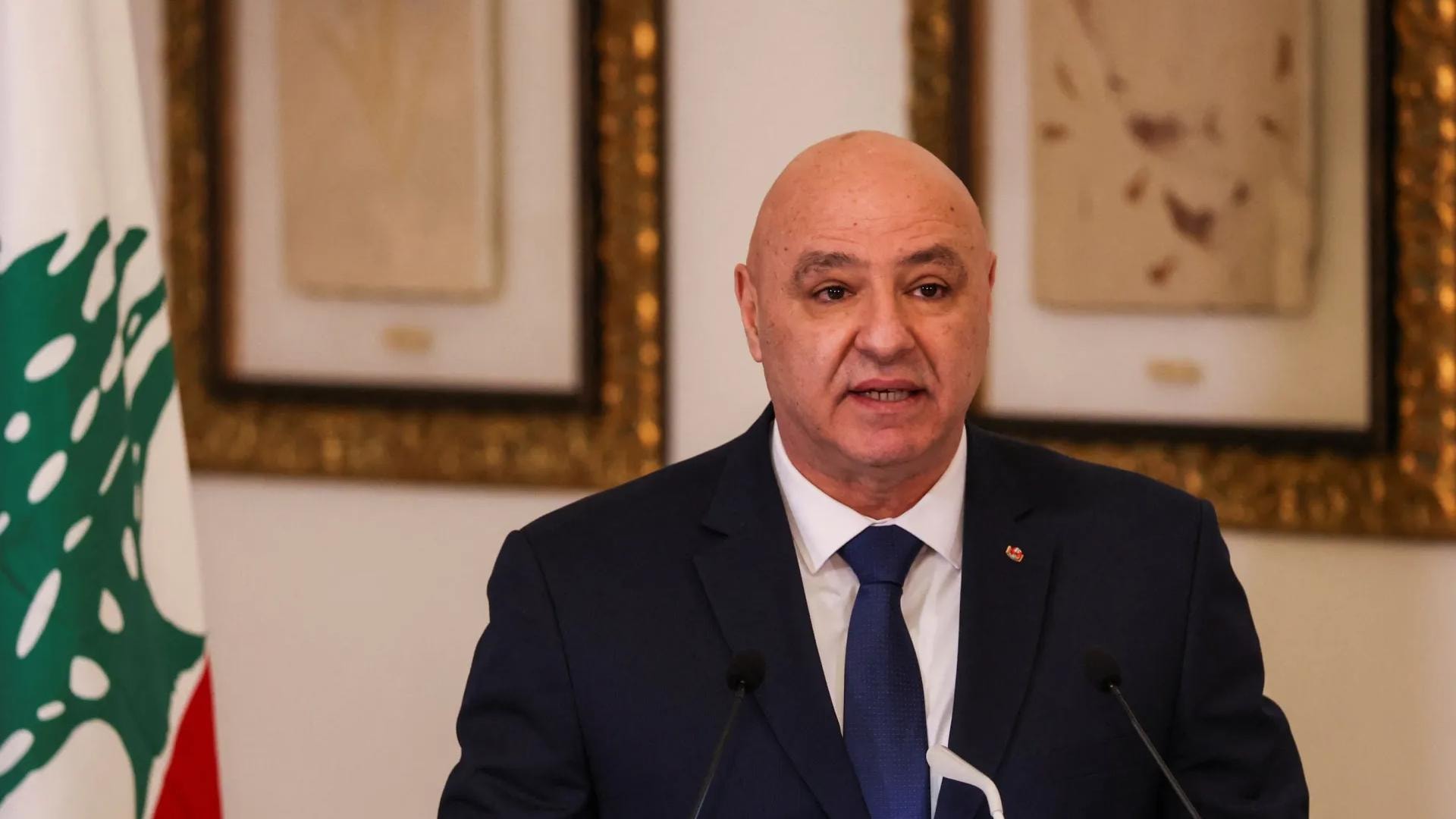
Decrees 3594, 3595, 3596, and 3597, dated August 7, 2026, were issued this afternoon, by which President of the Republic General Joseph Aoun returned four laws to the Parliament that the latter had approved in its recent session, requesting that they be reconsidered and citing the reasons for their return.
Below are the most prominent reasons for the requests for reconsideration:
- Decree No. 3594, which includes the return of the law on the creation of an information technology department within the establishment of the Ministry of Education and Higher Education, and the holding of a restricted competition for an IT technician position (fourth category - first rank).
The reasons for the request for reconsideration stated: "Whereas paragraph (c) of the Constitution stipulates that Lebanon is a republic based on equality in rights and duties among all citizens, a principle of equality affirmed by Article 7 of the Constitution, as well as by Article 12 thereof regarding public office; and whereas the restricted competition, by infringing upon the principle of equality stipulated in the Constitution, acquires an exceptional character that requires the imposition of conditions responding to this exceptional character, the most important of which is the minimum time period that would have allowed the acquisition of experience in public administration, given that this described experience is the primary justification for resorting to an exception to the general rule of competition in assuming public offices; and whereas the explanatory notes of the law requested to be reconsidered were based, in holding the restricted competition for contracted mechanization workers, on the extensive experience they acquired in running public schools regarding mechanization-related tasks for a period of time, while the law came devoid of any condition requiring a minimum duration of work for the contracted employees concerned in official secondary schools, schools, institutes, vocational schools, and educational regions."
- Decree No. 3595, which includes the return of the law concerning the authorization of the Supreme Customs Council to reinstate officers and non-commissioned officers of the Customs Directorate who were discharged from service for non-disciplinary reasons.
The reasons for the request for reconsideration stated: "Whereas the explanatory notes of the law requested to be reconsidered were based on the prohibition of employment in ministries, public administrations, administrative, security, military, and technical cadres, and the rest of the public sector, as noted in the 2019 general budget law, while this prohibition no longer exists following the comprehensive job survey noted in Article 80 of the aforementioned law, and appointments of employees have subsequently been approved based on decisions issued by the Council of Ministers, among which is the decision issued on 23/7/2026 approving the Ministry of Finance to conduct a competition to appoint 150 assistant inspectors in the Customs Administration; and whereas the law requested to be reconsidered specified a single age as one of two deadlines for the discharge of officers and non-commissioned officers, whereas Article 89 of the urgent draft law put into effect by virtue of Decree No. 1802 dated 27/2/1979 (organization of the Customs Directorate) distinguished in determining the maximum age of service between officers and non-commissioned officers, a distinction required by the nature of the operations and tasks undertaken by each of these two categories; and whereas the law requested to be reconsidered authorized the reinstatement of those for whom five years have elapsed since their discharge upon submitting their applications, and consequently authorized the reinstatement of individuals who have reached the age of fifty-five and non-commissioned officers who have reached the age of fifty-sept, especially since it did not include a contrary text preventing the reinstatement of those who have reached the legal age on the date of reinstatement, and that by setting the new discharge deadline upon the occurrence of one of two furthest deadlines—either the lapse of five years from starting work after reinstatement, or reaching the age of fifty-seven—it has permitted continued service for reinstated individuals up to the age of sixty, and for non-commissioned officers up to the age of sixty-two, i.e., in both cases adopting a maximum age that exceeds by ten years the age originally noted for retirement, which is a matter that does not correspond with the nature of the operations and tasks entrusted to them; and whereas the law requested to be reconsidered specified two different deadlines for the new discharge of those reinstated to service under it, which means not adopting a single age for their departure from service in order to grant an opportunity of service for a minimum of five years, while public interest dictates determining the maximum service age based on objective criteria related to the ability to perform functional tasks; and whereas the law requested to be reconsidered granted the Supreme Customs Council, after consulting the Director General of Customs, the authority to establish a regulation determining the rights, duties, and conditions of officers and non-commissioned officers reinstated to service under it from administrative, organizational, functional, financial, and social aspects, which are constitutional authorities some of which belong to the legislative authority and others to the executive authority, and the delegation of constitutional authorities takes place between constitutional authorities and not between a constitutional authority and an administrative one."
- Decree No. 3596, which includes the return of the law related to amending Law No. 659 dated 5/2/2005 (Consumer Protection Law) and its amendments.
The reasons for the request for reconsideration stated: "Whereas paragraph (c) of the Constitution stipulates that Lebanon is a republic based on equality in rights and duties among all citizens, a principle of equality affirmed by Article 7 of the Constitution, as well as by Article 12 thereof regarding public office; and whereas Article 133 of the law requested to be reconsidered, by tenuring contracted employees in the administrative cadre, has distinguished these contracted employees from their competitors at the time of announcing a competition for contracting who were unaware that this contracting would lead to tenure in the cadre, and that this fact could have prompted them to participate in the competition for contracting or to apply for it; and whereas the tenure of contracted employees in second-category positions deprives third-category employees who have successfully completed a training course at the National Institute of Administration in accordance with the provisions of Article 11 of Legislative Decree No. 112 dated 12/6/1959 (Employees' Regulations) of promotion to the second category and appointment to its positions; and whereas contracting in public administrations allows contracts to include compensation higher than the salary of an employee whose tasks are similar to the contracted tasks, especially since the contracted employee does not benefit from the retirement system, and it is unfair, after benefiting from this advantage, to also benefit from a pension; and whereas paragraph (e) of the Constitution stipulates that the system is based on the principle of separation of powers, their balance, and cooperation; and whereas Article 65 of the Constitution stipulates that the appointment of state employees falls within the powers of the executive authority; and whereas the law requested to be reconsidered, by tenuring contracted employees in the general administrative cadre—who are specific contracted employees—has addressed an operational matter related to the appointment of employees; and whereas the law requested to be reconsidered allocated forty percent of collected fines to specific entities and employees, and while these entities and employees have a role in imposing and collecting these fines, these employees perform this role based on what the law requires of them to perform their functional tasks specified in laws and regulations like all state employees and workers whom laws concerning them do not allocate any percentage of the amounts they collect in the course of exercising their tasks, or who perform tasks that do not result in the collection of any amounts, a matter that would create inequality among public employees and disorder in the work of public facilities, especially by flooding them with transfer requests from positions not allocated revenues to positions allocated them; and whereas the aforementioned allocation violates the general principles upon which public finance is based, the most important pillar of which is the general budget, which is dominated by the generality of its revenues and the non-allocation of any of these revenues to specific expenses in themselves; and whereas some articles of the law requested to be reconsidered stipulate that their provisions apply to specific chapters, while the said law does not include any division of its articles into chapters, a matter that involves lack of clarity in legislation and would hinder the application of its provisions; and whereas Article 64 of the law requested to be reconsidered abolishes the Consumer Protection Department and establishes a Consumer Protection Directorate at the Ministry of Economy and Trade, and Article 67 thereof addresses the same department, whereas the aforementioned department had already been abolished and the indicated directorate established pursuant to Article 63 of Law No. 659 dated 4/2/2005 (Consumer Protection Law)."
- Decree No. 3597, which includes the return of the law related to aquatic fishing and aquaculture in Lebanon. The reasons for the request for reconsideration stated:
"Whereas the law requested to be reconsidered allocated in its Article 124 the employees of the aquatic and land fishing department 20% of the revenues of fines imposed within its text and of the proceeds of public auction sales of confiscated items; and whereas the aforementioned allocation violates the general principles upon which public finance is based, the most important pillar of which is the general budget, which is dominated by the generality of its revenues and the non-allocation of any of these revenues to specific expenses in themselves; and whereas the performance by the aforementioned employees in Article 124 of the law requested to be reconsidered of their role and tasks specified in the law is based on what the law requires of them to perform their functional tasks specified in laws and regulations like all state employees and workers whom laws concerning them do not allocate any percentage of the amounts they collect in the course of exercising their tasks, or who perform tasks that do not result in the collection of any amounts, and that distinguishing certain employees by allocating them a percentage of the amounts they collect would create inequality among public employees and disorder in the work of public facilities, especially by flooding them with transfer requests from positions not allocated revenues to positions allocated them; and whereas the law requested to be reconsidered, in addition to the aforementioned distinction, distinguishes among those working on its application, as the allocation of a percentage of revenues and public auction sale proceeds did not include all of these workers from the ranks of security forces and judicial police, such as municipal police officers mandated under Article 109 thereof to suppress violations stipulated therein, nor the courts and their workers from judges, judicial assistants, and others."
Tags:
Joseph Aoun
In this story:
Joseph Aoun

← Previous article
Among them is George Deeb... The arrest of an international drug network in Lebanon according to an Interpol warrant
Related Articles

Aoun: The school is a partner in building the state and consolidating national unity

Aoun and Chamoun stress the importance of national unity in difficult circumstances

Aoun: An opportunity for the port of Tripoli to become one of the most important ports