Raji: Restoring sovereignty requires complete Israeli withdrawal, stopping attacks, and implementing Resolution 1701.
15:49 · 31 October 2026
3 min read
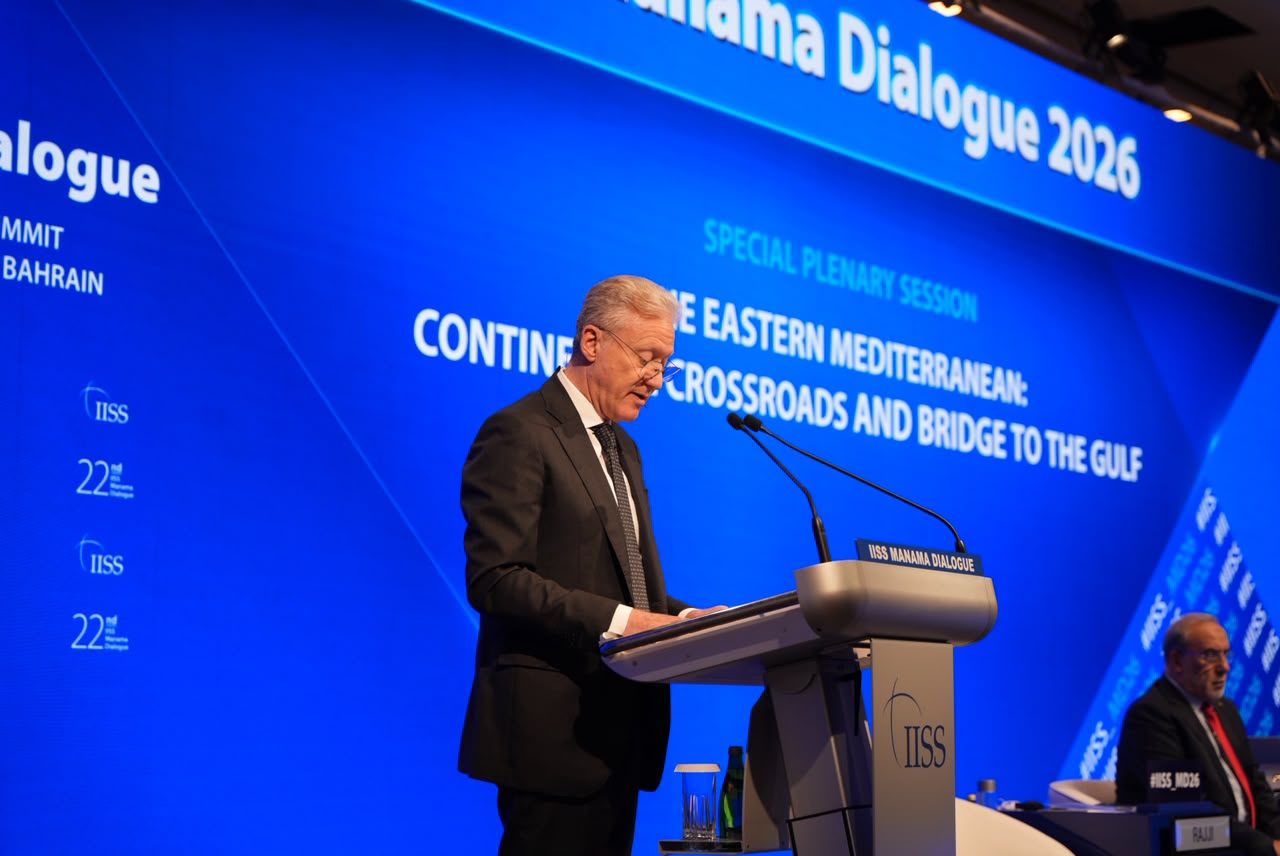
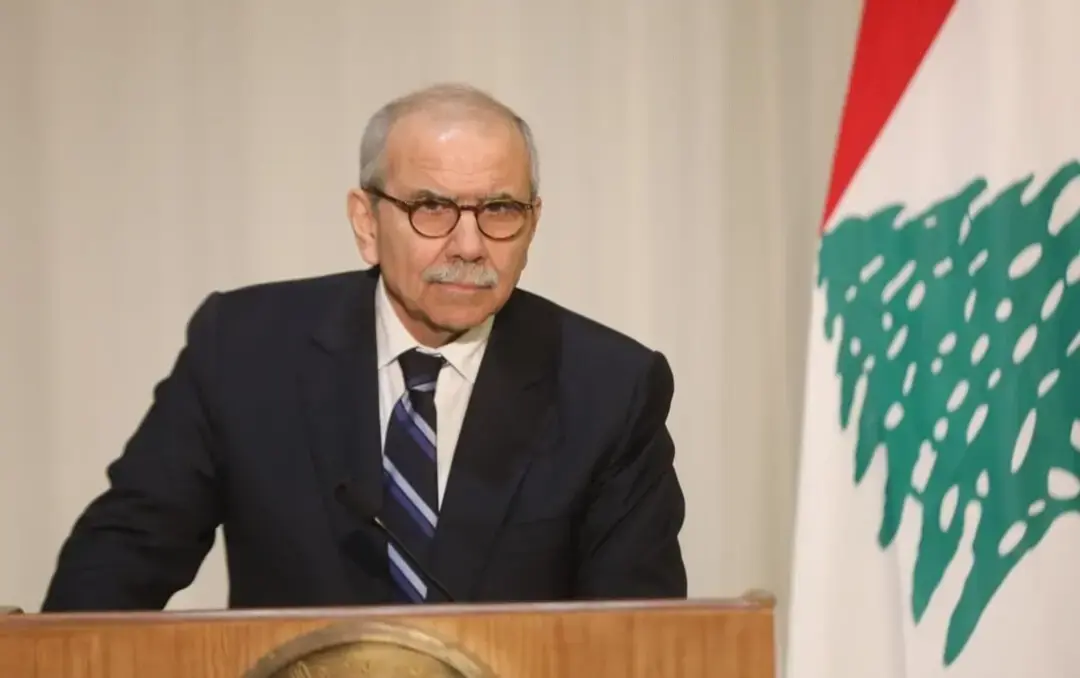
Minister of Foreign Affairs and Emigrants Youssef Raji, during the twenty-second Manama Dialogue organized by the International Institute for Strategic Studies, renewed Lebanon’s full solidarity with Bahrain and the Gulf states in the face of Iranian attacks and those carried out by armed groups linked to Iran, rejecting any violation of its sovereignty, security, and territorial integrity.
During the session on the Eastern Mediterranean, which was titled “The Eastern Mediterranean: A Crossroads of Continents and a Bridge to the Gulf,” Raji stressed that no country has the right to achieve its regional ambitions through armed organizations outside the authority of the state, saying that Lebanon “experienced over the years the devastating results of the transformation of armed organizations into tools of external influence, and the Lebanese paid heavy prices for wars they did not choose.”
Raji warned of the threat to the security of navigation in the Strait of Hormuz, Bab al-Mandab, and the Red Sea, considering that the security of the Gulf is no longer separate from the security of the Red Sea, and that the latter is linked to the security of the Eastern Mediterranean.
He pointed out that the Gulf states were never just an economic partner, but rather embraced generations of Lebanese and stood by Lebanon in the most difficult stages. He said: “The ties that unite Lebanon with its brothers in the Gulf have proven their ability to withstand even in periods in which relations witnessed tensions created by mortgaging Lebanon’s interests with accounts that do not concern us and that we did not want.” He called for an integrated Arab strategic partnership in the face of major transformations, the condition of which is the establishment of strong, fully sovereign states whose legitimate institutions alone monopolize the decision of war and peace.
Regarding the Lebanese interior, he stressed that Lebanon, during the era of President General Joseph Aoun and the government of President Nawaf Salam, began a path to restore state authority, recalling the government’s decisions to limit weapons to the state and ban Hezbollah’s military and security activities. He said that they “did not come in response to external dictates, but rather from a firm Lebanese sovereign conviction, and they are not merely political positions or declarations of intent.” He stressed that Lebanon "will no longer accept that its lands be used as a platform to threaten the security of its Arab brothers, or a negotiating card in settlements concluded outside its borders," and that Lebanese foreign policy "is determined in Beirut and that national security is determined by the state alone."
Raji stressed that restoring sovereignty also requires complete Israeli withdrawal from the occupied Lebanese territories, stopping the attacks, and implementing Resolution 1701.
Raji called on the Gulf states to support the army and security institutions and to resume investments, stressing that Lebanon aspires to renew the political and strategic partnership, based on the fact that a sovereign, stable and prosperous Lebanon is a strategic Arab interest, not just a Lebanese one.
He concluded: "The future of our region must not remain a hostage to the ambitions of armed militias, the calculations of external powers, or the settlements made at the expense of the sovereignty of our countries and the interests of our peoples. Rather, it must be created by sovereign countries, cohesive, aware of their interests, in solidarity with each other, and capable of bearing responsibility for their security, stability, and self-determination."
← Previous article
To avoid power cuts... Beirut Airport pledges to pay its dues
Related Articles
Raji heads to Canada to discuss strengthening bilateral relations with Anand
Salam: The rights of people with disabilities are a test for the state
Rifi: Protecting the south and its people is the state’s responsibility