A series of meetings for Salam... and Yassin: Due to the necessity of benefiting from regional changes
14:25 · 27 July 2026
5 min read

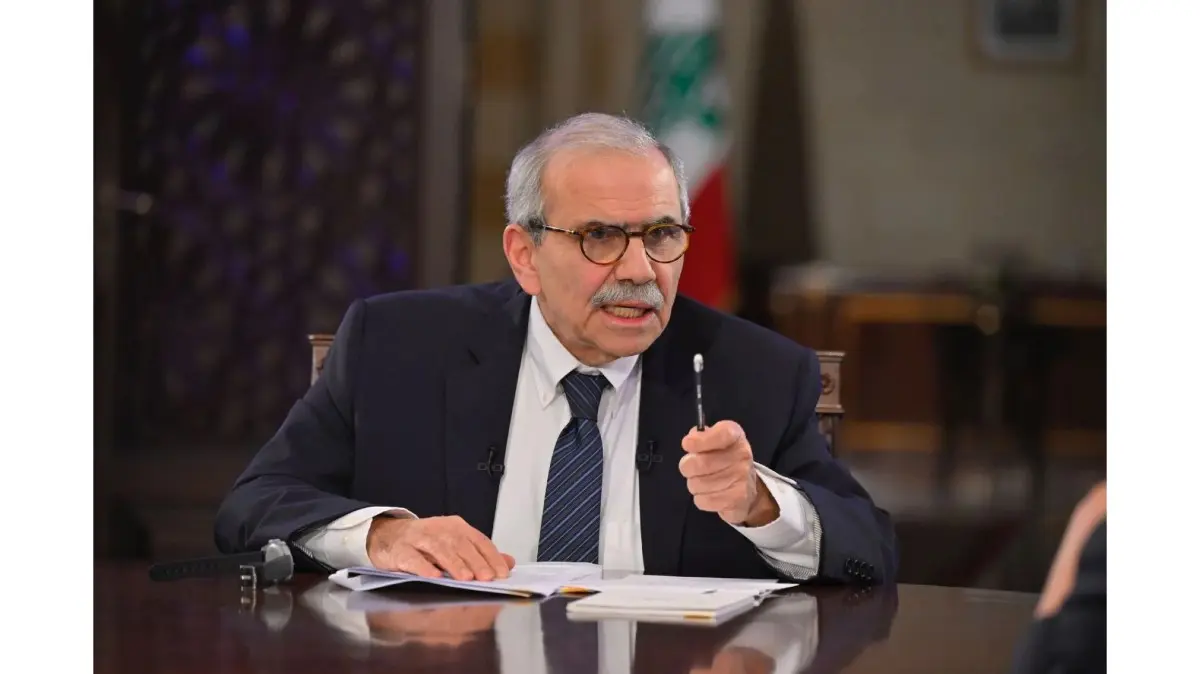
Prime Minister Nawaf Salam received United Nations High Commissioner for Human Rights Volker Türk and his delegation, in the presence of Deputy Prime Minister Tarek Mitri. Prime Minister Salam welcomed his visit and commended the work of the expert team tasked with preparing the report on violations of international humanitarian law since October 2023.
Prime Minister Salam also expressed the government's interest in the continuation of the team's work in collecting and documenting evidence related to what may constitute war crimes, particularly through a neutral international body such as the United Nations.
Salam also received MP Yassine Yassine, in the presence of his office director Mohammad Hallawi and Ms. Dina Abou El-Zour.
Following the meeting, MP Yassine said: "We met today with Prime Minister Salam in a meeting characterized by frankness and national responsibility, during which we discussed a set of political, developmental, and administrative files that we consider essential in this delicate phase Lebanon is going through."
First - On the political level: "We affirmed our full support for the path that enhances the sovereignty of the Lebanese state, foremost among which is the framework agreement, provided it remains consistent with the national constants announced by His Excellency the President of the Republic, General Joseph Aoun, represented by the permanent cessation of hostilities, the complete Israeli withdrawal from Lebanese territory, the return of captives, and the launch of the reconstruction process. We also stressed that this path must also be consistent with the provisions of the Taif Agreement, thereby enshrining the exclusivity of arms in the hands of the Lebanese state and strengthening its legitimate institutions."
Yassine added: "We paused at the visit made by the Prime Minister to the town of Zawtar El Gharbiyeh, as it carries important national connotations that confirm that reclaiming land and protecting sovereignty are achieved through the Lebanese state and its institutions, and through negotiations led by the state, rather than through any parallel paths." He also "affirmed the necessity of capitalizing on regional and international developments to serve Lebanese interests, and ensuring that the national decision is independent, away from any external tutelage, regardless of its source, to preserve Lebanon's sovereignty and the freedom of its decision."
He stated that "at the same time, we stressed that the crimes committed by the Israeli enemy against Lebanon and the Lebanese cannot pass without accountability, and that justice remains a right for the Lebanese people, which must not be compromised or bypassed. We also affirmed to the Prime Minister the necessity of working toward the comprehensive implementation of the Taif Agreement, adhering to all its principles and provisions as the constitutional framework governing national life, refraining from treating any of its clauses selectively or with disregard, and working seriously to address the gaps that have emerged over past decades in a way that enhances the establishment of the state, develops its institutions, and preserves the national partnership upon which the agreement was founded."
Second - On the developmental level: "We briefed the Prime Minister on the atmosphere of our recent visit to the Council for Development and Reconstruction, and we demanded that he give priority to the Western Bekaa and Rashaya regions in upcoming development plans and projects, given the chronic deprivation they suffer from and the economic and human potential they possess that merits fair developmental investments."
Third - The appointments file: "We expressed our observations on the adopted mechanism, particularly regarding the failure to achieve balance in regional representation, as the Western Bekaa and Rashaya did not receive the presence they deserve in the recent appointments. We stressed the necessity of adopting standards of justice, competence, and national balance in any upcoming appointments."
Fourth: "We raised the issue of the 17th of October uprising wounded who lost their eyes, demanding that they be treated fairly and with the same standards adopted for other categories of the wounded, particularly regarding social care and rights that guarantee them a dignified life, given that their suffering is part of the state's responsibility toward all its citizens."
Yassine concluded: "Lebanon has entered a new phase, and its success will not be measured by the number or form of the agreements we sign, but by the state's ability to translate these agreements into full sovereignty, justice that preserves the rights of the Lebanese, and development that reaches all regions without exception. The Lebanese have grown tired of moving between tutelages, and what we want today is a strong state that does not replace one tutelage with another, but rather derives its legitimacy from its people, and protects its sovereignty with its free national decision."
"Our goal will remain to support the state and its institutions, and to contribute to everything that enhances sovereignty, justice, and balanced development, because building a strong and fair state is the only guarantee for the future of Lebanon and all its people."
More from:
Zawtar news

← Previous article
Aoun to Turk: Israeli attacks in the south are a violation of human rights.
Related Articles
Salam in response to fake news promoters: moral bankruptcy added to political bankruptcy.
Here are the decisions of the Council of Ministers
Salam: The exclusivity of weapons in the hands of the state “is no longer up for debate”... and there has been significant progress in the Qatari electricity supply