5 million euros from Germany to Lebanon!...a sum allocated for these goals
10:18 · 15 October 2026
4 min read
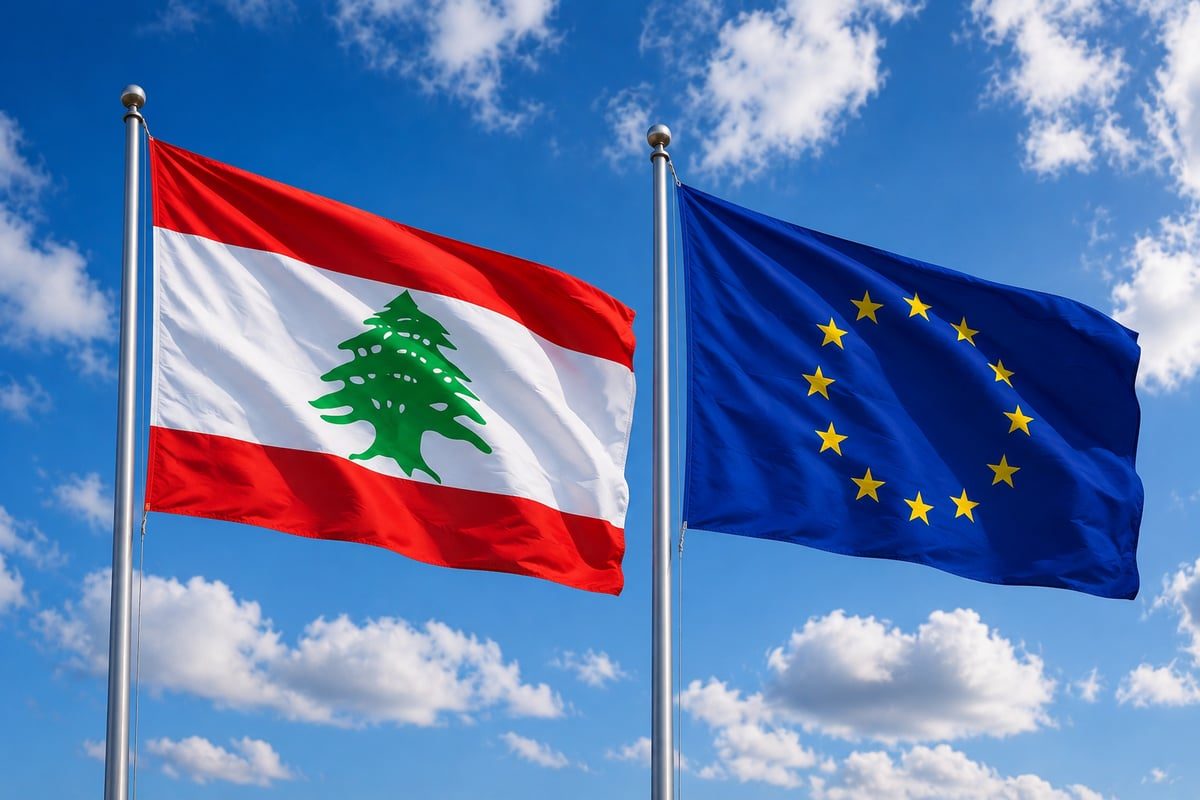
The United Nations Development Program (UNDP) announced, in a statement, that “the German government has provided an additional contribution of 5 million euros to the programme, the United Nations Development Program (UNDP), to support the Lebanese army and enhance its capabilities to contribute to stabilization and recovery efforts in Lebanon, bringing the total German support provided to the army through this program to 10 million euros.”
He pointed out that the new funding will be allocated "to improve the living conditions of Lebanese army members and their families, by providing support in the areas of food, health care, education and housing, in addition to providing the army with the necessary equipment to remove rubble and explosive ordnance, in a way that supports recovery efforts in areas affected by the conflict."
He said: “This non-military support will continue until 2028, to help members meet their basic needs, and to strengthen the Lebanese Army’s capabilities to facilitate safe access to the affected areas and support recovery efforts there.”
He added: “This contribution comes at a time when the Lebanese Army’s responsibilities in extending state authority are increasing, in line with UN Security Council Resolution No. 1701 (2006), in light of the continuing financial pressures that the military institution has faced since 2019. The escalation of hostilities in March 2026 led to the displacement of more than 50,000 Lebanese Army soldiers and their family members, amid a state of uncertainty about the possibility of their return. This coincides with a period of Lebanon is witnessing a transitional period, following the adoption of Security Council Resolution No. 2790 (2025) ending the mandate of the United Nations Interim Force in Lebanon (UNIFIL).
The United Nations Development Program explained, “In this context, the Assistant Secretary-General of the United Nations and Director of the Regional Office for Arab States at the United Nations Development Programme, Abdullah Dardari, said: “Continued German support sends a strong message of solidarity with Lebanon in a critical transitional phase.” The Lebanese Army, which enjoys the confidence of various parties across the country’s complex political spectrum, plays a pivotal role in protecting Lebanon’s recovery path.”
He said: “Germany has supported the project “Enhancing the role of the Lebanese Army and expanding the scope of its participation by supporting the military’s living system” since its launch in December 2024, as its first contribution of 5 million euros contributed to ensuring the availability of basic foodstuffs at subsidized prices in the “Soldier’s Homes” affiliated with the Lebanese Army, which number 144 cooperatives, in addition to introducing an electronic system for points of sale in various of these cooperatives.”
The project provides “an integrated framework for providing non-military support to the Lebanese Army, with the aim of improving the living conditions of approximately 81,500 soldiers and their families. It also supports Civil-Military Cooperation (CIMIC) activities implemented by the Lebanese Army, enhancing communication with local communities and trust in state institutions.”
The project is being implemented by UNDP “under a memorandum of understanding with the Lebanese Ministry of National Defense and the Office of the UN Special Coordinator in Lebanon, and with contributions from Germany, the European Union, Spain, France, Norway, Denmark and Japan. The program links support to security and stability with broader recovery efforts in Lebanon.”
The new German contribution is provided “through the UNDP Funding Mechanism for Governance, Peacebuilding, Crisis and Resilience. Through the same funding mechanism, Germany has separately provided more than €6 million to support the Stabilization Response Mechanism, which supports the Internal Security Forces in southern Lebanon, and supports the restoration of essential public services, including civil registry and traffic management services.”
About the project
The project “Enhancing the role of the Lebanese Army and expanding the scope of its participation by supporting the personnel’s living system” extends from December 2024 until February 2028. It aims to improve the living conditions and food security of the soldiers in the Lebanese Army and their families, enhance their access to social services, and support civil-military cooperation, in a way that contributes to achieving stability, recovery, and renewing confidence in state institutions.
← Previous article
After removing a cancerous tumor from his lung...the Vatican reveals the health condition of Pope Leo XIV.
Related Articles
Operating without a license... closing a slaughterhouse in Beirut with red wax
Salam: Public transportation touches the life of every citizen... and a painter reveals a network of 54 routes and 300 buses
New fuel schedule... How much were the prices?