Fayyad criticizes the "electricity paper": Random opening of the sector threatens chaos and quotas
21:43 · 19 August 2026
9 min read
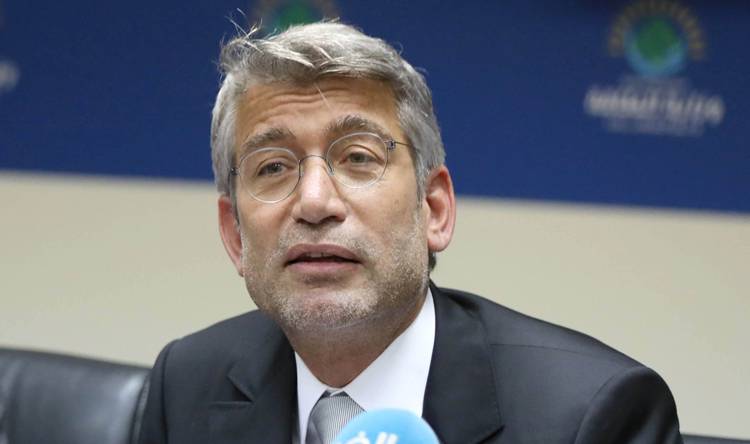
Former Energy Minister Walid Fayad wrote an article titled "The Electricity Plan for Random Deregulation: The Dangers of Chaos, Quota-Sharing, and Lack of Competitiveness," in which he stated:
"About a year and a half after the formation of the government, the new paper was issued under the title 'Electricity Sector Policy.' The first questions that impose themselves regarding this paper are: Are we truly before a new policy for the sector, or before an attempt to confer the status of 'policy' on a paper that fills the legislative void present in Law 462, which does not point in any way to the transitional phase? Are we before a random opening of the sector, or organized steps protected by a clear policy and a path leading to sustainability and competitiveness?
In my opinion, this document does not represent a sector policy in the true sense of the word, nor does it constitute a development of the path the sector has taken over the past years. Most importantly, it deals with this path as if it had never existed in the first place, as we find in it no reference to the policies previously approved by the Council of Ministers, starting from past policies all the way to the sector policy approved in 2022, which did not start from a vacuum, as it was built upon what preceded it and was updated with what economic and financial developments dictated. This approach is not a detail because it is based on the principle of continuity in building public policies, not on a break with them. Today, however, the approach seems as though it is starting from zero.
Another striking indicator is the removal of the section that dealt with rescue initiatives concerning generation, transmission, and distribution between the draft of the paper and the final version referred to the Council of Ministers. This deletion was not merely an amendment to the document's structure, but reflects a clear shift from attempting to formulate an integrated sector policy to merely setting a vision for the transitional phase absent in Law 462, which should have been amended through a bill submitted to Parliament—a bill we had previously prepared but which was neglected for unclear reasons. This is what stripped the approved paper of elements addressing the future of the sector, focusing instead on implementation mechanisms, institutional structuring, and private sector participation.
And here lies the core of the problem.
The real problem is not in some of the details contained in the new paper, but in the philosophy from which it stems. Sectoral policies are built first on a clear vision, then translated into legislation implemented through operational plans. As for trying first to implement a law that does not reflect the required model, and then inventing concepts not found in it during implementation, this places the sector before a legal and regulatory problem from the very first moment.
Lebanon today does not need a new interpretation of Law 462, but rather its update to reflect the reality and needs of the sector, and a genuine sector policy that builds on what has been achieved, rather than ignoring it, and establishes the correct legislative and regulatory framework before moving to the implementation phase.
This is the essential step that must be undertaken based on a clear sector policy built on two matters: the economic and financial framework, and the political framework. Each of these two frameworks will impose structural mechanisms and steps in the various electricity activities from generation to transmission, distribution, and collection. It is assumed to determine what is available for Lebanon and what is most suitable for it in the coming years. Merging political, economic, and sectoral choices to derive a clear path extending for decades to come is the fundamental idea upon which to build. Will Lebanon produce electricity using liquefied gas, natural gas, or fuel oil, which countries will sell Lebanon the necessary materials for operation, and what are the sustainability prospects in such a path?
This is the type of questions that the sector policy is supposed to answer, rather than being finalized before discussing them and delving into them stemming from Lebanon's relations and experiences, and the experiences of others as well. The decisions that are taken must be built on solid foundations, not on a paper prepared by the Electricity Regulatory Authority to fill a legislative vacuum in Law 462.
Sectoral policies are built first on a clear vision, then translated into legislation implemented through operational plans.
This matter is not related to generation only; the same methodology is used to answer questions related to transmission, distribution, and collection as well. What steps must be taken to stop electricity waste and improve services for subscribers, and what is the capacity to make a qualitative leap in the electricity transmission grid? Also, the sector policy is supposed to answer the issue of financing, which appears to be completely absent. Is funding available, whether from the public sector or the private sector? All these issues are entirely absent from the paper approved by the Council of Ministers.
The steps adopted by the Minister of Energy and submitted to the Council of Ministers, where they were approved, are nothing more than a set of measures to fill the legislative vacuum resulting from the lack of definition of the form of the transitional phase stipulated in Law 462. This phase is not short-term as believed, but extends for coming years, and the law did not provide for it at all. That is, the law did not mention what the transitional phase for restructuring the entire sector would be like. The problem also is that what the paper proposes comes from outside the legal scope, as if Law 462 was amended by a decision or decree in the Council of Ministers.
What is put forward today is a random opening for the deregulation of the sector under the pretext that opening it will confer competitiveness, while the reality is that competitiveness in a narrow market governed by a well-known political reality may not find a starting point, but rather deregulation will be a random process that increases the chances of more chaos and quota-sharing instead of reorganization and restructuring.
For Law 462 was established on the basis of full deregulation of the electricity market. That is, it assumes that producers sell electricity directly to whoever they wish, and distributors buy electricity from the producer they choose, within an open competitive market. This model may be suitable in countries that include a large number of competing producers, but it does not reflect Lebanon's reality.
In the traditional fossil fuel electricity generation sector, we will not have dozens of producers, but a very limited number of plants that can be counted on the fingers of one hand. Therefore, talking about a fully competitive market is not based on reality, because actual competition between a limited number of producers will not materialize in the form assumed by the current law.
For this reason, the model Lebanon needs is the "Principal Buyer" model, such that Independent Power Producers (IPPs) sell their production to a single buyer under long-term contracts that guarantee investment recovery and revenue stability. This type of project inherently requires clarity and revenue guarantees for decades, and cannot be subject to the fluctuations of an open market where the selling price changes continuously.
However, this philosophy is absent from Law 462. There is no mention of a principal buyer in it, nor a clear definition of contractual relations between producers and distributors, nor of the legal framework regulating this model. Nevertheless, the new paper tries to apply it practically, as if it were stipulated in the law. Here lies the fundamental legislative gap.
The same applies to the distribution sector. In my opinion, distribution companies must operate through clear concession contracts, because they will manage, operate, and invest in state-owned assets worth hundreds of millions, if not billions of dollars. What is required is for these assets to remain state-owned, while companies undertake their operation and investment for a specific period under clear conditions, rather than having their ownership transferred directly or indirectly. However, this organization also finds no place in the current law.
For this reason, we worked during 2024 to prepare an integrated draft to amend Law 462, based on the principles upon which previous policies were founded, while developing them to keep pace with the needs of the current stage. The draft was referred to the Shura Council and then to the Council of Ministers, but the current government did not adopt it, jumping over it instead and attempting to apply a model for which the law itself does not provide the necessary framework.
In contrast, a distinction must be made between traditional electricity and distributed renewable energy. These are two different sectors in terms of economic nature and market mechanisms. In distributed renewable energy, a competitive market can indeed be established, because this sector allows for the emergence of a large number of small and medium producers, and is not limited to a limited number of projects. Hence came the philosophy of Law 318, which we drafted and which was approved in Parliament during our time in government, thus opening the door to deregulating the distributed renewable energy market and encouraging competition in it.
As for traditional electricity generation, it still needs an organized market, based on the presence of a principal buyer, long-term power purchase contracts with producers, and concession contracts with distributors, because the nature of this sector differs radically from the nature of distributed renewable energy. It is a mistake to deal with the two models using the same logic."
Source
الاخبار
← Previous article
Al-Sadi responds to Fayyad: The electricity paper corrects previous policies and does not cancel them
Related Articles
Electricity of Lebanon: Cutting off electricity supply to state institutions as of this date
Qatar is on the verge of the electricity crisis in Lebanon... two new stations and a 20-year gas agreement
A meeting with Qatar tomorrow... and the response may escalate towards the government