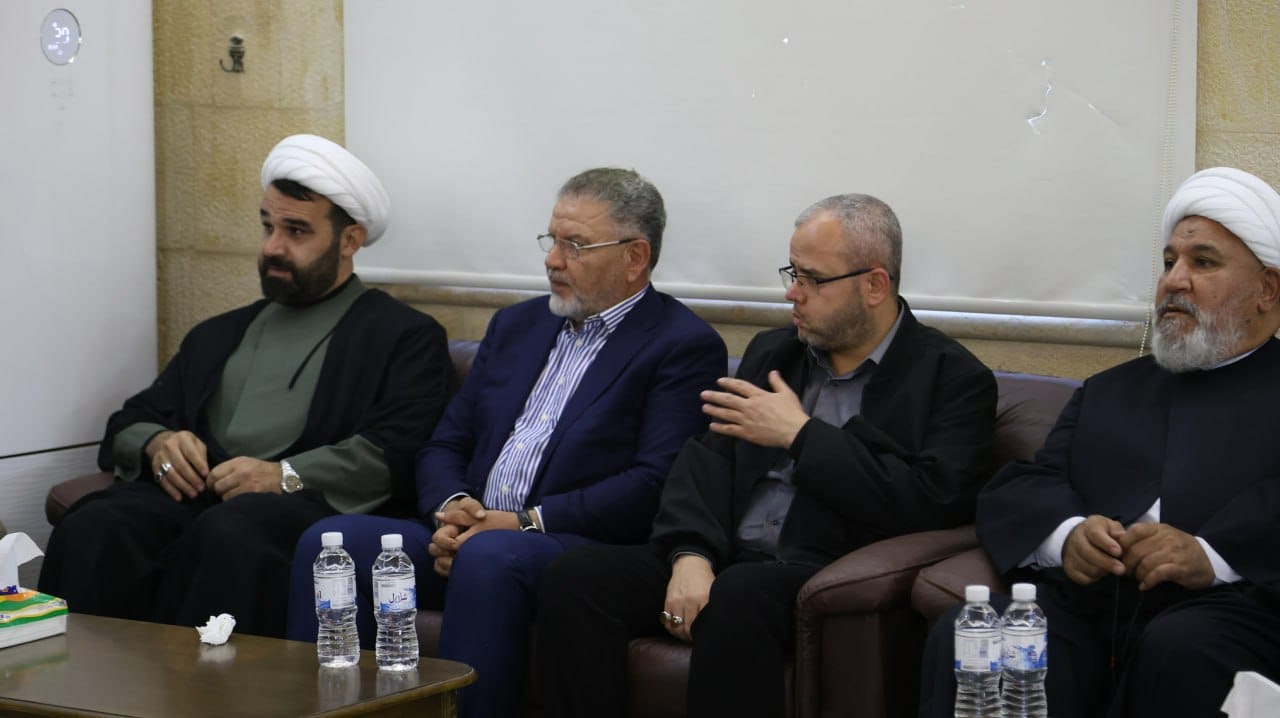
Lebanon is not a battlefield... Salam: The government is determined to restore the authority of the Lebanese state
19:30 · 13 March 2026
5 min read

Prime Minister Nawaf Salam affirmed during the conference launching the urgent humanitarian appeal for Lebanon that "Lebanon did not choose this war, and the conflict was neither chosen nor wanted by the Lebanese people, and there are villages and towns being completely emptied in the south," stressing that "the immediate cessation of fire is not only a political option, but an urgent humanitarian necessity."
He called on the international community to "stand by Lebanon through decisive political and humanitarian action."
Salam pointed out that "there is no justification for holding an entire people hostage, and Lebanon is not a battlefield."
He stressed that "the government is determined to restore the authority of the Lebanese state over all its territories and to confine weapons to the state's hands, and it has taken decisive steps in this direction."
For his part, United Nations Secretary-General António Guterres affirmed during the conference launching the urgent humanitarian appeal at the Grand Serail his solidarity with the Lebanese people, emphasizing that the military escalation in the region leaves heavy losses and the world must show the strongest forms of support for Lebanon."
Guterres launched an urgent humanitarian appeal worth 325 million US dollars to support the people of Lebanon, considering that this assistance is urgently required, pointing out that United Nations agencies and its humanitarian partners are working closely with local authorities to respond urgently by providing hot meals, safe drinking water, hygiene supplies, and basic relief materials, as these efforts save lives but need much greater support."
Guterres pointed out that "for long years, Lebanon opened its doors to those fleeing conflicts, and the people of Lebanon showed the world the true meaning of hospitality, solidarity, and resilience, and now the world must show the people of Lebanon the strongest forms of support in this critical hour of danger and deep need."
For his part, UN Humanitarian Coordinator in Lebanon Imran Riza delivered a speech during the conference launching the urgent humanitarian appeal at the Grand Serail, which read as follows:
Your Excellencies, esteemed colleagues, partners, and friends,
As the United Nations Secretary-General emphasized, the humanitarian impact of the current escalation is devastating.
Communities in conflict-affected governorates are experiencing repeated displacement, loss of livelihoods, and disruption of basic services. Furthermore, violence has hit schools, health facilities, and homes, significantly deepening the suffering of the most vulnerable people.
According to our joint estimates, around 1.3 million people have been affected by this crisis. Of these, as many as one million people have been displaced inside Lebanon, and nearly 100,000 people have crossed the border towards Syria. These figures underline the scale of the crisis and its regional dimensions.
As Her Excellency Minister Haneen Al-Sayed clarified on behalf of the Lebanese government, national institutions are leading the emergency response. Our role as humanitarian partners is to stand firmly beside them to bolster their leadership by providing the necessary resources and expertise and ensuring the solidarity of the international community.
The urgent appeal we are launching today outlines the funding requirements and operational priorities needed to address the most pressing humanitarian needs of nearly one million people over the next three months.
On behalf of the Humanitarian Task Force in Lebanon and humanitarian partners – from UN agencies, international and national NGOs – we are requesting 300 million US dollars in funding with the aim of providing life-saving and sustainable aid.
Without this support, we cannot scale up the response to meet the growing needs.
Therefore, our joint response focuses on three strategic priorities, which are:
First, providing timely, life-saving assistance across various sectors to those affected by hostilities, especially displaced families residing in shelter centers, host communities, and conflict-affected areas.
Second, strengthening the protection of civilians and civilian infrastructure, based firmly on international humanitarian law and human rights laws. Civilians and civilian infrastructure must never be targets.
Third, supporting rapid response and the resumption of basic services in areas affected by the escalation, to ensure the continued functioning of essential systems despite the crisis.
Throughout all of this, we will pay significant attention to the principle of inclusivity, ensuring that host communities are supported alongside displaced families as well as those who remained in hard-to-reach areas, to ensure the needs of the most vulnerable groups are met and to mitigate any potential tensions.
For this response to succeed, humanitarian workers must have safe and predictable access that does not pose an obstacle to reaching people in need. Access is not a privilege; it is an urgent necessity. Without it, aid will not be able to reach the displaced and uprooted, and crisis-affected individuals will not be able to seek help, especially those residing in hard-to-reach areas where needs are most acute.
Local organizations and national partners play a pivotal role in these ongoing efforts. They are the first responders, the trusted workers within communities, and the key to ensuring accountability toward the people affected by this crisis. Therefore, strengthening localization remains a fundamental pillar in our joint response, with the aim of ensuring aid is delivered quickly where it is most urgently needed.
Ladies and gentlemen,
The key figures are in the summaries available in the hard copy before you, and the full version of the flash appeal can be accessed by visiting the provided link or QR code.
This urgent appeal is being launched amidst an already constrained funding environment. Humanitarian partners are responding to needs with limited and reduced financial and human resources compared to before. While initial emergency allocations from the Lebanon Humanitarian Fund and the Central Emergency Response Fund help jump-start the response, the need for additional funding remains urgent and critical. Without it, we cannot scale up the response to meet the escalating needs.
Therefore, I call on the international community to respond generously and swiftly.
Together, we can save lives, protect civilians, and help Lebanese communities endure with dignity amidst this crisis.
Thank you.
In this story:
Nawaf Salam
More from:
South Lebanon news

← Previous article
President Aoun: The best solution is through negotiations
Related Articles
Jumblatt: Lebanon-Israel negotiations will not bear fruit as long as Israel occupies the south
Hasbani: The Dahr al-Baidar incident is a gateway to implementing the government’s decisions regarding the party’s weapons
Contact between Al-Hajjar and his Saudi counterpart... enhancing joint cooperation between the two countries