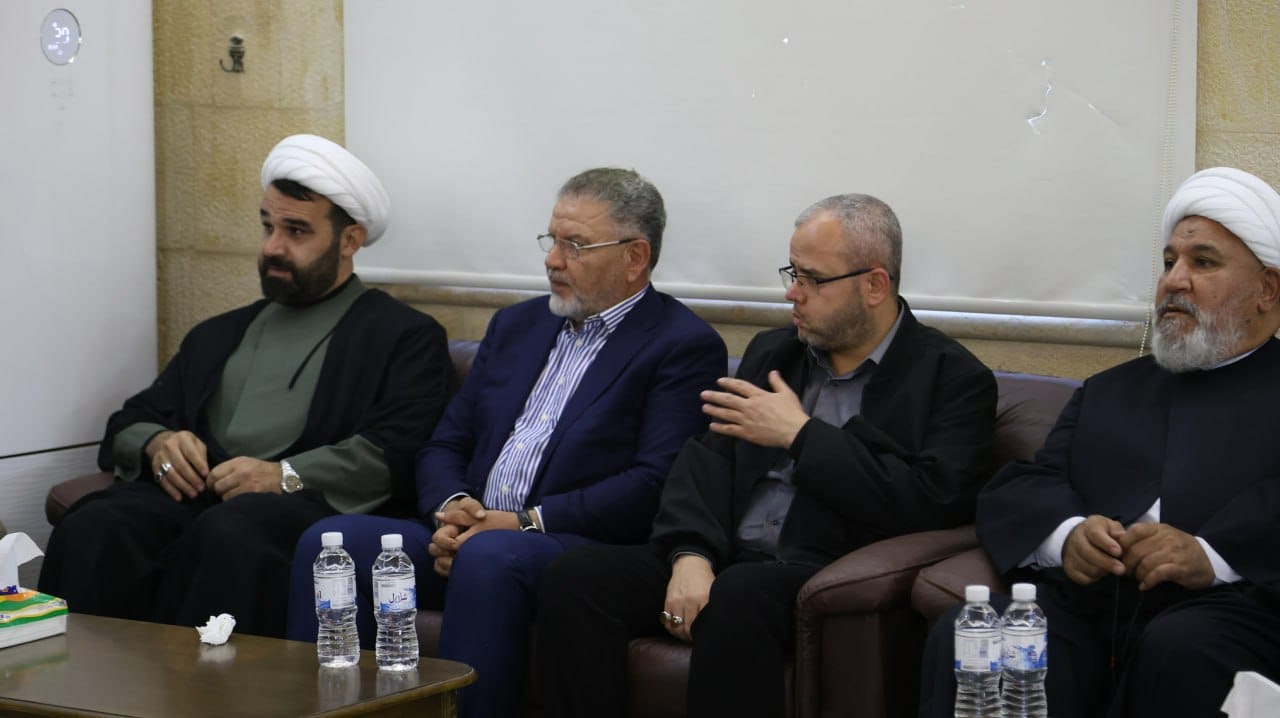
President Aoun: The best solution is through negotiations
18:09 · 13 March 2026
6 min read

President General Joseph Aoun stressed that peace cannot be achieved by one party, but requires the consent of two parties.
He said: We look forward today to ways in which we can stop this war as soon as possible, because it does not only threaten the lives of Hezbollah members, but threatens all innocent civilians.
President Aoun considered that the best solution is through negotiations, because continuing the war will only lead to more tragedies, and the shelling carried out by Israel mostly targets civilians, civilian facilities and buildings, but without United Nations assistance it will not be possible to reach this solution.
He affirmed the commitment to government decisions on the necessity of confining weapons to the state and holding the decision of war and peace, not for the interest of anyone, but for the interest of Lebanon and the Lebanese.
For his part, UN Secretary-General Mr. Antonio Guterres stressed that he is "a friend of the Lebanese people, and in complete solidarity with them." He called on Hezbollah and Israel to cease fire, stop the war, and pave the way for a solution that gives Lebanon the opportunity to be an independent country with full sovereignty over its territories." He said: "This is no longer a time for armed groups, it is the time of a strong state."
The positions of President Aoun and Mr. Guterres came during the meeting that brought them together at the Baabda Palace this afternoon, after the UN official and the accompanying delegation headed from Rafic Hariri International Airport directly to the Baabda Palace where President Aoun received him, and they held a meeting that lasted for an hour during which the current situation in Lebanon and the region was reviewed in light of the Israeli escalation.
Atmosphere of the meeting
At the beginning of the meeting, the UN Secretary-General affirmed that his visit to Lebanon is a visit of solidarity with it at this stage, stressing that he stands by Lebanon and by the efforts made by President Aoun to create the appropriate conditions for extending the sovereignty of the Lebanese state and monopolizing its control over its entire territory, expressing hope to find the appropriate environment to create these conditions as soon as possible in accordance with the policy and strategy pursued by President Aoun, and for Lebanon to enjoy peace under the exclusive control of the Lebanese state.
President Aoun recalled his positions on peace which he expressed either in his visits abroad or during the visit of His Holiness the Pope to Lebanon, stressing in return that peace cannot be achieved by one party, but requires the consent of two parties. He said: "Unfortunately, Lebanon has been drawn into a war that is not ours, and we look forward today to ways in which we can stop this war as soon as possible, because it does not only threaten the lives of Hezbollah members, but threatens all innocent civilians, as the number of victims so far has reached about 700 people, 10% of whom are women and more than 10% are children, and about 800,000 displaced persons. If this war continues, we will see more victims, wounded and displaced persons in addition to more destruction, which affects the stability and security of the country and the region alike."
President Aoun added: "I spoke with openness about Lebanon's readiness for direct negotiations at the highest levels, but the success of these negotiations requires Israel to give something in return, such as a temporary ceasefire so that we can conduct negotiations. The military option is not the solution, and in 2024 we reached, under the auspices of the United Nations, the United States of America and France, an agreement to cease hostilities, but Israel did not abide by it, especially since its provisions stipulate the completion of their withdrawal from Lebanese points within a period of 60 days, with the army deploying along the border and the state assuming security responsibility then. This matter would have enabled us to deal more effectively with Hezbollah, but the Israelis continued throughout the past period their attacks and undermining of the state's authority, and this is what led to this war."
He continued: We are looking forward to a way out of this war, and the best solution is through negotiations, because continuing the war will only lead to more tragedies, and the shelling carried out by Israel mostly targets civilians, civilian facilities and buildings, but the Israelis are still convinced of the option of war despite previous experiences that occurred since 1982 through 2000 and 2006 up to 2024, which did not lead to achieving their goals, but without your help it will not be possible to reach this solution. We are committed and have made the decision, not for the interest of anyone, but from the interest of Lebanon and the Lebanese, on the necessity of confining weapons to the state and holding the decision of war and peace, and we are convinced of that, and your help will accelerate this step, which is a matter that serves the interest of everyone, because it is impossible to continue in this state with the expansion of the fighting and the fall of more victims.
Guterres' statement
After the meeting, Mr. Guterres stated to journalists, saying: "In difficult times, friendship and solidarity are essential, and I am here as a friend of the Lebanese people, and in complete solidarity with them. And I know that the Lebanese people are suffering greatly, and that the Muslims among them are living the month of Ramadan, and the Christians are also in a period of fasting, and this time should be a time of peace and solidarity. But unfortunately, Lebanon has been dragged into a war that the Lebanese do not want. And I sincerely hope that during my next visit, I will visit a country that enjoys peace, and the state in it has the exclusive use of force. And to visit a country that has regained the sovereignty of its territories and respect for this sovereignty. At this time I strongly call on both parties, namely Hezbollah and Israel, to cease fire, stop the war, and pave the way for a solution that gives Lebanon the opportunity to be an independent country with full sovereignty over its territories, and where authority, as I mentioned, has the exclusive right to use force. This is no longer a time for armed groups, it is the time of a strong state."
The delegation accompanying Mr. Guterres included: Jean-Pierre Lacroix, Jeanine Hennis-Plasschaert, General Donato Albania, Imran Riza, Alex Guetaia, Shireen Yassine. Meanwhile, the Lebanese side included: General Director of the Presidency of the Republic Dr. Antoine Choucair, and advisors: Brigadier General Andre Rahal, Ambassador Joanna Qazzi, Brigadier General Antoine Mansour, Jean Aziz, Najat Sharafeddine, Director of Information at the Presidency of the Republic Rafik Shalala.
Talks between President Aoun and Mr. Guterres were completed during a working lunch hosted by the President of the Republic in honor of his guest, in the presence of the international and Lebanese delegations.
In this story:
Joseph Aoun

← Previous article
After throwing the leaflets... Warning to the Lebanese: Do not scan the QR codes!
Related Articles
Jumblatt: Lebanon-Israel negotiations will not bear fruit as long as Israel occupies the south
Hasbani: The Dahr al-Baidar incident is a gateway to implementing the government’s decisions regarding the party’s weapons
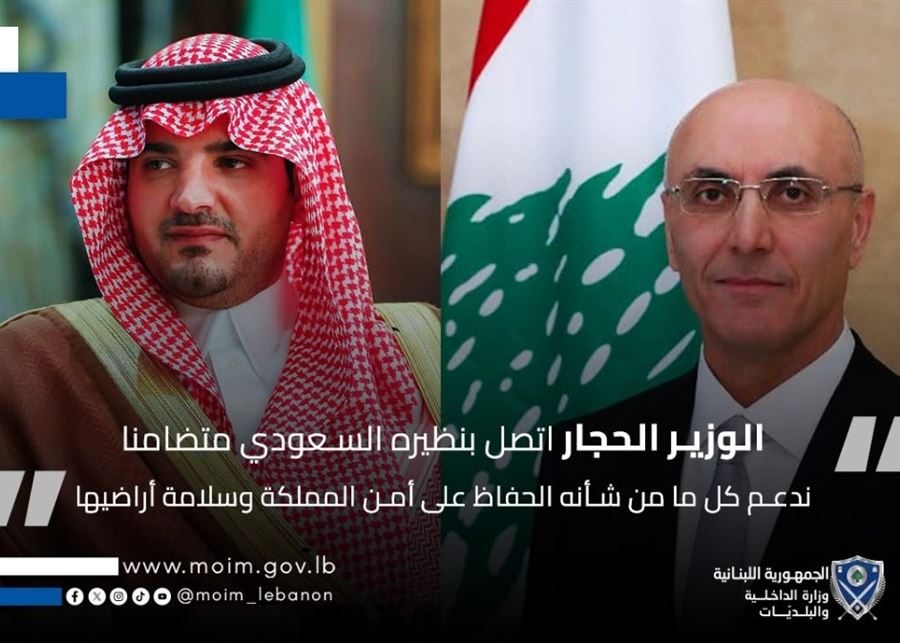
Contact between Al-Hajjar and his Saudi counterpart... enhancing joint cooperation between the two countries