Likud leads the Knesset vote count... and no camp has 61 seats
08:55 · 28 October 2026
4 min read
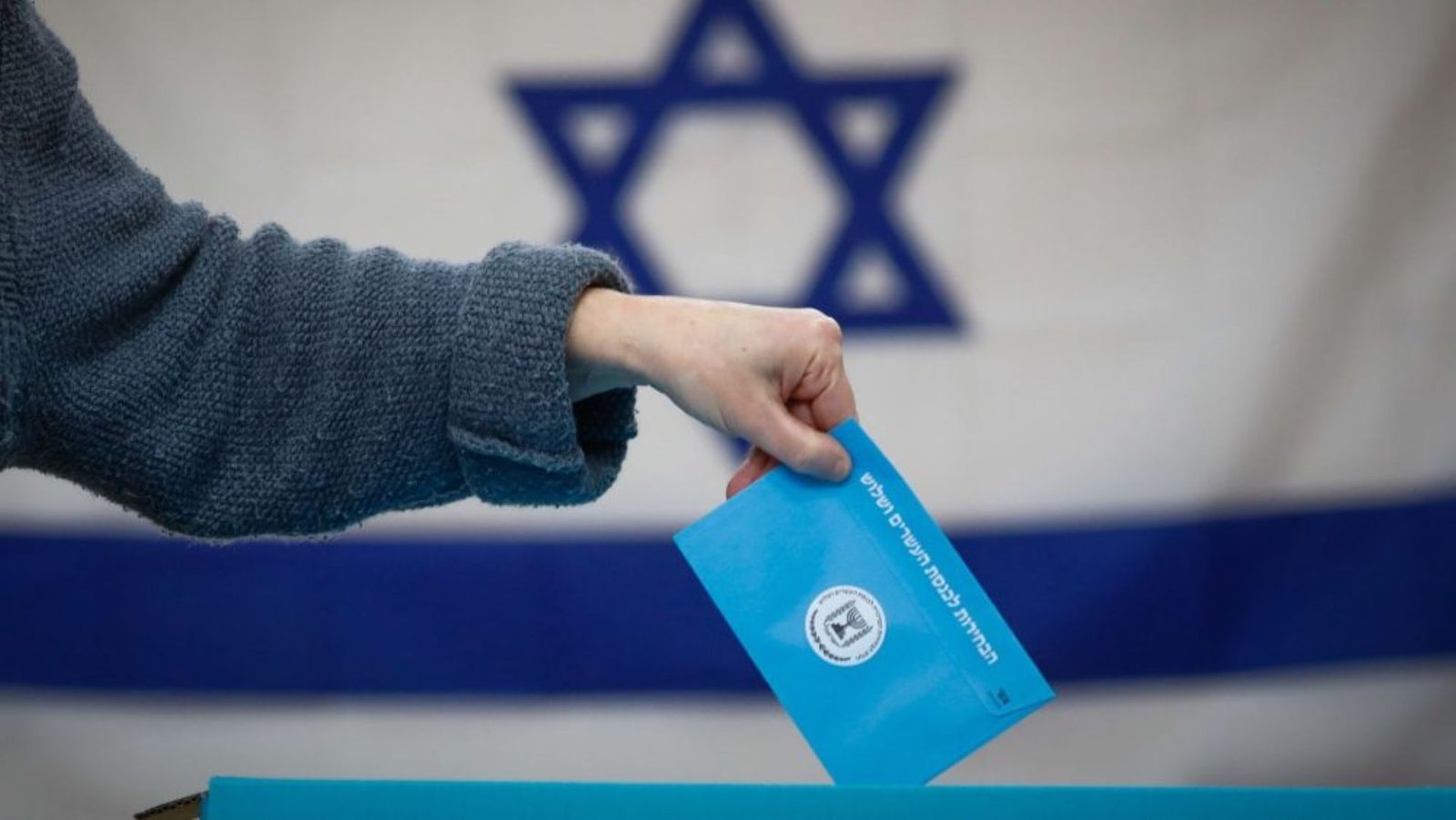
The process of counting votes in the Israeli Knesset elections continues, with the Likud Party continuing to lead with 20.68% of the valid votes counted, followed by the Yashar Party headed by Gadi Eisenkot with 16.71%. The "Bayahad" party, headed by Naftali Bennett, received 9.0%, while the Joint List received 8.94%, and the United Arab List's share reached 3.5%, continuing to exceed the electoral threshold.
According to the latest data from the Israeli Central Elections Commission, updated at 07:57, 2,950,493 votes were counted in 6,881 ballot boxes, including 2,937,354 valid votes and 12,197 invalid votes, out of 7,331,981 people entitled to vote. Likud obtained 607,519 votes, compared to 490,877 votes for Yashar, 262,714 votes for the Joint List, and 264,631 votes for Biyahad, while the Unified List obtained 102,825 votes.
The Israeli website Ynet had published seat estimates after counting about 41% of the votes, at 6:02 am on Wednesday, giving Likud 28 seats and Yashar 21 seats.
The Israeli "Channel 12" saw that the Arab lists achieved a "historic achievement" in the Knesset elections that took place yesterday, Tuesday, while "Channel 13" said that the preliminary results indicate that they obtained 18 seats, their highest representation in years. Channel 12 quoted Joint List head Yousef Jabareen as saying that he hopes to send Prime Minister Benjamin Netanyahu, Finance Minister Bezalel Smotrich "and the blood government to their homes," stressing that "we cannot be ignored in all political scenarios." It also quoted the head of the United Arab List, Mansour Abbas, as saying: “We will turn the seats we obtained into a new reality in Israel,” adding in another statement to “Channel 12”: “The current numbers show that there is no government. Everyone is talking to us, not just the Eisenkot bloc.”
On the other hand, the head of the Yisrael Beytenu party, Avigdor Lieberman, said: “We have to wait until the real results are released, as this is an election different from all the previous ones,” adding: “I am not sure that the polls reflect the real results of the elections. We ran the elections in unreasonable circumstances.”
The Israeli Channel 14, which is close to Netanyahu, said that the right-wing camp won 60 seats, compared to 43 for the left camp and 17 for the Arab parties, while Netanyahu considered that “a left-wing Arab government will be a government of terrorism.” Reuters said that the exit polls did not produce a clear winner, as neither Netanyahu nor his rival Gadi Eisenkot have a clear path to forming a government, which opens the door to long coalition negotiations. She added that the situation may allow Netanyahu to remain head of a caretaker government. Maariv newspaper stressed that increasing estimates indicate that Eisenkot will be the first to receive the mandate to form a government from President Isaac Herzog, while Foreign Minister Gideon Sa'ar considered the opposition's celebrations "premature."
According to The Times of Israel, President Isaac Herzog has wide discretion in choosing who to form the government, and this does not obligate him to assign the leader of the largest party, but rather he chooses whoever he believes has the best chances of building a government coalition. According to the Jewish Telegraph Agency, the president is supposed to decide this within seven days of the publication of the official results. The designated person has 28 days to form the government, with a possible extension of two weeks, according to CNN.
The final results are expected to be released tomorrow, Wednesday. No party has ever held 61 seats alone, so small parties, and Arab lists in particular, may play the role of “kingmaker.”
In this story:
Benjamin Netanyahu

← Previous article
Trump: Attacking Iran is “possible”... and my support for Netanyahu has changed the course