With dates... Al-Sada reveals the path of forensic auditing of the ships’ file
14:22 · 21 August 2026
5 min read
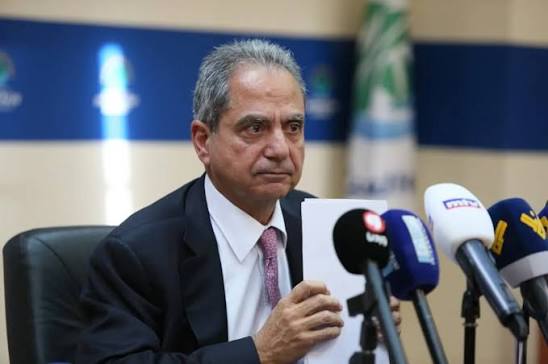
Minister of Energy and Water Joe Sader announced the launch of a forensic audit into the 2012–2017 power-barges contracts and related fuel deals, in implementation of the current government's ministerial statement which provides for "commitment to forensic and accounting audits in ministries, administrations, and public institutions," and in light of the suspicions and questions raised regarding the leasing of power barges that continued to operate from 2012 for several years and whose contracts were renewed more than once, amid talk of deals, commissions paid, and a lack of transparency in the bidding mechanism.
Sader affirmed during a press conference held in the presence of Électricité du Liban (EDL) Director General Kamal Hayek and Acting Director General of Investment Fadia Hayek, that he took the decision to proceed with the forensic audit in this file to distance it from any political bickering and out of keenness to know the fate of the funds paid from the state treasury and belonging to the Lebanese people.
Sader then detailed the timeline of the forensic audit:
* On 18/2/2026, we sent the draft book of conditions to the Public Procurement Authority for its observations.
* On 2/3/2026, the Authority sent its observations.
* On 10/3/2026, we sent a revised copy of the book of conditions to the Authority after taking its observations into account, aimed at conducting a final review of it.
* On 16/3/2026, the Authority took note of the contents of the book of conditions, requesting that the scope of the mission include, at a minimum, the 2012-2017 barge contracts and related fuel deals.
* On 23/4/2026, the Council of Ministers approved, pursuant to Decision No. 2, the securing of the required appropriations to enable the Ministry of Energy to conduct the tender related to the forensic audit in the power barges file through the Ministry of Finance, while emphasizing the obligation to comply with the provisions of the Public Procurement Law when conducting the aforementioned tender.
* On 27/7/2026, a decree was issued transferring appropriations from the budget reserve to secure the necessary funds to conduct the awarding of the forensic audit.
* On 13/8/2026, the Council of Ministers approved the international arbitration clause contained in the book of conditions.
* Today, on 21/8/2026, we announce to the Lebanese people the launch of the tender process and the publication of the book of conditions on the Public Procurement Authority platform.
* The session for opening bids is scheduled for 15/10/2026.
The Minister of Energy and Water subsequently affirmed that this forensic audit will not be the sole one, and pointed out that three days ago, the book of conditions for the forensic audit tender for the Janna Dam and Lake project on the Ibrahim River, submitted by the Beirut and Mount Lebanon Water Establishment, was published on the Public Procurement Authority platform.
Sader concluded: "We are committed to this institutional and legal approach because the Lebanese have the right to know how funds were spent and whether there is any waste or corruption, and because the state we are working to build must be based on the principles of transparency, governance, sound management, and accountability."
In response to a question, Sader clarified that Paragraph 8 of Article 13 of the Public Procurement Law dictates that the estimated value of a procurement project must remain confidential both before and after the award.
Regarding the comparison made by Bassil, in which he claimed that the cost of a kilowatt from the barges was 14 cents, from EDL 27 cents, and from generators 55 cents, Sader clarified that the production cost of Bassil's barges was not 14 cents as he claims, but rather fluctuated and was always higher than EDL's average production cost, adding: "According to documented figures from Électricité du Liban, for example:
In 2014, the production cost of the barges was 19.71 cents/KWh, while the production cost of Deir Ammar was 17.51 cents/KWh and Zahrani 17.02 cents/KWh—meaning they were lower, and these are our two largest plants.
In 2015, the production cost of the barges was 13 cents/KWh, while Deir Ammar was 10.51 cents/KWh and Zahrani 11.10 cents/KWh.
Likewise, the cost of leasing the barges over 3 years was higher than the cost of purchasing them.
Simply put, Bassil's comparison of the production cost to the tariff is like comparing 'the price of fabric to the price of a suit,' as the tariff includes the cost of production, transmission, distribution, and waste. It is worth noting that if we assumed back then that the price of the barges was 14 cents/KWh, EDL's tariff price was 9 cents/KWh; meaning that in order to increase production by 20%—because this was the capacity of the barges—we inflicted millions in losses on EDL, which practically came from the pockets of the Lebanese and depositors' funds. I will no longer delve into this file, which is now in the custody of the forensic audit."
← Previous article
In Sodeco... arrest of a network active in prostitution
Related Articles
Electricity of Lebanon: Cutting off electricity supply to state institutions as of this date
Qatar is on the verge of the electricity crisis in Lebanon... two new stations and a 20-year gas agreement
A meeting with Qatar tomorrow... and the response may escalate towards the government