Al-Saddi: The gas line will be ready within weeks... and its use is a priority to reduce costs
16:56 · 10 August 2026
6 min read
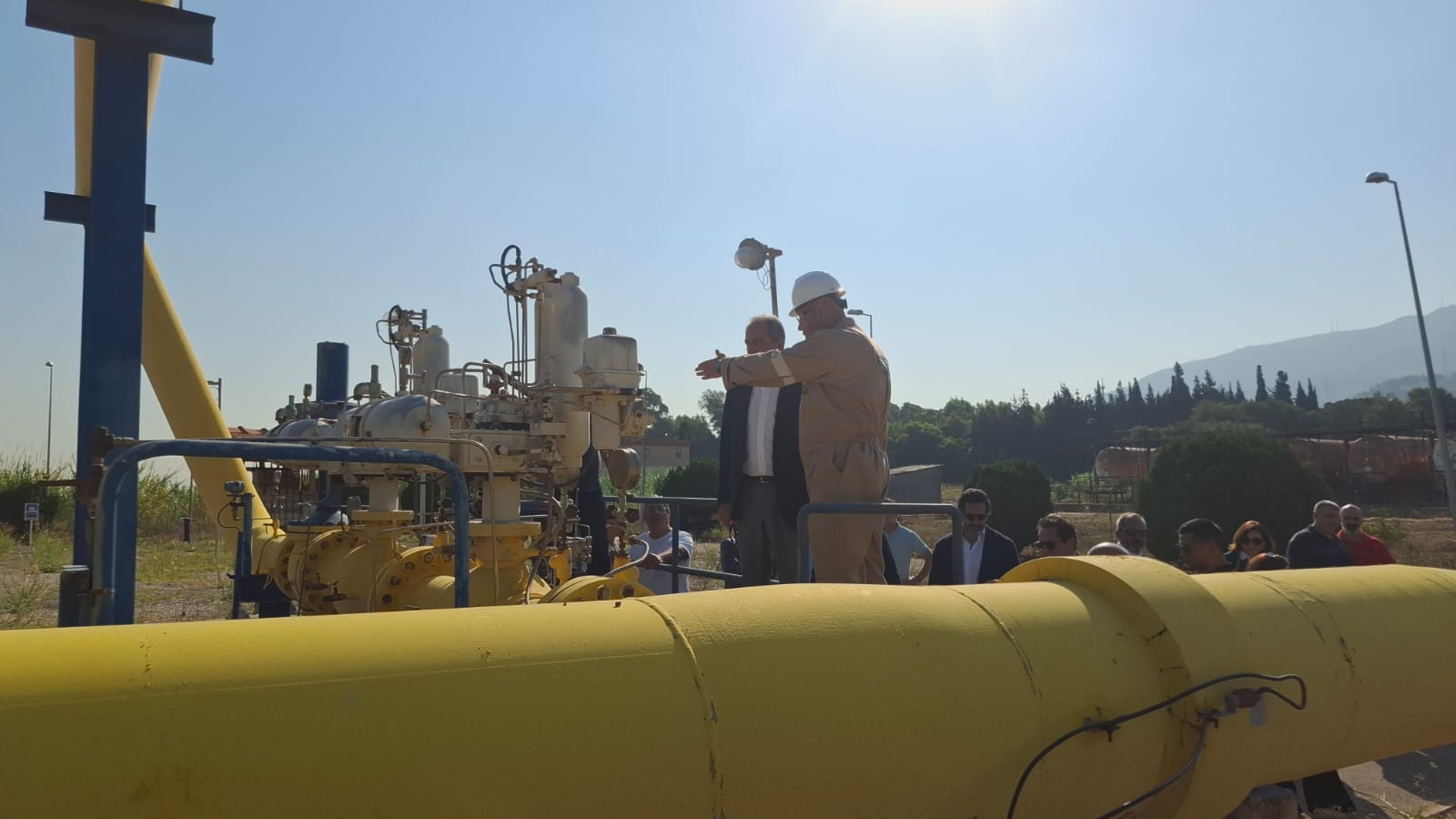
Minister of Energy and Water Joe Sader kicked off his visit to Tripoli by inspecting the oil and gas facilities in the Beddawi area, accompanied by Director General of Oil Maurice Karkafi, members of the Oil Administration Board Dr. Wissam Zahabi and Jean-Paul Sabbagh, Prime Minister’s advisor Dr. Lamia Moubayed, as part of a field tour to examine the condition of the facilities and their equipment, follow up on the workflow, and discuss their needs and plans for development and expansion. He also inspected the maintenance work on the gas pipeline carried out by the Egyptian Technical Services for Gas Pipelines (TGS) company for two weeks, with this phase continuing for up to 4 weeks.
Sader and the accompanying delegation were received by the heads of the marine, land, medical, and gas departments, alongside senior employees and officials at the facilities, where the minister listened to a briefing on the work mechanism and the role played by the various sections, as well as the available capabilities and the requirements needed to enhance their operational capacities.
He was also briefed by engineers from the Egyptian TGS company on the progress of the gas pipeline maintenance work, which began about two weeks ago and will last for 4 weeks, to be followed by a two-week second experimental phase when gas flow begins.
Sader also toured the sections and facilities of the plant, examined the equipment and infrastructure related to the oil and gas sectors, and inspected the tanks scattered around the perimeter of the facilities, listening to a detailed explanation regarding their storage capacities, operational status, and the maintenance and rehabilitation work they require.
The tour also included discussions on the possibility of developing the Beddawi facilities and expanding their storage capacities, to allow for better utilization of the existing infrastructure and enhance the role of the facilities in storing petroleum products and gas and securing market needs.
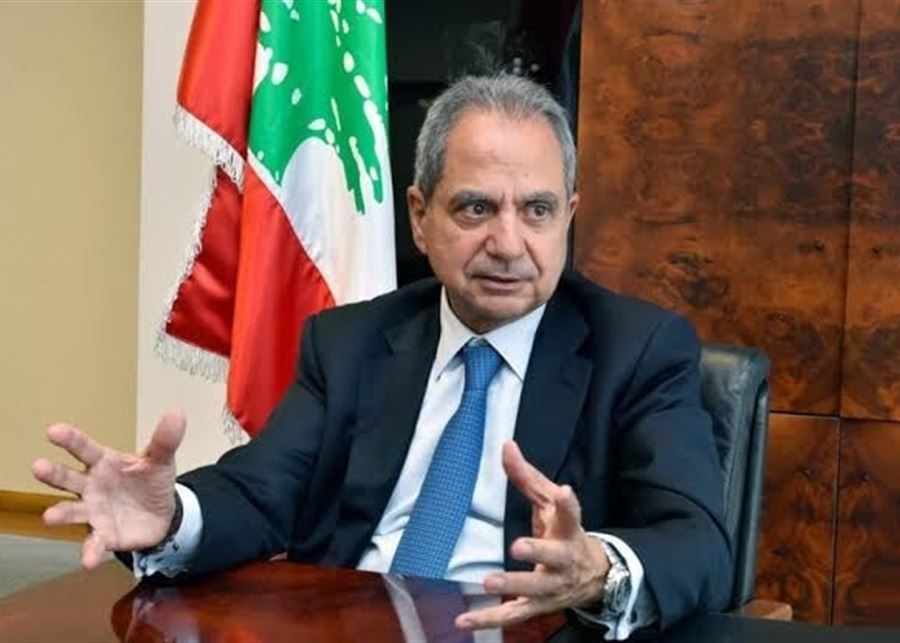
During his talks with journalists, the Minister of Energy emphasized that "working to transform the electricity production sector to use natural gas is an essential step to reduce production costs, limit the environmental impact, and raise the banner of transitioning to gas-based energy production from the moment he assumed his duties," pointing out that "the rehabilitation work of the gas pipeline reaching the Deir Ammar plant via the Dabboussiyeh station in Syria is proceeding according to the specified timetable."
Speaking while inspecting the progress of the work, he said that "transforming the sector to the use of natural gas is an important step, given the production costs it saves, in addition to being much better environmentally compared to using fuel oil."
He explained that "the Egyptian TGS company undertook the rehabilitation work of the gas pipeline and began fieldwork about two weeks ago," noting that "the current phase requires about four additional weeks to complete the maintenance and rehabilitation work."
He added: "After completing this work, the phase of testing the pipeline and operating the gas experimentally will begin, lasting for about two weeks to ensure the safety of the pipeline and its readiness for operation."
Regarding securing gas, Sader revealed that "the contracts for purchasing gas and its transit through Syria are in their final stages," and said: "He will refer the contracts to the Board of Directors of Electricité du Liban to make the appropriate decision regarding them, considering the institution is the purchasing party, and after its approval, they will be referred to the Council of Ministers to obtain final approval."
He emphasized that "the goal of his visit is to make sure on the ground that the works are being executed according to the set program," saying: "I came today to make sure that the work is proceeding according to the scheduled timeline, and things are going as planned, and we hope that these works will finish after about four weeks."
Joint gas procurement via Jordan
Regarding the source of gas, Sader explained that "the project is based on purchasing liquefied natural gas (LNG) in cooperation with Jordan and Syria within a joint procurement mechanism, or what is known as 'Pooling'."
He pointed out that "the gas will arrive at Aqaba, and from there it is transported towards Syria, where an exchange or 'Swap' operation is carried out in coordination with the Syrian side, allowing the gas to arrive via the pipeline network to the Deir Ammar plant."
He explained that "the two contracts that will be referred to the Board of Directors of Electricité du Liban are related, first, to the purchase of gas, and second, to the transit and exchange process through Syria, confirming the existence of approval from the Syrian side for this mechanism."
Furthermore, Sader stressed that "the priority in the current phase is to complete the maintenance and rehabilitation work of the pipeline within the specified deadline, and then conduct the necessary tests in preparation for its operation."
Regarding the existing encroachments in some northern areas on the gas pipeline right-of-way, Sader pointed out "the presence of some houses close to the pipeline route," explaining that "the gas pipeline right-of-way is subject to specific safety distances, and the encroachments file is being followed up within the framework of the works related to the rehabilitation of the pipeline."
In a separate context, the Minister of Energy and Water indicated that "he will hold a meeting in the city of Tripoli with the city's deputies to discuss the comprehensive plan related to Tripoli," stressing that "the focus of his current visit is on the natural gas transition project and the operation of the gas pipeline."
Deir Ammar
Afterwards, Minister Sader moved to the Deir Ammar power generation plant, where he was received by the plant's director, engineer Toni Yacoub, alongside senior officials and workers at the plant.
Sader toured its various sections, closely examining the work mechanism and the stages of electric power production, and listened to a detailed explanation regarding the progress of operational and technical operations, the most prominent needs and challenges facing the plant, and its readiness to operate on gas.
The tour comes within the framework of a field inspection of the reality of the Deir Ammar plant and its operational conditions, due to its essential importance in the electric power production system in Lebanon, especially since the station will operate in the near future on gas.
Tags:
Syrian Arab Republic
The Hashemite Kingdom of Jordan
Echo atmosphere
Tripoli
Lebanon Electricity
Lebanon
cabinet

← Previous article
An exceptional night... 4 astronomical phenomena coincide on August 12
Related Articles
Electricity of Lebanon: Cutting off electricity supply to state institutions as of this date
Qatar is on the verge of the electricity crisis in Lebanon... two new stations and a 20-year gas agreement
A meeting with Qatar tomorrow... and the response may escalate towards the government