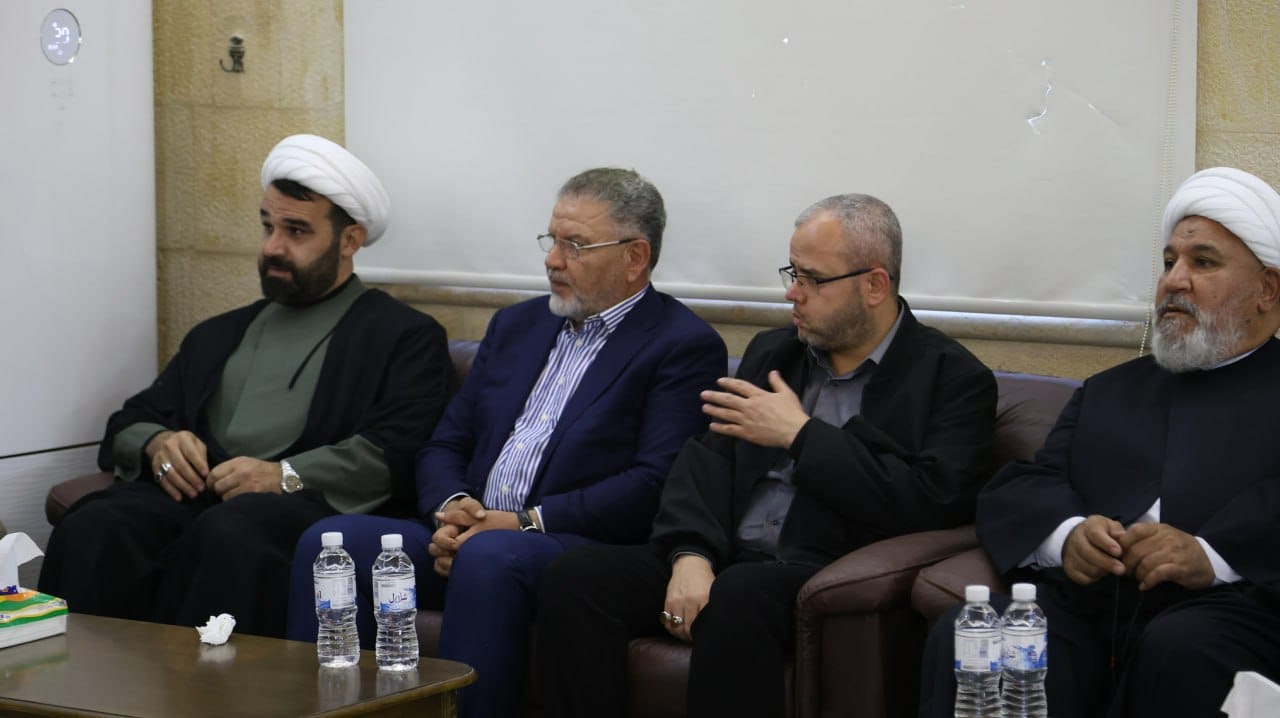
The Ministers of Finance, Energy and Economy discussed the repercussions of the crisis and the rise in oil prices
18:30 · 12 May 2026
5 min read

A meeting was held at the Ministry of Finance, bringing together Ministers of Finance Yassine Jaber, Energy and Water Joe Sader, and Economy and Trade Amer Al-Bsat, dedicated to discussing the repercussions of the crises resulting from the war on Lebanon, the rise in global energy prices on the electricity sector in Lebanon, and available ways to address them.
The meeting was attended by Director General of Finance George Maarawi, the Director General of Electricité du Liban, Director of the General Budget Carole Abi Khalil, Acting Director of the Public Debt Department Rania El Chaar, advisors Zeina Kassem and Rahaf Nabbouh from the Finance Minister’s team, and Boutros El Hachacheti from the Energy Minister’s team.
Following the meeting, Jaber, Sader, and Bsat held a joint press conference, explaining the objectives of the meeting, which will be followed by periodic meetings to discuss addressing the negative repercussions on the electricity sector resulting from either global or internal conditions.
Sader
The Minister of Energy and Water said: "The purpose of our meeting today is to discuss the repercussions of the war and the rise in global oil prices and their reflection on the electricity sector. This is the first meeting and it will be followed by meetings during this week and next week. We also discussed the issue of World Bank loans and the future plan regarding them, especially since we have an electricity loan and another for water, alongside others that are currently being worked on."
He was asked: Did you discuss the subject of your visit to Syria?
He replied: "No, we did not touch upon the visit."
Jaber
For his part, the Minister of Finance began his remarks in response to the question addressed to the Minister of Energy regarding the visit to Syria, by saying: "Regarding Syria, the discussion is on the subject of the oil pipeline from Iraq to Lebanon, and resuming communication with the formation of a new government in Iraq, and it is necessary to coordinate with the brothers in Syria through whom this oil pipeline passes. As for confronting the repercussions of the crisis, there are a number of projects, including the solar energy project which has become ready after land was allocated for it in the Bekaa and elsewhere."
He added: "There are major variables in the world of energy and oil, and we are coordinating positions to mitigate the negative impacts as much as possible, as the crisis is global and not local. The entire world is confused today on the subject of energy, and we are trying to coordinate between the ministries so that Lebanon can take the necessary steps in order to preserve financial and monetary stability, and at the same time to be able to provide energy and electricity continuously and permanently, and we hope to succeed in these organizational matters."
Bsat
As for the Minister of Economy, he said regarding the repercussions of the crisis on the economic situation: "As the Minister of Finance said, there is a major crisis and it does not stem only from the interior, but rather an external crisis, and fuel is part of our imports as a whole. Our duty as ministers is to coordinate work among ourselves and take measures that protect the private sector and the consumer, and to try to absorb the crisis we are going through."
He was asked: Can the scale of losses be known?
He replied: "There is no doubt there are four types of losses: the economic losses themselves from unemployment, the closure of institutions, and a decrease in the number of tourists, and this is a large figure constituting 7% of the gross domestic product, in addition to the massive destruction whose value we are currently studying, and of course it is in the billions of dollars. As well as the inflationary issue and rising prices due to fuel, which harms the purchasing power of the Lebanese consumer, and this is a very large crisis, added to it is the social crisis with the presence of about one million and two hundred thousand displaced persons."
Jaber
There was an intervention by the Minister of Finance in which he said: "The problem is not only in the rise of energy prices and the price of a barrel of oil; shipping has risen, and insurance, and obtaining goods has also become more difficult. All these are complications that reflect negatively on us. We are importing the crisis, and we must handle it well to mitigate its impacts as much as possible on Lebanon, and we are preparing to take the necessary measures to maintain the continued availability of energy and fuel and secure imports to avoid falling into a crisis of this kind."
He added: "We are in continuous coordination meetings, whether here at the Ministry of Finance or the Grand Serail. Yesterday, an important meeting was held with His Excellency the President of the Republic, as everyone is interested in this subject."
As for estimating the losses, he said: "Since the first week of March, coordination has taken place with the World Bank and the Global Research Institute, where imaging is being analyzed and documented via artificial intelligence technology, through which losses can be determined and initial costs estimated. This is direct, while the indirect is the economic impacts from the damage to the tourism sector to the high cost of imports."
Regarding the possibility of bearing the losses, he said: "We are bearing losses against our will and not by choice. Is what is happening of bombardment, demolition, and the leveling of villages a choice? Unfortunately, these are losses imposed upon us, and the important thing is to plan how to deal with them."
In this story:
Yassine Jaber

← Previous article
After targeting the Civil Defense... “Health”: We will not remain silent about these crimes
Related Articles
Jumblatt: Lebanon-Israel negotiations will not bear fruit as long as Israel occupies the south
Hasbani: The Dahr al-Baidar incident is a gateway to implementing the government’s decisions regarding the party’s weapons
Contact between Al-Hajjar and his Saudi counterpart... enhancing joint cooperation between the two countries