Fadlallah: We will not accept submission to dictates and let the enemy expect our response
12:49 · 09 May 2026
5 min read

Loyalty to the Resistance bloc member MP Hassan Fadlallah affirmed that we are in a defensive position regarding our existence and destiny in the face of an Israeli aggression on our country, and that there is a new phase in which the resistance does not accept a return to what was before March 2. When our villages and our Dahiyeh are attacked, the enemy must expect a response, which is what the resistance is doing. Regardless of the costs and challenges, the resistance will not allow a return to the past phase, pointing out that there are two different approaches in the country on how to confront the Zionist aggression, representing a track of division among the Lebanese. This requires a conscious, nationally responsible handling without taking the country into dangerous mazes, but rather setting out together from a national basis whose title is national understanding over choices, freezing internal differences, and considering the Israeli aggression on our country to be an existential threat to Lebanon. Its results are not limited to a region, a sect, or a group, and we should all head towards a single national priority: stopping the aggression, liberating the land, returning the displaced, recovering the captives, and agreeing thereafter on ways of national protection.
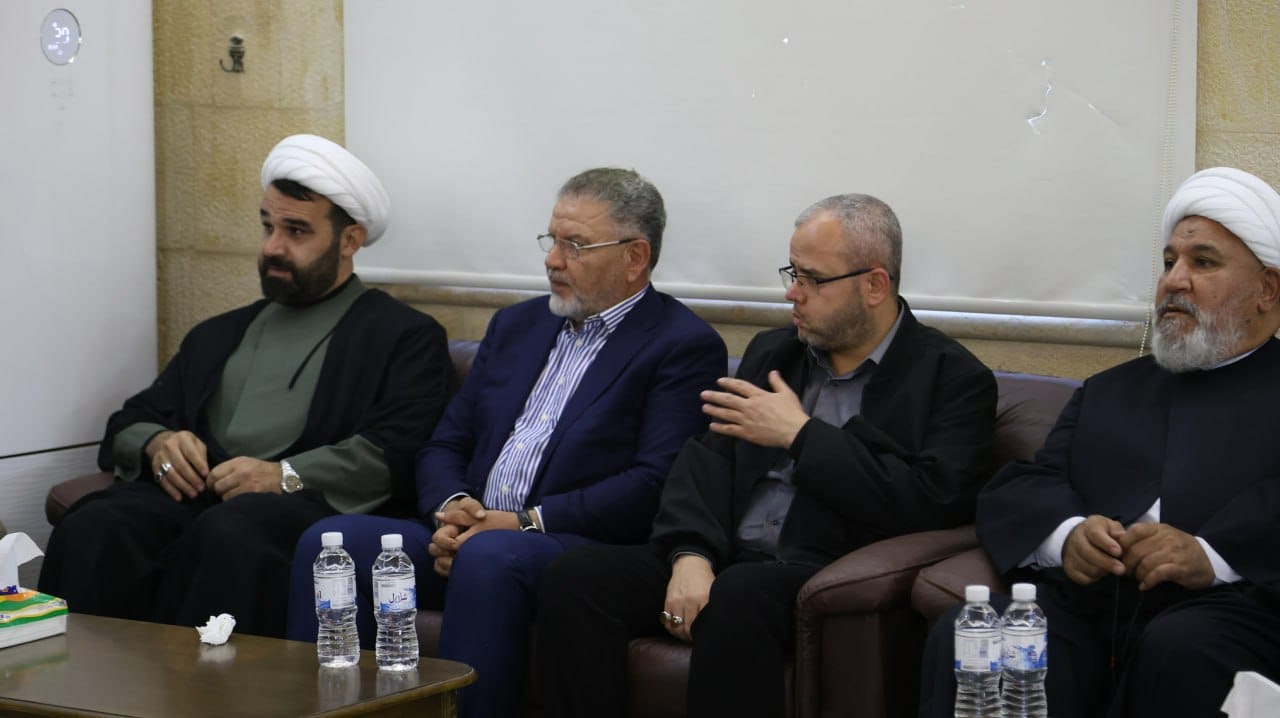
MP Fadlallah's remarks came during the memorial ceremony held by Hezbollah for the mourners of Imam Hussein (PBUH) and the martyrs, including the blessed martyr "Yahya Mohammad Hoteit", at the Hounin Husseiniyah in Haret Hreik, in the presence of MPs Amin Sheri and Ayoub Hamiyeh, a number of clerics, families of the martyrs, and a gathering of locals.
MP Fadlallah affirmed that Lebanon is not weak; it is strong with the heroic resistance fighters who are fighting the enemy to this moment in the front villages with valor, boldness, courage, awareness, and wisdom. With them, the factors of internal unity can be invested to strengthen the national position in confronting this Israeli aggression, and no one is permitted to squander the factors of strength, especially the resistance.
MP Fadlallah called for returning to the actual texts of the constitution and the Taif Agreement rather than fragmenting or cherry-picking certain phrases. Taif says in its literal text, "Preparing the armed forces to be able to confront the Israeli aggression," but successive authorities did not implement this clause. As for the majority dominating power today, it ordered its army to withdraw instead of confronting the enemy, and had it not been for the heroic resistance fighters, the enemy would be in Beirut today as happened in 1982.
MP Fadlallah added: The Taif Agreement stipulated "using all means to liberate the land," and one of the most important of these means is the resistance, which the foundational statement of the post-Taif government affirmed its support for. This confirms that constitutional and charter legitimacy is available, and breaching this charter and bypassing these two clauses is an actual threat to the constitution and the Taif Agreement. Consequently, whoever wants to protect Taif and defend it must implement what it stipulated and not allow it to be breached by bypassing the central idea it approved regarding hostility towards Israel.
MP Fadlallah affirmed that direct negotiations with the enemy are a downward path, noting that we are not against diplomacy based on strength, which in 1996 led us to the April Understanding, the liberation of captives, and the securing of protection equations. Therefore, we are with indirect negotiations that lead to achieving objectives through specific procedures. As for this path in Washington to which the authority has resorted, it constitutes a departure from Taif and the constitution, and we call on it to retract it, as it has sufficient national justifications. If it is facing pressure from the United States of America, it can tell the Americans: since you have not been able to provide us with a comprehensive ceasefire, and since this enemy has attacked the Dahiyeh and attacks the south every day and commits massacres, and since it has not committed to a comprehensive ceasefire, we are withdrawing from direct negotiations. This is a sufficient justification for this authority to return to the option of internal understandings that strengthen Lebanon's position, because these direct negotiations have increased internal division and created a rift within state institutions. It is not true that the state went to negotiations; rather, the majority dominating power went to negotiations, and we are part of the state, which is not united in this path. Relying on the unity of our people and the state strengthens our position.
MP Fadlallah stressed that betting on the US administration is a mistaken bet, because when regional negotiations are concluded, this majority dominating power will remain alone. It has entered a swamp, and we call on it to exit it. Therefore, this authority has a real opportunity today, and we do not want our country to live in problems or internal disputes, but at the same time, our people will not accept submission and surrender to these dictates imposed upon them. We have enough popular strength and steadfastness in the field, and relying on the new equations and the regional umbrella being forged today in Islamabad gives Lebanon strength. However, what is important is for the authority in Beirut to be aware of these equations and to turn to the choices of its people rather than any other choices.
MP Fadlallah concluded by saying: Times have changed. When Iran is attacked, whether by destroyers, aircraft, or fleets, it responds to this aggression directly. Likewise, when we are attacked in our country, we respond to this aggression. We are in a position of defending our homeland and our south, and we will bring down the yellow line and the security belt, and we will return with our heads held high to our villages and towns, and the enemy will not be able to remain on our land.
In this story:
Hassan Fadlallah

← Previous article
A call between President Aoun and the Emirati President.. What happened between them?
Related Articles
Jumblatt: Lebanon-Israel negotiations will not bear fruit as long as Israel occupies the south
Hasbani: The Dahr al-Baidar incident is a gateway to implementing the government’s decisions regarding the party’s weapons
Contact between Al-Hajjar and his Saudi counterpart... enhancing joint cooperation between the two countries