Al-Rahi: The South is not a sheet of accounts
14:38 · 06 September 2026
8 min read
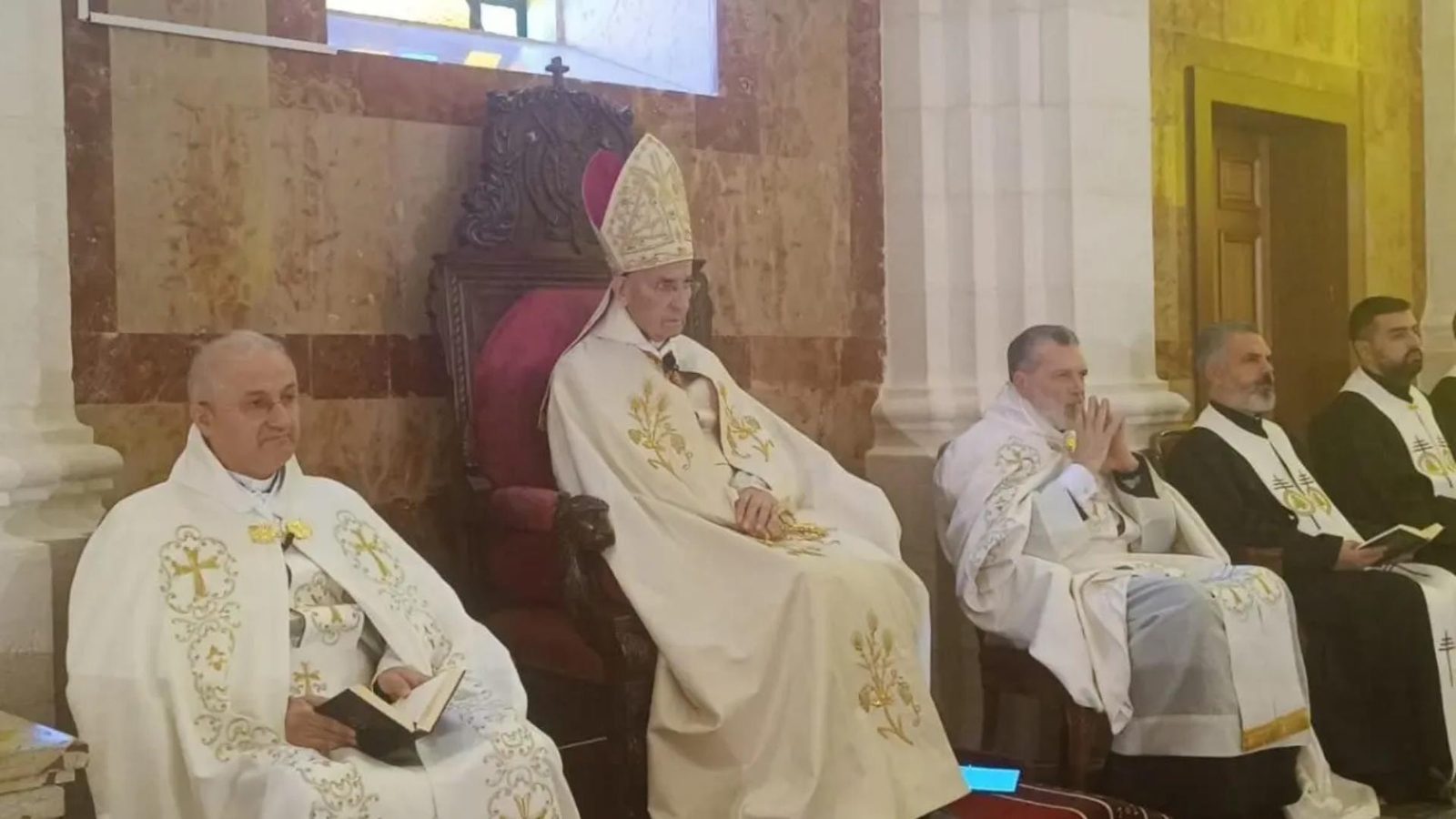
Maronite Patriarch Cardinal Mar Bechara Boutros al-Rahi presided over the Mass of the sixteenth Sunday of the Season of the Cross at the Patriarchal Summer Residence church in Diman. He was assisted by the Head of the Patriarchal Office, Father Khalil Arab, and the Secretary-General, Father Fadi Tabet, with the participation of Monsignor Victor Keyrouz, Father Camilio Mikhail, and a number of priests, and in the presence of the head and members of the Caritas Jbeil region, a delegation from the International Human Rights Organization, a delegation of figures and residents of the town of Mchmich, and a gathering of the faithful.
Al-Rahi delivered a sermon titled: "Whoever exalts himself will be humbled, and whoever humbles himself will be exalted" (Luke 14:18), in which he said: "This statement is not merely a conclusion to the parable of the Pharisee and the tax collector, but rather a key to understanding the relationship between man and God, and between man and his brother. Two men went up to the temple to pray. One was a Pharisee who knew the law and practiced his religious duties, and the other was a tax collector bearing in the eyes of people the image of a sinner. The Pharisee was boasting about his deeds, his fasting, his prayers, and his giving, and he saw himself as better than the rest of people and than the tax collector. As for the tax collector, he found nothing to offer except a broken and repentant heart and a sincere word: 'O God, be merciful to me, a sinner.' The problem of the Pharisee was not that he fasted, prayed, and gave—these are all good deeds. Rather, the problem was that he made his prayer a reason to exalt himself above others, turning his actions into condemnation. As for the tax collector, he did not justify himself nor compare himself to anyone; he knew his weakness and confessed his need for God's mercy. Therefore, the Lord said that the tax collector returned to his house justified, while the Pharisee did not." He concluded by saying: "Everyone who exalts himself will be humbled, and whoever humbles himself will be exalted" (Luke 14:18).
He continued: "I am happy to welcome you all to celebrate this Divine Liturgy together. I extend a special welcome to the delegation of prominent figures and dear residents of the town of Mchmich, to Caritas Lebanon in the Jbeil region of the Patriarchal Eparchy, and to the delegation from the International Human Rights Organization."
He added: "Today's Gospel leads us to a fundamental question: What does prayer mean to us? Prayer is not an occasion to tell God how good we are, but a moment to discover how much we need God. The Pharisee was praying, but his heart revolved around himself. As for the tax collector, he stood before God in all his weakness. True prayer begins with praising God and glorifying His name, because He is the source of our life and every blessing. Then we thank Him for life, family, faith, health, every gift that has reached us, and the many things we experience every day. Then our prayer turns into intercession, as we carry before God in our prayer the sick, the suffering, the poor, families experiencing hardship, young people who fear for their future, and our dead. Then we lift up our own needs: we ask for daily bread, health, strength, wisdom, peace, protection, work, and everything our lives need. But we do not ask God as if we are imposing our will upon Him, but rather as children placing their trust in their Father. We ask with faith, we implore with hope, and in the end, we surrender to His will."
He touched upon national affairs: "Whoever exalts himself will be humbled, and whoever humbles himself will be exalted (Luke 14:18). National humility begins with everyone acknowledging that Lebanon is not the property of any single faction, and that no one alone holds the right to self-determination. The state is not spoils, power is not a privilege, and public office is not a means to aggrandize individuals, but rather a trust to serve the people. For Lebanon to recover its health, there must be a single national authority and a sovereign decision. The protection of Lebanon lies in confining weapons to the hands of the state, because the state cannot protect its citizens or demand respect for its sovereignty if security decision-making remains distributed among multiple authorities. This path must be pursued with wisdom and responsibility, away from incitement and strife, and in a manner that preserves the dignity of all Lebanese. As for negotiations, they must not remain rounds without result; what is required is a halt to attacks, Israel's withdrawal from Lebanese territories, and the guarantee of people's security and their right to return to their villages and homes."
He pointed out that "the South is not a card to be used in calculations, but rather Lebanese land and dear people who have a steadfast right to security, life, and reconstruction. It is not permissible for southerners to remain prisoners of waiting, nor for their suffering to be turned into a subject for bargaining."
He said: "Lebanon needs an army that knows its mission is not only to protect the borders, but to protect the very meaning of the state—an army that is present where the state ought to be, and resolute when the homeland is threatened, backed by a political will that does not leave it alone in the face of dangers. A state whose army does not have the final say in protecting its land remains a state of incomplete sovereignty. Lebanon needs neutrality that protects it from the conflicts of others. Neutrality is not a withdrawal from national issues, nor a renunciation of rights, but rather a rejection of turning Lebanon into an arena for axes. It is a path to restoring free decision-making, preserving relations with everyone, and keeping Lebanon a homeland rather than an open front. Lebanon does not rise when one faction triumphs over another, but when everyone triumphs for the state. The homeland is not built on the logic of domination, but on partnership, respect for the rule of law, and putting the public interest above private calculations. At that point, national humility becomes a strength, and salvation becomes possible."
He added: "In national affairs, we hope that the signing of the general amnesty law will be a door to mercy and an opportunity to open a new page titled justice, reconciliation, and peace in Lebanon. Amnesty, when coupled with right and justice, is not merely the dropping of a penalty, but a step toward healing wounds, rebuilding trust, and granting those who deserve it a new chance to return to society and life. We hope this law will open the door to further reconciliations, help turn the pages of pain and division in a spirit that preserves human dignity, safeguards the rights of those affected, and places Lebanon's interest and unity above all considerations."
He continued: "Many citizens bring their pain to us and say: Lebanon and its people have reached a stage where silence is no longer acceptable. The citizen is suffocating from high prices and poverty, the sick are suffering, families are struggling to secure the most basic elements of living, while electricity, generators, and bills add to the people's pain. Our enemy kills us once, but corruption, negligence, and the absence of accountability kill us every day with our eyes open while we watch our homeland collapse. We need a strong voice like yours that stands by the people and speaks the truth without fear or complacency. Lebanon does not need pity; it needs a state, justice, and accountability. Our trust in your voice and your conscience is great, and our hope is that the pain of the Lebanese remains a priority."
Al-Rahi concluded: "Let us pray, beloved brothers and sisters: O Lord, teach us to pray with humility and to work with love. Protect Lebanon, and lift it up in truth and peace. To You belongs glory and thanksgiving forever, amen."
Following the Mass, the Patriarch received those who participated in the Mass, and the head of the Caritas Jbeil region, Dr. Elie Elie, delivered a speech thanking the Patriarch for his continuous patronage of Caritas and his support for its humanitarian and social mission. He extended special thanks to Father Samir Ghawi, Bishop Joseph Naffah, Father Khalil Arab, and all members of the Caritas Jbeil region for their efforts and silent giving.
More from:
South Lebanon news
← Previous article
“A dangerous escalation”... Aoun condemns the targeting of state institutions
Related Articles
Jumblatt: Lebanon-Israel negotiations will not bear fruit as long as Israel occupies the south
Hasbani: The Dahr al-Baidar incident is a gateway to implementing the government’s decisions regarding the party’s weapons
Contact between Al-Hajjar and his Saudi counterpart... enhancing joint cooperation between the two countries