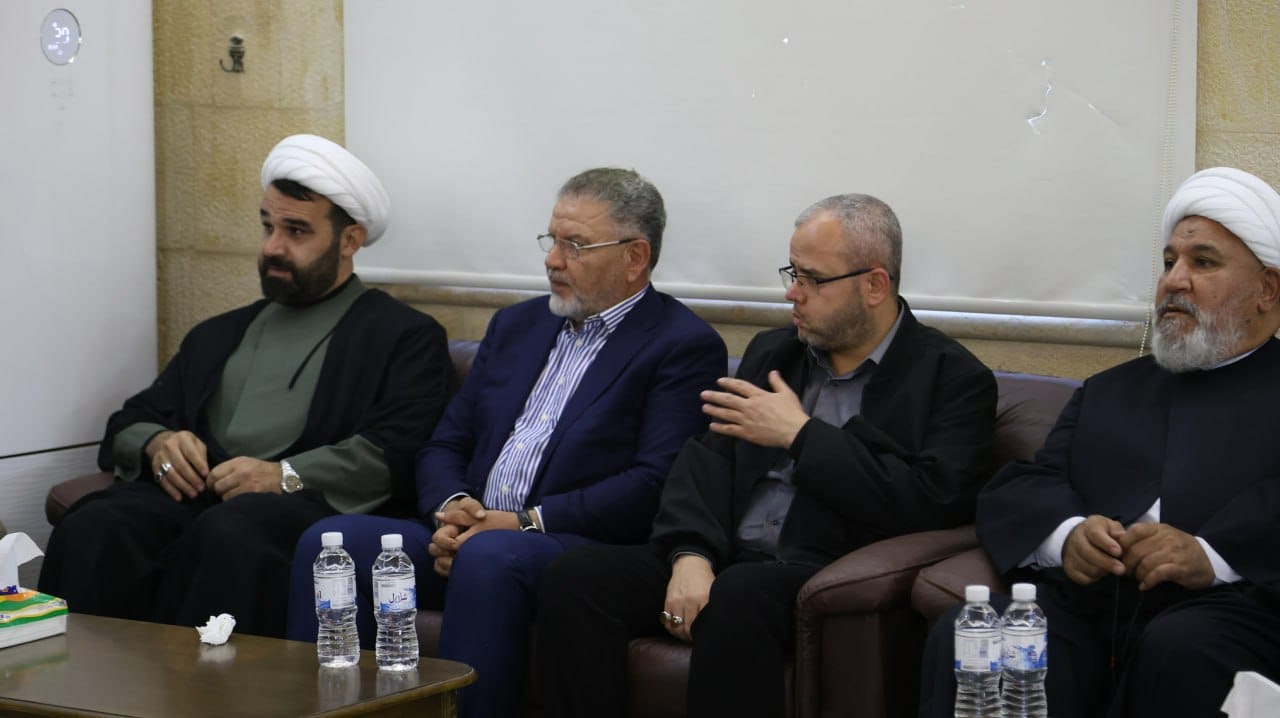
Salam: A complaint to the Security Council against Israel’s violations... and measures to enhance security and support the displaced
20:26 · 26 March 2026
7 min read

Prime Minister Dr. Nawaf Salam chaired a cabinet session attended by Deputy Prime Minister Dr. Tarek Mitri and Ministers of Culture Ghassan Salameh, Defense Michel Mansour, Energy and Water Joe Sadek, Tourism Laura Al-Khazen, Social Affairs Hanine El Sayed, Foreign Affairs and Emigrants Youssef Ragi, Economy and Trade Amer Al-Bsat, Displaced Persons and Information Technology and Artificial Intelligence Affairs Kamal Shehadeh, Interior and Municipalities Brigadier General Ahmad al-Hajjar, Justice Adel Nassar, Telecommunications Charles El-Hajj, Youth and Sports Nora Bayrakdarian, Education and Higher Education Rima Karami, Industry Djo Issa El-Khouri, Administrative Development Affairs Fadi Mekkawi, Public Works and Transport Fayez Rasamny, Agriculture Nizar Hani, and Information Paul Morcos.
Also attending were the Director-General of the Presidency of the Republic Dr. Antoine Choucair and the Secretary-General of the Council of Ministers Judge Mahmoud Makkieh.
After the session ended at around five in the afternoon, Minister of Information Paul Morcos announced the official decisions:
The Council of Ministers held its session chaired by Prime Minister Dr. Nawaf Salam, in the presence of the ministers, with the absence of the Minister of Finance, the Minister of Public Health, the Minister of Environment, and the Minister of Labour.
As you know, there was a single-item agenda in this session, specifically addressing the issue of the displaced, the repercussions of displacement, Israeli attacks, and their impacts on various levels: housing, relief, social, economic, financial, and naturally, foremost among them, the military.
Therefore, the ministers presented their interventions after the Prime Minister spoke, saying:
First: The Israeli Defense Minister repeatedly threatens us that Israel is active in occupying the area south of the Litani River, and the Minister of Finance also adds that he will demand the annexation of the area south of the Litani River to Israel. Israel has blown up the majority of the bridges located on the Litani River in an effort to separate this area from the rest of Lebanese territory. This was accompanied by a mass displacement process for the residents of towns and villages located south of the Litani River, a daily process of land encroachment, and the demolition of their homes—sometimes by completely bulldozing them—as if it were a signal that civilians will not return to their homes in the near future.
We consider these actions and statements, under any title whatsoever such as a security belt or buffer zone, to be extremely dangerous, threatening Lebanon's sovereignty, territorial integrity, and the rights of its people, as well as completely contradicting international law, international humanitarian law, and the United Nations Charter. Therefore, I ask the Minister of Foreign Affairs and Emigrants to immediately submit a complaint to the Security Council in this regard, and I will also contact the Secretary-General of the United Nations directly immediately after the end of this session for the same purpose.
Second: I regret that news has reached us of the discovery of a new terrorist cell in the brotherly State of Kuwait, and that among the accused are two individuals belonging to Hezbollah, according to the Kuwaiti Ministry of Interior. I want to emphasize once again that what harms Kuwait harms Lebanon, and that the bilateral relations between our countries are firm and historical, and that the overwhelming majority of the Lebanese community respects the laws in force, actively contributes to Kuwaiti economic life, and establishes an excellent bridge of cooperation between the two countries. I hope that this will be the last time Lebanon's name is linked in such matters, and I hope that all our citizens will absolutely respect the laws in force in the countries where they work, especially in the Gulf Cooperation Council countries, upon whose friendship Lebanon always relies.
I have contacted His Highness the Prime Minister of Kuwait and expressed to him our strong denunciation of these terrorist acts and Lebanon's full solidarity with brotherly Kuwait.
In this context, it must be noted that the focus of Iranian bombardment has shifted from Israel to the Arab Gulf states. Official data released by the targeted countries showing a statistic of Iranian attacks, whether by missiles or drones, since the beginning of the war, indicated that 83% of them primarily targeted the Arab Gulf states, as well as Jordan, Turkey, and Azerbaijan, compared to only 17% on Israel.
Among the targets hit were vital facilities and civilian sites, constituting a dangerous escalation.
It is true that the Gulf states have efficiently countered in defense of their territories, but Lebanon cannot remain silent while its Arab brothers are exposed to daily attacks hitting their territories. Therefore, I have contacted and will contact the leaders of brotherly countries to express once again Lebanon's solidarity with them.
Third: I reiterate that our displaced people, like us, are victims of this war that was imposed upon us; they were neither consulted about it nor did they have a decision to enter into it. It is par excellence the war of others on our land, in which Lebanon had no interest, neither closely nor remotely.
Finally, I would like to reassure the Lebanese in general and our people in Beirut in particular that we have taken new measures to enhance security in the capital, which will be visible to everyone through the intensification of army and security forces patrols in the city.
The Minister of Information's speech continued after the cabinet session.
Minister Morcos added: And as we mentioned, most ministers reviewed, each within the scope of their ministry—including the Minister of National Defense—the military developments in the south, especially in the frontline villages and general Lebanon, and he also touched upon the military situation on the Lebanese-Syrian border.
The Minister of Interior also touched upon security developments and preparations, and the needs of villages under Israeli attacks.
The Minister of Information conveyed to the Council of Ministers the media recommendations issued by media outlets, and meetings will be held successively in this regard. It was also emphasized that the security reference of the Lebanese Army should be adopted in press coverage.
As for the Minister of Social Affairs, she presented the housing and food needs of the displaced, and pointed to the increasing numbers, both in terms of the number of displaced persons and their hosting centers. She also touched upon efforts aimed at auditing the names of registered displaced persons and procedures related to transparency regarding aid that has arrived in Lebanon.
For her part, the Minister of Education indicated that 75 percent, whether in formal or private education, have returned to in-person learning, online learning, or distance learning. She pointed to schools that have become within conflict zones (War Zones) or that have lost their status as schools, totaling 340 schools. She also reviewed the conditions of schools damaged by the war and the situation of their administrative and educational staff.
Likewise, the Minister of Economy indicated that the information in his possession has become complete, with clear statistics available regarding food and supply stocks, and reassured that these stocks are sufficient for the foreseeable future.
He also presented in detail the supply chains from producer to consumer, which are subject to his continuous follow-up. He dwelt on the issue of rising prices and its various causes, including the rising cost of transport and insurance, in addition to monopoly, noting that his ministry is taking measures against violators in terms of issuing violation reports (red tickets), confiscation, and referral to the judiciary, while noting the number of these reports being issued.
He also pointed to cooperation with the Minister of Energy on the issue of diesel, and with the Minister of Agriculture on agricultural products.
He reviewed the major impact in terms of inflation resulting from the war and the erosion of growth achieved during recent months. Finally, he presented an aspect of the general financial situation and possible financial options, noting that the Minister of Finance will address these issues in detail.
Likewise, the Minister of Energy spoke about the issue of fuel, both in terms of availability and prices.

← Previous article
“I call you”... the great artist Ahmed Kaabour has passed away
Related Articles
Jumblatt: Lebanon-Israel negotiations will not bear fruit as long as Israel occupies the south
Hasbani: The Dahr al-Baidar incident is a gateway to implementing the government’s decisions regarding the party’s weapons
Contact between Al-Hajjar and his Saudi counterpart... enhancing joint cooperation between the two countries