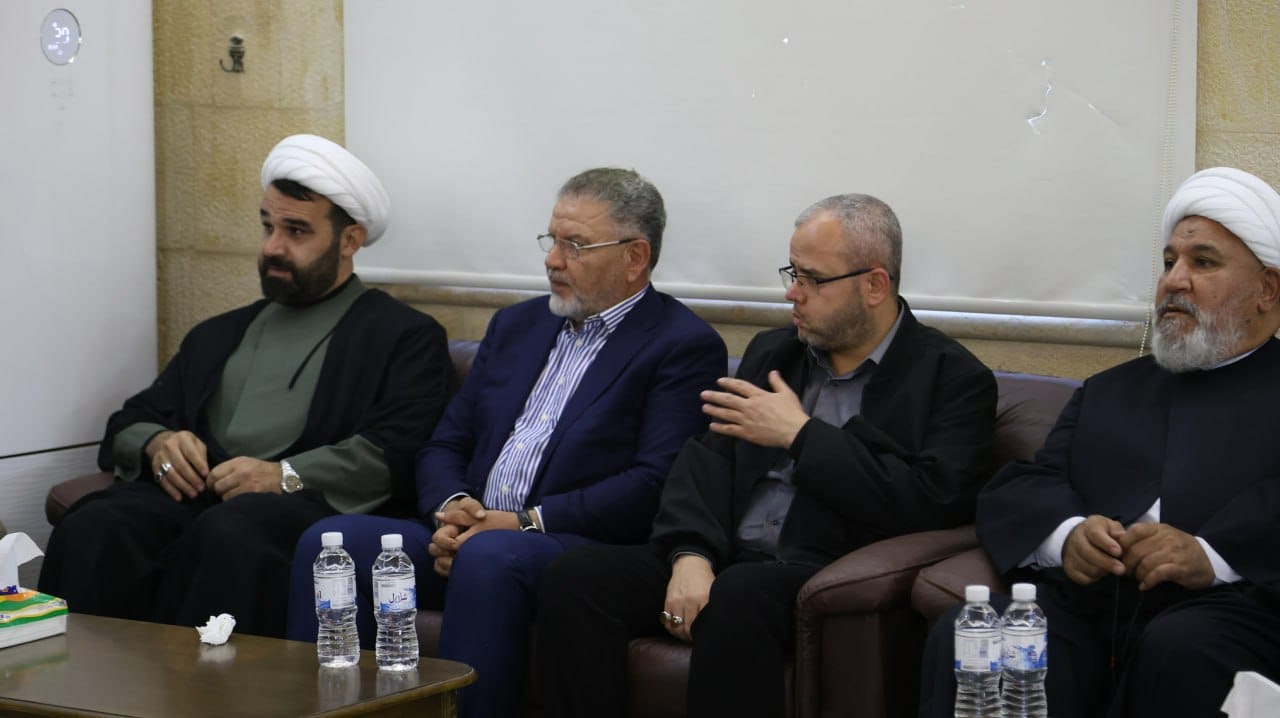
Manasseh from the south: Our goal is to recover the land
13:24 · 05 August 2026
9 min read
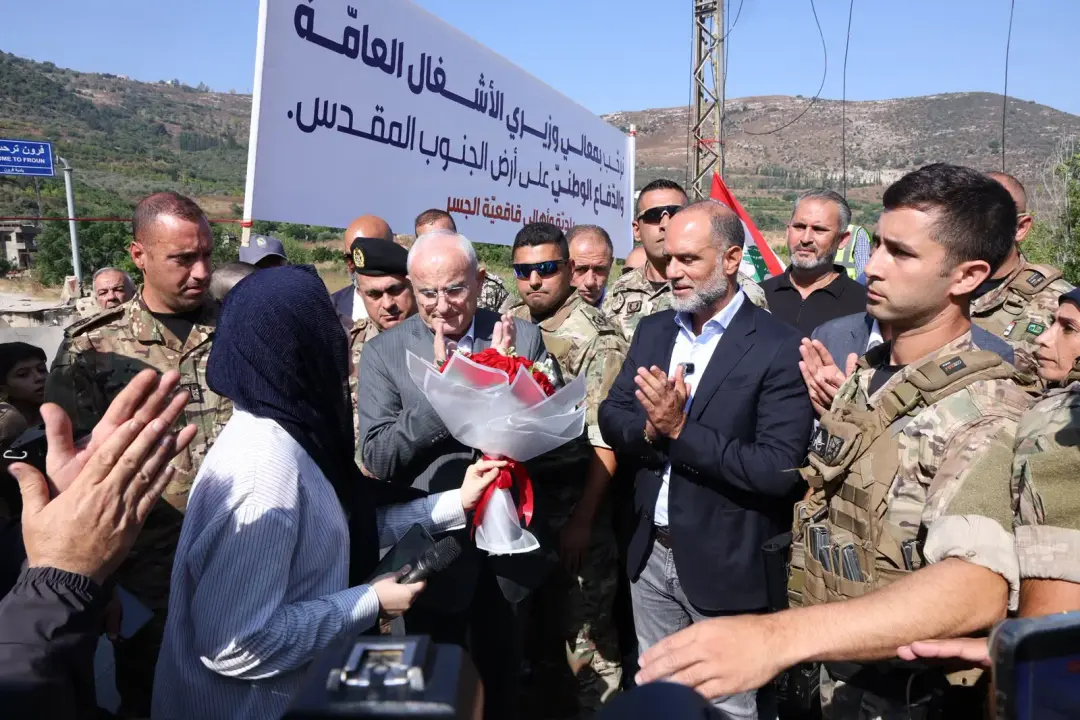
Minister of Public Works and Transport Fayez Rassamny and Minister of Defense Michel Mansour conducted a field tour in the south that included the towns of Qaqaiat al-Jisr and Zawtar al-Gharbiyeh, to inspect the extent of the damage left by the Israeli aggression on infrastructure, roads, and bridges, and to follow up on the executive steps aimed at rehabilitating them to enable residents to return and remain on their land.
Ministers Rassamny and Mansour began the tour at the Qaqaiat al-Jisr bridge, which was destroyed by Israeli airstrikes during the aggression of spring 2026. The bridge connects the Nabatieh region to the Bint Jbeil region. They were received by the mayors of the city of Nabatieh, Abbas Fakih Eddine; Qaqaiat al-Jisr, retired Brigadier General Adib Hallalawi; Froun, Hassan Bazzi; Al-Hmeiri, Fadl Berri; Director General of Roads and Buildings at the Ministry of Works, engineer Pierre Maalouf; Head of the Council of the South office in Nabatieh, Youssef Mehdi; Head of the Army Intelligence office in Nabatieh, Brigadier General Ali Ismail; Regional Director of the Ministry of Works in the South, engineer Haitham Bazzi; Head of the Road Implementation Department at the Ministry's Regional Directorate, Dr. Ali Najm; in addition to delegates from the consultant "Dar Al-Handasah," engineers Nazih Taleb and Imad Awada.
Hallalawi
Hallalawi welcomed the ministers, "Here on the Qaqaiat al-Jisr bridge, which the Israeli enemy wanted by its destruction to sever the ties of communication and gathering between the people of the south, but the will of the people of the south, despite Israeli malice and aggression, has returned to pump life and determination into this land. Today, with the presence of the state through the presence of Your Excellencies and the presence of many concerned ministries and institutions, and certainly through the presence of the army, the presence of reassurance and stability, we hope that the reconstruction workshop will start as quickly as possible—the reconstruction of homes, infrastructure, bridges, and roads, and this is what we are counting on today through your tour here."
Tour
The two ministers inspected the conditions of the destroyed bridge and listened to an explanation from those concerned about the reality of the site and the procedures decided to ensure the continuity of citizens' movement until it is permanently rebuilt, especially with the start of works on the temporary passage adjacent to the destroyed bridge to facilitate the movement of citizens in the area.
The Minister of Works stressed "the necessity and importance of completing the temporary passage at the destroyed bridge for what it provides to citizens in terms of the burden of moving between the Nabatieh and Bint Jbeil regions, and consequently rehabilitating and maintaining the retaining wall on the main road leading to the bridge, and launching the rehabilitation and maintenance workshop for main roads in the towns of Zawtar al-Gharbiyeh, Qaqaiat al-Jisr, Burj Qalaouie, Qalaouie, Srifa, and Al-Ghandouriyeh, in addition to rehabilitating the Al-Sawana road, which connects Qaqaiat al-Jisr to Zawtar al-Gharbiyeh and has become a vital road in light of the inability to reach Zawtar from the direction of Nabatieh al-Fawqa due to Israeli attacks on it."
Zawtar al-Gharbiyeh
Afterwards, the ministerial delegation and attendees moved to the town of Zawtar al-Gharbiyeh, where they were received by Mayor Abed Ezzedine, members of the municipal council, and mukhtars.
Ezzedine welcomed the ministers and the accompanying delegation to the town of Zawtar al-Gharbiyeh, "the stricken town upon which the Israeli enemy poured the full measure of its malice and tyranny, destroying its homes and erasing the features of its infrastructure. Today, Zawtar and its people welcome the return of state institutions and concerned ministries to work quickly and restore life to it by clearing rubble and reconstructing homes, institutions, and infrastructure. We thank you for your presence, and we hope that our town and neighboring towns will recover and that the traces of aggression and occupation will be lifted from them."
A tour was conducted in a number of the town's neighborhoods, most of whose homes were destroyed by the Israeli enemy, and whose infrastructure—especially the road network—suffered severe damage that the enemy deliberately removed and completely altered.
The two ministers met with citizens who had returned to the town amid the deployment of army units in the town's neighborhoods to establish protection and security and to remove suspicious objects left behind by the enemy. They also viewed from a distance the towns and sites occupied by the Israeli enemy located within what it calls the yellow zone.
Rassamny
Following the tour, Minister Rassamny spoke to journalists, considering that the south "has paid exorbitant prices in defense of the homeland, yet the will of its people has not broken, and the state will remain by their side until what has been demolished is rebuilt."
He stressed that "the Ministry of Public Works and Transport is not content with preparing studies or launching promises, but rather adopts field work, proceeding from the fact that reconstruction starts from the ground and from the actual response to the needs of citizens."
Rassamny pointed out that "the Council of Ministers approved, during the period of aggression, an emergency and comprehensive action plan to rehabilitate, open, and maintain damaged roads and rebuild destroyed bridges," explaining that "the ministry undertook the responsibility of reopening main and internal roads, reconnecting villages, and securing temporary crossings in place of destroyed bridges, ensuring that no town is isolated and that the movement of citizens, ambulances, civil defense, and security agencies continues."
He also commended "the cooperation between the Ministry of Public Works and Transport, the Lebanese Army Command, the Council of the South, and the municipalities," praising "the efforts exerted in opening roads and removing rubble," and affirming "the continuation of full coordination between the various concerned parties to ensure rapid intervention when needed."
He announced "the launch of the project to implement the temporary crossing at the Qaqaiat al-Jisr bridge on the Litani River, allowing the reconnection of Bint Jbeil district with Nabatieh district, and securing the movement of citizens, students, and patients until the bridge is permanently rebuilt." He also announced "the commencement of rebuilding the damaged retaining wall on the Qaqaiat al-Jisr main road, to preserve the readiness of the road and the safety of its users."
He pointed out that "the ministry will also begin rehabilitating and repairing potholes on public roads in the most damaged towns within the buffer zone, particularly in Al-Ghandouriyeh, Zawtar al-Gharbiyeh, Burj Qalaouie, Qalaouie, Srifa, and Froun, so as to restore infrastructure to its normal state and enhance public safety." He further announced "the inclusion of the project to rehabilitate and pave the Qaqaiat al-Jisr – Zawtar al-Gharbiyeh road (Al-Sawana area) within the Ministry of Public Works and Transport's program for the year 2026, given its importance in connecting towns, serving economic, agricultural, and social movement, and securing the safe movement of citizens."
He pointed out that "the ministry continues to prepare the necessary studies to rebuild damaged bridges and facilities, and is working to secure the necessary funding for their implementation according to national priorities and available capabilities."
He affirmed that "every road we reopen is a return to life, every bridge we rebuild is a bridge between the people and the state, and every wall we restore is a protection for citizens' livelihoods, security, and future," renewing "the ministry's commitment to continue executing its duties until the region restores its entire infrastructure."
Mansour
For his part, Minister Mansour said: "Our visit today embodies the state's commitment to extending its legitimacy across all Lebanese territory, and this makes us more driven to prove to the world that the state does not return merely through security, but rather returns through the concerted efforts of all ministries concerned with providing basic services for the return of citizens to their land—this sacred land that we will never abandon, and the state is returning to it to provide all services and requirements that accelerate the return of residents to their towns and villages."
He added: "The army is in constant readiness to reclaim the land. This land is ours and not anyone else's, and our goal is one, which is to reclaim our land. And how is that possible? I say this is our job, and for that reason, I left the outcome to the negotiations taking place, but rest assured that the land of the south will return to its people. I tell you from Zawtar al-Gharbiyeh that we, as the army—which is the spearhead of Lebanese legitimacy—and as long as the army is carrying out advances in the towns, this means that legitimacy is in place, and legitimacy is not complete, as I said, except through the concerted efforts of all ministries, with the army among them and at the forefront. Zawtar is returning today, and every grain of soil in the south will return to its people. It may take time, but it will return, and it is forbidden for a stranger to be in it. From here, our duty is to reclaim the land and hand it over to its people, who are the most deserving of living on it, while at the same time demanding that the state provide services and assistance."
At the end of the tour, the two ministers stressed the importance of continued coordination between various state institutions to pursue rehabilitation works, ensuring the enhancement of the resilience of the people of the south and securing the return of normal life to the affected towns as quickly as possible.
In this story:
Michel Menassa

← Previous article
Kim Yo Jong threatens "military options" in response to "Japan's ambitions"
Related Articles
Jumblatt: Lebanon-Israel negotiations will not bear fruit as long as Israel occupies the south
Hasbani: The Dahr al-Baidar incident is a gateway to implementing the government’s decisions regarding the party’s weapons

Contact between Al-Hajjar and his Saudi counterpart... enhancing joint cooperation between the two countries