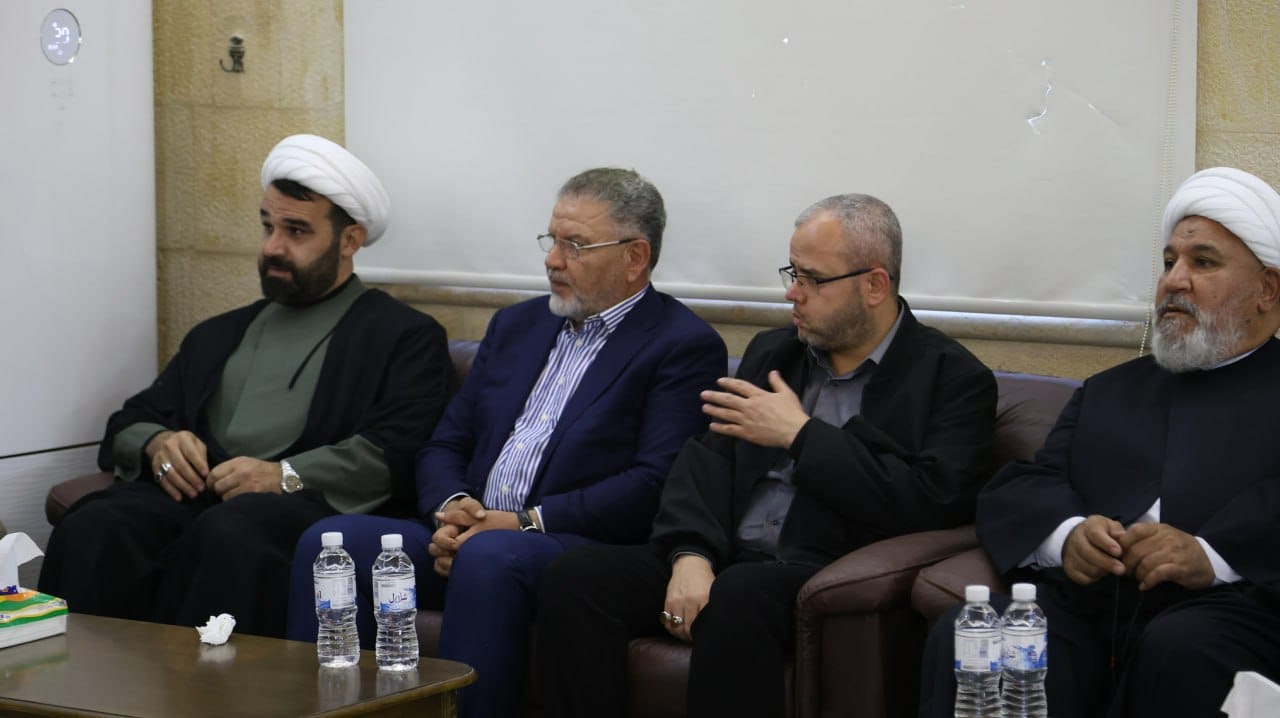
Berri: My relationship with Aoun is excellent... and Saudi Arabia loves me more than some Lebanese
08:58 · 26 July 2026
8 min read

Speaker of Parliament Nabih Berri received President Donald Trump's message in his own way: “Nabih Berri is a good man, and he will join the ongoing path when he sees the progress made,” to which he said: “It seems that President Trump understands me more than some Lebanese.” When “Assas” asked him how he read Trump's remarks, he said: “His remarks came in response to a question.” We interrupt: “Mr. Speaker, Trump interrupted President Aoun's remarks to say what he said,” and a smile appears on his face: “Whoever the Kingdom of Saudi Arabia loves, the whole world loves, and it seems that the Kingdom of Saudi Arabia loves me more than some Lebanese.” He adds: “I have always said it and I still do, we in Lebanon need a tripartite guarantee consisting of the Kingdom of Saudi Arabia, the United States of America, and Iran.”
What about Prince Yazeed?
He adds: “My relationship with the Kingdom of Saudi Arabia is steadfast, and throughout my political life, not a single offensive word has been issued by me against the Kingdom, because I believe in its love for Lebanon, its concern for it, and the centrality of its role in establishing national stability.”
He continues: “I have performed the Hajj pilgrimage three times, thank God. Every time, the brothers in the Kingdom of Saudi Arabia were keen to invite me, honor me, and take care of me. In the recent period, intensive contact has taken place with the brothers in the Kingdom of Saudi Arabia, especially with Prince Yazeed bin Farhan, who told me that they support the current path and are keen to make it succeed and follow it up with Washington.”
A special chemistry binds Prince Yazeed bin Farhan and President Nabih Berri, who describes the former as “a very intelligent man, who scrutinizes things to the point of exaggeration” (laughing).
Sitting at the Door of the State
President Nabih Berri does not love sitting on the riverbank, and he is not a forest ranger; rather, he has appointed himself—just as days, circumstances, and events have appointed him—to sit on a chair at the door of the state, guarding and nurturing it, to be always and forever its guarantor and the guarantor of coexistence within it.
Against this backdrop, he says: “My relationship with President Joseph Aoun is excellent. We disagree on some political viewpoints, but we are in constant contact. Before his travel to Washington, he called me, saying: ‘What do you advise me?’, so I told him: ‘I advise you to do two things: consolidate the ceasefire, achieve a comprehensive Israeli withdrawal, and the return of people to their villages and homes.’ When he returned from Washington, I called him to congratulate him on his safety, and I will visit him soon. My relationship with President Nawaf Salam is a permanent relationship filled with affection” (drawing a broad smile on his face).
President Nabih Berri does not oppose the current political path of the Presidents of the Republic and the Council of Ministers, but he is not optimistic about reaching decisive positive outcomes, and the root of his pessimism is time. He says: “What is happening in Zawtar El Gharbiyeh is the greatest proof of that. People waited for days until they were able to make a temporary entry into their villages, and the Israeli attacks are still ongoing, so how much time will we need to achieve a full Israeli withdrawal and the return of the southerners to their land?”
President Berri's positions, as a whole, reflect an attempt to draw a roadmap for the upcoming phase, based on establishing internal stability, reorganizing relations with Damascus, and maintaining openness to the capitals influential in the Lebanese file, foremost among them Riyadh and Washington, without ignoring the Iranian role.
This is what I told al-Shibani..
President Nabih Berri looks with great importance at the relationship between Sunnis and Shiites, not only in Lebanon, but across the Arab and Islamic worlds. He believes that the dispute between Sunnis and Shiites is unjustified, saying: “If all Sunnis said that Imam Ali is more rightful to the caliphate, what would the Shiites benefit? And if all Shiites said that Abu Bakr is more rightful to the caliphate, what would the Sunnis benefit? We are doomed to consensus in every place and time.”
He adds: “I have said it previously and I repeat it: I am Shiite in identity, Sunni in inclination, and Arab in destination,” then he reveals the details of the meeting that brought him together with Syrian Foreign Minister Asaad al-Shibani, stressing that the meeting was not protocolary, but was characterized by complete frankness and honesty from the first moment. He says that, contrary to his habit, he asked to start speaking himself before his guest spoke, out of a desire to put a set of facts before him before entering into any political discussion.
He clarifies that he recalled before the Syrian minister his long experience with the Syrian leadership, pointing out that his relationship with the late President Hafez al-Assad extended for about twenty-five years, and was, as he described it, an excellent relationship based on trust and communication.
In contrast, he stresses that his relationship with former President Bashar al-Assad was characterized by tension and coldness for more than twelve years during which he did not visit Damascus, explaining that the main reason for that was his refusal to get involved in the Syrian war, saying: “I am the only Shiite in the Arab world who did not get involved in the war inside Syria, a position for which I paid the price at the level of the political relationship with Damascus at the time.”
Advice to the New Syrian Leadership
Proceeding from this experience, Berri says that he directed a set of advice to Minister al-Shibani that he considered necessary for the success of the new phase in Syria:
1- The necessity of avoiding entering into a confrontation with any Syrian component, especially the Alawite sect, calling for absorbing it and involving it in state institutions, because building the new Syria, in his opinion, cannot be based on exclusion or revenge, and Syrians must not commit the mistake of the Iraqis after the fall of Saddam.
2- Syrian Christians are afraid, and they must be reassured and their presence protected, because they constitute an essential part of Syria's history and national fabric. Christians in Syria are more numerous than Christians in Lebanon, and preserving religious diversity constitutes a factor of stability for the Syrian state.
3- Shiite citizens in Syria have no worries; the new Syrian administration will deal with them as full-fledged citizens, just like the rest of the Syrian people.
President Berri's talk was not limited to the internal Syrian reality, but moved to the future of the Lebanese-Syrian relationship, setting a clear vision for organizing it during the upcoming phase.
Lebanese-Syrian Relations are Foundational
He believes that the success of the relationship between the two countries begins with addressing three basic issues, represented in controlling the joint borders and putting an end to smuggling operations, completing the demarcation of the land and maritime borders in a way that prevents any future conflicts, in addition to respect by both Lebanon and Syria for each other's sovereignty and non-interference by either in the internal affairs of the other.
He considers that these files represent the real gateway to building a stable and normal relationship between the two countries, away from the bickering that marked past decades.
Berri concludes his talk with al-Shibani, as he revealed, by saying: “Lebanon is bordered by Palestinian lands to the south, the sea to the west, and Syria to the east, and if Lebanese-Syrian relations are not in their best state, we will all jump into the sea and drown together,” in reference to the geographical and political interdependence that makes the stability of the two countries a mutual interest.
Whoever leaves Ain el-Tineh must carry an integrated picture of President Berri's comprehensive approach, which is based on keeping communication channels with various influential capitals, in parallel with a call to organize Lebanese-Syrian relations on new foundations, and enhancing internal partnership among the Lebanese, considering that any political stability will not be viable without internal consensus, Arab cover, and international accompaniment, in a phase that many describe as one of the most sensitive phases in Lebanon's history.
Source
زياد عيتاني - "أساس ميديا"
Tags:
Islamic Republic of Iran
Kingdom of Saudi Arabia
United States of America
Joseph Aoun
Donald Trump
Nabih Berri
Washington

← Previous article
Trump suspends strikes on Iran
Related Articles
Jumblatt: Lebanon-Israel negotiations will not bear fruit as long as Israel occupies the south
Hasbani: The Dahr al-Baidar incident is a gateway to implementing the government’s decisions regarding the party’s weapons
Contact between Al-Hajjar and his Saudi counterpart... enhancing joint cooperation between the two countries