Aoun in Washington...Lebanon's moment
09:08 · 18 July 2026
4 min read

President Joseph Aoun is heading to the White House on an official visit, the first by a Lebanese president since 2010, in a political and diplomatic stop that comes at a delicate phase experienced by Lebanon and the region. In an exceptional political and diplomatic stop that reflects the importance of the phase Lebanon is passing through, and the scale of American interest in its future. Hence, the anticipated visit of President General Joseph Aoun to Washington acquires an importance that transcends the framework of bilateral relations, to turn into a pivotal stop that may draw the contours of the coming phase at the political, security, and economic levels.
Aoun's visit comes at a highly sensitive timing, amidst rapid transformations witnessed by the Middle East, and the shift of international attention toward cementing stability and reshaping new security and political arrangements in the region. In this context, Lebanon occupies a pivotal position, given that its stability is linked to the security of the Eastern Mediterranean, and to the path led by the United States to cement calm on the southern border, and to accompany the implementation of existing understandings, in a way that preserves Lebanon's sovereignty and security and prevents the region from sliding into a new confrontation.
The importance of the visit is not limited to its political symbolism, but also lies in the fact that it is the first official meeting between President Joseph Aoun and US President Donald Trump, which grants it a strategic dimension reflecting the desire of the two sides to turn a new page of cooperation, and to reactivate the Lebanese-American partnership in political, security, and economic files.
Essential files are expected to top the talks, foremost among them cementing stability on the southern border, completing the implementation of security understandings, and supporting the Lebanese Army as the legitimate institution tasked with protecting the homeland and defending its sovereignty, in addition to discussing ways to enhance security and military cooperation, in a way that consolidates the role of the state and its institutions.
In parallel, the economic file will be present strongly on the agenda, in light of Lebanon's need to restore the international community's confidence, attract investments, and secure the necessary support to keep pace with financial, administrative, and judicial reforms. Any progress in this field would constitute a positive message to markets and international financial institutions, and enhance the chances of launching a new phase of economic recovery, after accumulated crises heavily burdened the state and citizens.
The visit also acquires special importance in light of the renewed Arab openness toward Lebanon, particularly after the positive steps witnessed in relations with the Kingdom of Saudi Arabia and a number of Gulf countries. This regional climate grants Lebanon an opportunity to re-cement its position within its Arab surroundings, in parallel with enhancing its international partnerships, which contributes to restoring political and economic confidence in the Lebanese state's ability to rise from its crises.
President Aoun is expected to carry to Washington a vision based on a set of national constants, foremost among them consolidating state sovereignty, enhancing the role of legitimate institutions, implementing the constitution, committing to international legitimacy, and adopting dialogue and diplomacy to address conflicts, alongside affirming that stability constitutes the essential gateway to any economic reform or developmental rise.
In return, the visit represents an opportunity for the United States to reaffirm its support for Lebanon and its legitimate institutions, foremost among them the Lebanese Army, and to continue accompanying the path of reforms, encouraging investments, and enhancing cooperation in the fields of energy, infrastructure, technology, and education, in a way that consolidates the foundations of a long-term partnership between the two countries.
The importance of this visit is not limited to the political positions that may result from it, but also lies in the messages it carries to the interior and abroad. It affirms that Lebanon seeks to restore its presence through its constitutional institutions, and that diplomacy has become the primary option for addressing major national files, away from the logic of open confrontations that heavily burdened the country over decades.
In the end, the success of the visit will not be measured by the number of meetings or statements that will be issued from it, but by its ability to turn international interest in Lebanon into practical steps that enhance state sovereignty, support its institutions, restart the economic wheel, and consecrate stability. If it succeeds in achieving this goal, it may constitute the beginning of a new phase whose title is restoring confidence in Lebanon, and consolidating its position as an active partner in its Arab surroundings and on the international arena.
Source
جو رحال_ نداء الوطن

← Previous article
A 5-magnitude earthquake strikes Malatya, southeastern Türkiye
Related Articles

Jumblatt: Lebanon-Israel negotiations will not bear fruit as long as Israel occupies the south
Hasbani: The Dahr al-Baidar incident is a gateway to implementing the government’s decisions regarding the party’s weapons
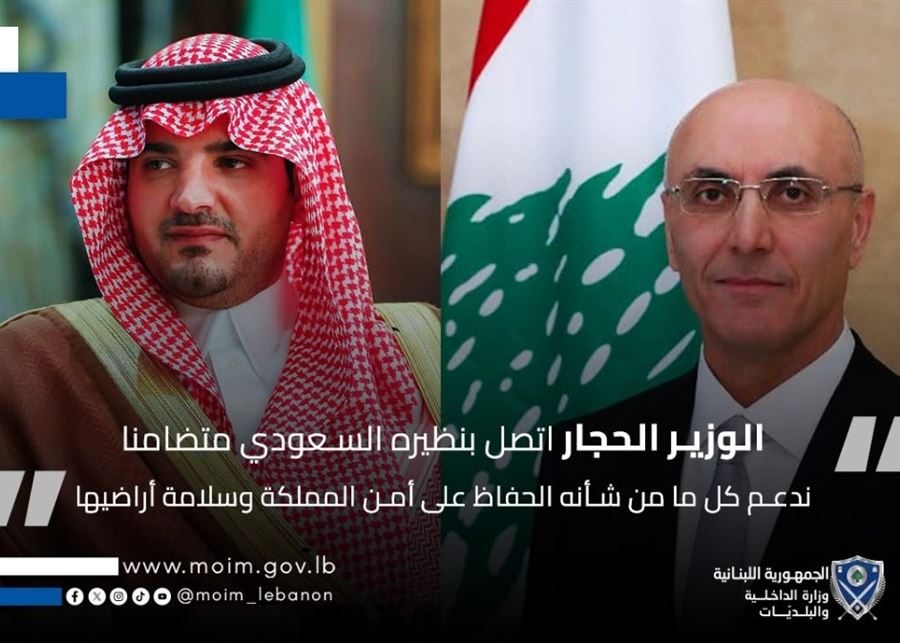
Contact between Al-Hajjar and his Saudi counterpart... enhancing joint cooperation between the two countries