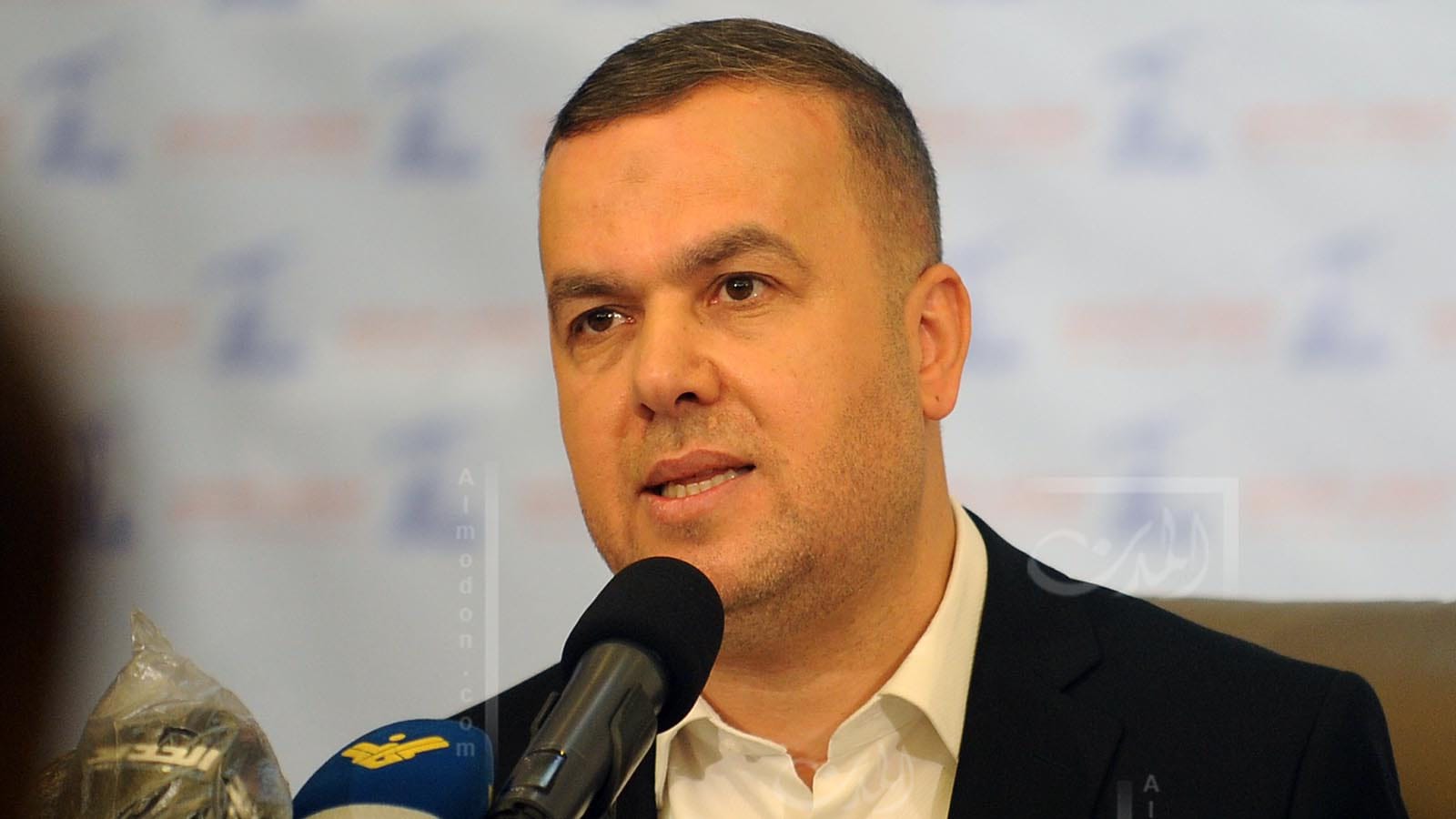
Al-Shaibani from Maarab: We are keen to support Lebanon’s stability
20:32 · 02 July 2026
6 min read
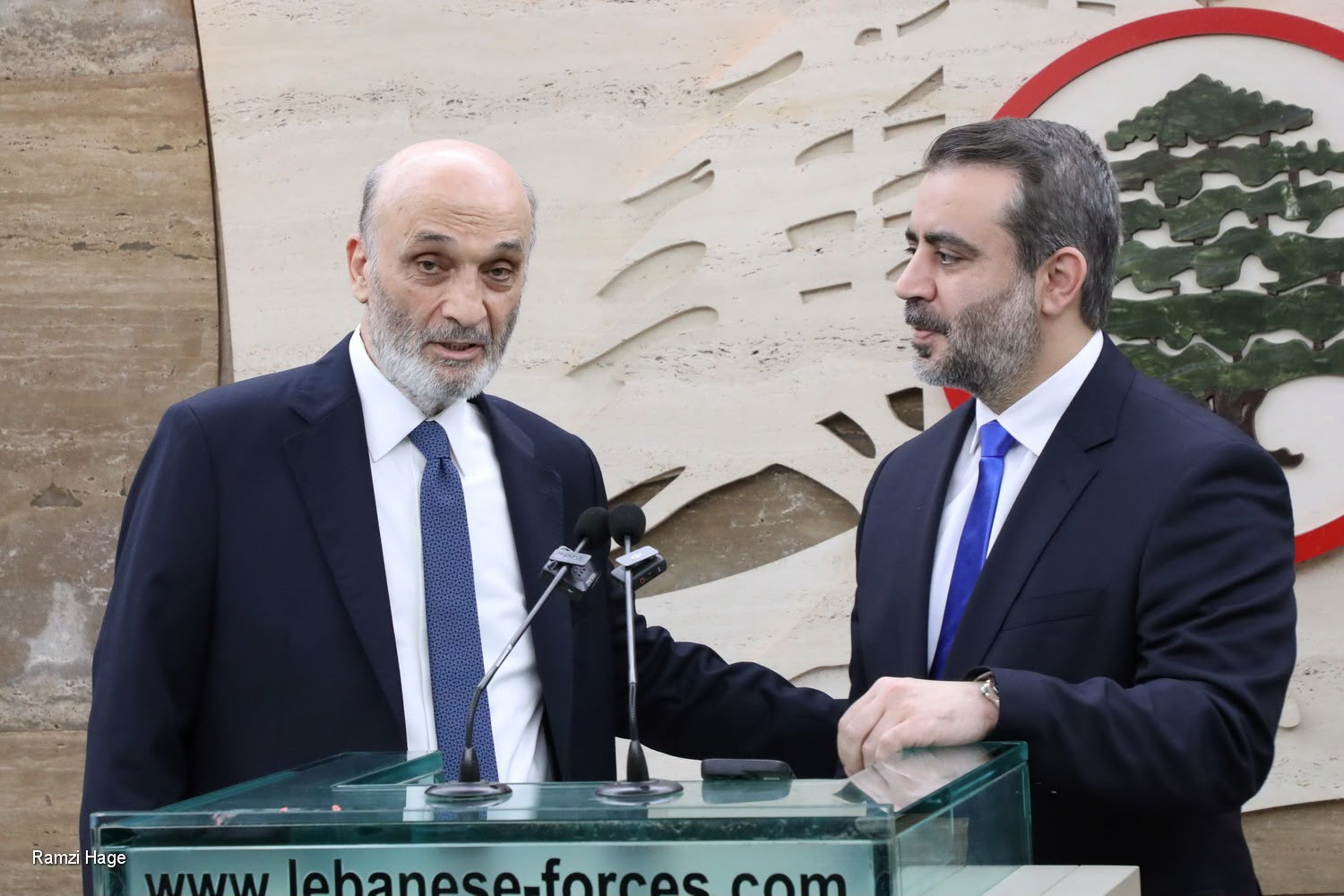
Lebanese Forces party leader Samir Geagea hosted Syrian Foreign Minister Asaad al-Shaibani in Maarab, accompanied by the Chargé d'Affaires of the Embassy of the Syrian Arab Republic in Beirut Iyad al-Hazzar, al-Shaibani's advisor for Arab affairs Mohammad al-Ahmad, the Director of Consular Affairs at the Syrian Ministry of Foreign Affairs Mohammad al-Omar, the Director of American Affairs at the Syrian Foreign Ministry Saad Baroud, the Director of Diplomatic Representation at the Syrian Foreign Ministry Obeida al-Arnut, al-Shaibani's office manager Obada Diab, and the Director of Information at the Syrian Foreign Ministry Abdallah al-Hakka. The meeting was attended by Strong Republic bloc MPs Pierre Bou Assi, Melhem Riachi, and Elie Khoury, Executive Committee member in the "Forces" Joseph Jubaili, and Roger Rajeh from the party's Foreign Relations Department.
Following the meeting, which lasted for about an hour and was followed by a closed-door session bringing together Geagea and al-Shaibani, the Syrian guest thanked the "Forces leader" for hosting him and stressed that "the discussion was transparent and keen on the interest of Syria and Lebanon, expressing Syria's readiness to stand by Lebanon in all files that serve the interest of its stability and that reflect on Syria's interest."
He added: "Today, we signed the launch of the joint high-level governmental committee to activate economic and trade partnerships between Syria and Lebanon as well. We are keen to support Lebanon regarding security and political stability."
Al-Shaibani expressed hope that the relationship with the "Lebanese Forces" would develop to be crowned with mutual visits, whether in Damascus or in Beirut.
After welcoming Minister al-Shaibani, Geagea emphasized that this meeting for him was not merely a political gathering, especially since for a long time we have not witnessed this kind of rapprochement between the Lebanese and Syrian peoples after the former regime "obliterated" any affection, amity, or positivity between them.
He pointed out the necessity of strengthening the relationship between the two countries, especially since they are independent "neighboring" states and must respect this principle for the sake of the two peoples' interests.
He praised this meeting, reiterating his congratulations to the Syrian people, even if slightly late, on their deliverance from the "Stations of the Cross" that lasted for more than 55 years. He said: "I cannot imagine that any people in the world suffered like the Syrian people under the former regime; therefore, congratulations to them on a new Syria and a new regime with more success and brilliance."
In response to a question about the "framework agreement" between Lebanon and Israel, Geagea considered that we are witnessing confusion and deception of public opinion, and therefore things must be put in their proper framework. He said: "Some consider that this agreement is worse than the May 17 agreement, but here I say: If these some had not dropped the May 17 agreement, the situation would have been different, and we would have spared Lebanon and its people 45 years of wars and problems, knowing that we did not succeed in achieving any step forward in all directions, even in the Palestinian cause; consequently, whoever dropped the May 17 agreement committed a major crime."
Once again, Geagea sent a great tribute to President of the Republic Joseph Aoun and Prime Minister Nawaf Salam for their efforts, as "for decades we have not seen official officials putting themselves at the forefront to save Lebanon. Therefore, we continued for about 50 years as we were, from here I address them with the phrase: '... and the caravan moves on.'"
He added: "And since Lebanon today is in a very big predicament, what more do you want than for Israel to occupy more than 60 Lebanese villages? What more do you want than for the balance of power in the entire Middle East to be disrupted as it is today? Here there is also a question: when the "Manaa" (pro-axis) group, headed by "Hezbollah," does not want this agreement, why did it stop fighting, since it is not bound by the ceasefire decision? We must address matters realistically and logically; if this agreement is bad, let it continue fighting. For it is not the Lebanese state that is fighting, but Hezbollah."
He continued: "And there is another group, which is 'smarter,' proposing to rely on the Islamabad track, which is directly linked to the interests of Iran and the United States and not to the interest of Lebanon. Here I remind you that this track started in April and did not lead to a ceasefire in Lebanon because Iran does not care about Lebanon's interest, but rather about strengthening its influence in the region, and this is what got us into a thousand and one predicaments for 50 years. At best, the Islamabad track will return us to the pre-war phase or keep us in the current situation. Consequently, we have no options: either surrender the country to Iran, or continue fighting, or accept the framework agreement 'with whatever can come out of it,' even if we are not completely satisfied with it, but it is the only one available today to end the state of war and secure a minimum level of stability."
In response to a question, the "Forces leader" affirmed that "there is no repetition of 'February 6' or 'March 7,' and in any case, those who accomplished February 6 were the Assad regime in Syria, which has completely vanished, along with the influence of internal focal points that have currently disappeared, and all these are 'internal bravados that we are done with.'"
As for the message he entrusted to Syrian President Ahmed al-Sharaa, he replied: "My message was limited to the necessity of continuing to pursue the same policy currently followed with Lebanon, as a sovereign, free, independent country that must be dealt with according to this basis, in addition to helping Lebanon rid itself of Iranian influence by, for example but not limited to, completely withdrawing Lebanon from the Islamabad track." He considered that this track will place Lebanon on the international dissecting table in the game of interests between America and Iran, while the only beneficial track for our country is the Lebanese track currently taking place in Washington, in which the Lebanese government is negotiating."
When asked if he asked the Syrian minister to help Lebanon disarm Hezbollah, Geagea reiterated that the Syrian side is a friend, but the Lebanese state must deal with its problems by itself.
Asked about an upcoming visit of his to Syria, he sufficed to say: "We'll leave it for its time."
More from:
Beirut news
← Previous article
Aoun: We are committed to restricting weapons
Related Articles
“I am fed up with this kind of thing.” Geagea: The Dahr al-Baydar explosives threaten national security.

Al-Ahrar: Our positions are issued exclusively through our well-known official channels
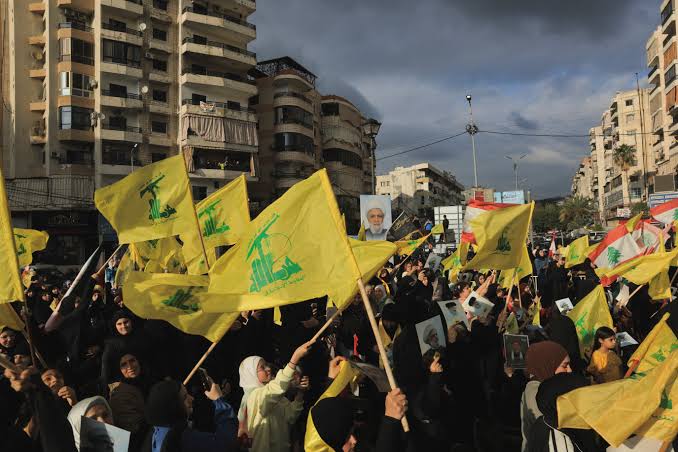
After the Semaan Gallery incident... Hezbollah clarifies: We have no connection to the warehouse