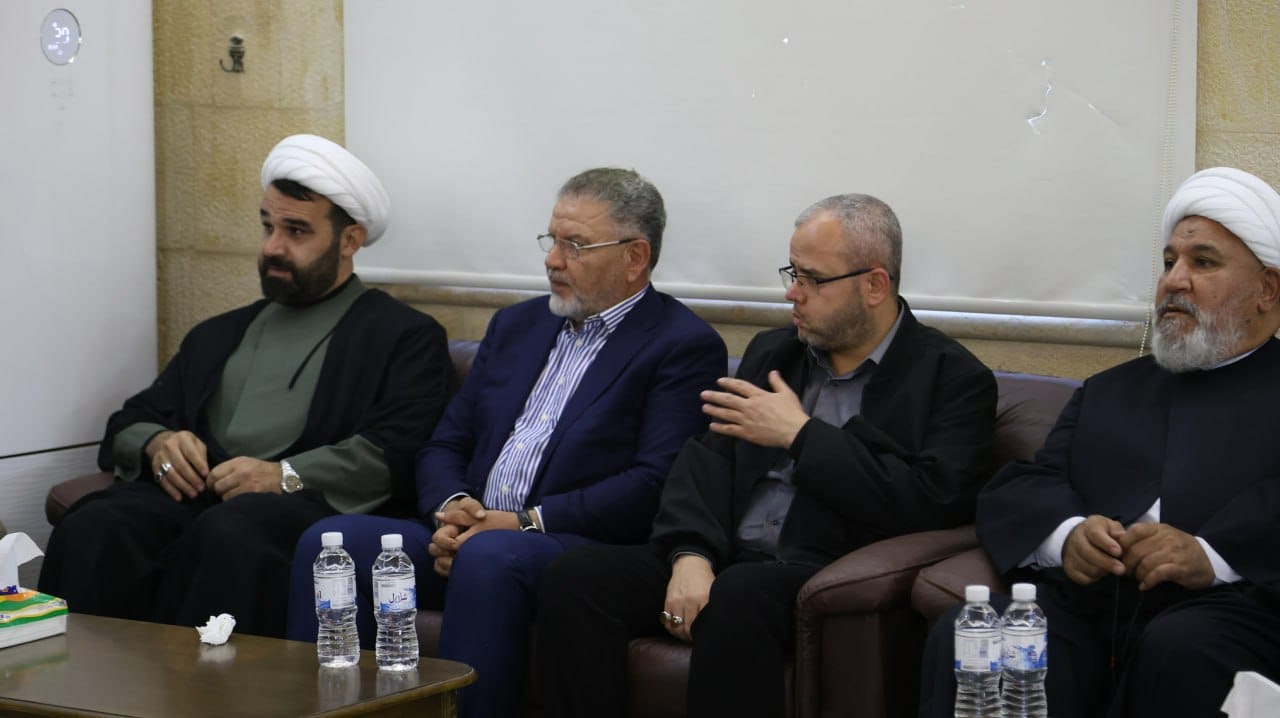
Salam explains the meaning of the "Framework Agreement": It leads to complete Israeli withdrawal and safe return of the displaced
05:46 · 02 July 2026
5 min read

Prime Minister Nawaf Salam noted that "the phrase 'Framework Agreement' is a source of confusion," and said: "We are talking about a guiding framework for negotiations to determine their path, with the goal of reaching an agreement, not an agreement or a treaty, and we are not amateurs of negotiations, but we reached this stage after two wars that left thousands of victims and the first caused direct damage exceeding 7 billion dollars without calculating the economic losses estimated at about 13 billion."
Salam added in an interview via LBCI station that "if the framework is applied, it is supposed to lead to the Israeli withdrawal from Lebanon and allow the return of our displaced people to their villages and homes a safe and dignified return, our goal is the return of the southerners to their homes and stopping the bleeding, and the second war caused more than five thousand martyrs in a retaliatory war linked to Khamenei."
He addressed the people of the South, saying: "What is the difference between redeployment outside Lebanese territory and withdrawal? The framework stipulates deployment outside the territory and it was defined with the definite article, meaning all territory, and this means a withdrawal."
Salam continued: "If we understand that this is a 'framework' that determines the course of negotiations, the issue of withdrawal takes place according to a timetable, and our priority of work is to set a timetable in the coming rounds of negotiations."
In response to the former President of the Progressive Socialist Party, the Prime Minister said: "I understand his apprehension, and the 'Armistice Agreement' is a fundamental reference, and what remains of it are principles upon which it was established, and in order for it to become executable, it must be updated."
He pointed out that "the declaration of cessation of hostilities in 2024 did not stipulate the armistice agreement either, and 1701 refers once to the armistice agreement but only to define the borders."
Salam said, "Aside from the two support adventures and the catastrophic results, and some call them victories, while we see the number of victims and the cost of reconstruction, which is a catastrophe, and before that since the Taif Agreement we have been calling for extending the state's authority over all its territories."
He explained that "the parties that open fire are the ones that stop the fire, and from the first day I contacted the Prime Minister of Pakistan and asked him to work for a ceasefire, and we saluted the agreement at the time, and I was the first to welcome the Islamabad process for a ceasefire."
He continued: "There is the Islamabad process and the ceasefire process, and here the question is: Who stops the fire? Not Lebanon, but whoever fires it, meaning Hezbollah and the Revolutionary Guard according to their statements, and the party that must stop the fire is this party and not me."
He considered that "there is an amount of inaccuracies about the Islamabad agreement including the issue of an Israeli withdrawal from Lebanon within 60 days, but it is not mentioned in the text."
Salam affirmed: "We are continuing the process of documenting what we consider a violation of international humanitarian law, and this is what Deputy Prime Minister Tariq Mitri is doing in Geneva, and if the negotiations deviate from their course, this constitutes a weapon in our hand."
He also affirmed that "the goal of the framework is clear, which is the complete withdrawal of the Israeli and the complete return of the people of the South, which allows for reconstruction."
Salam stressed that "neither the President of the Republic nor the Prime Minister can negotiate outside the constants and the ministerial statement."
He said: "I contacted President Berri and thanked him for his intervention to prevent strife and the transfer of matters to the street," noting that "President Berri is keen that we deal with any negotiation path through dialogue, and this is the substance of the call."
He added that "within days, the Israeli withdrawal will take place from the area of Zawtar el-Gharbiyeh and Zawtar el-Charqiyeh and a number of other villages, and the second area its situation is different, as there is no Israeli presence in it with tanks, but it is controlled by fire, and it includes Ghandouriyeh and Froun," explaining that every area from which the Lebanese Army withdraws, the Lebanese Army will enter and extend its authority.
Salam stressed that "we do not seek a clash with Hezbollah, and we must seek to prevent an armed clash with him, but we will not submit to blackmail and the threat of civil war, and we will not back down from restricting arms."
He pointed out that "disrupting the army, as President Berri said, is a second strife, and the political authority takes decisions and the army must implement them."
Salam explained, "For weeks we have been working on preparing the return of the people to their homes and lands in the South and in all fields related to infrastructure and we have plans for every region."
He added: "We are working to restore the communications network in the South within ten days to about 90% of what it was before the war."
He continued: "We will work to secure ready-made houses to be placed in the villages from which Israel withdraws to anchor the people in their land until reconstruction is completed."
More from:
South Lebanon news

← Previous article
England eliminates Congo and qualifies for the round of 16
Related Articles
Jumblatt: Lebanon-Israel negotiations will not bear fruit as long as Israel occupies the south
Hasbani: The Dahr al-Baidar incident is a gateway to implementing the government’s decisions regarding the party’s weapons
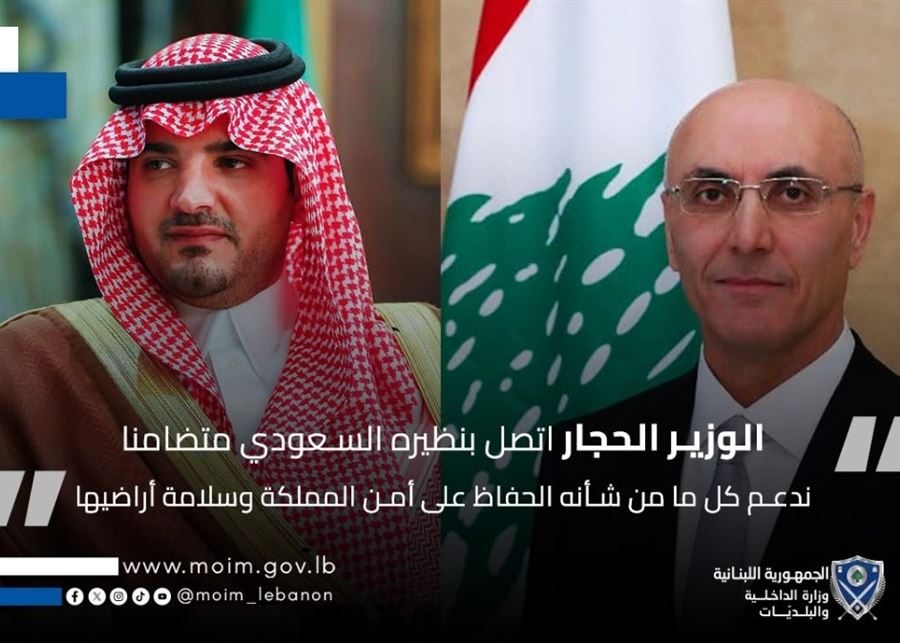
Contact between Al-Hajjar and his Saudi counterpart... enhancing joint cooperation between the two countries