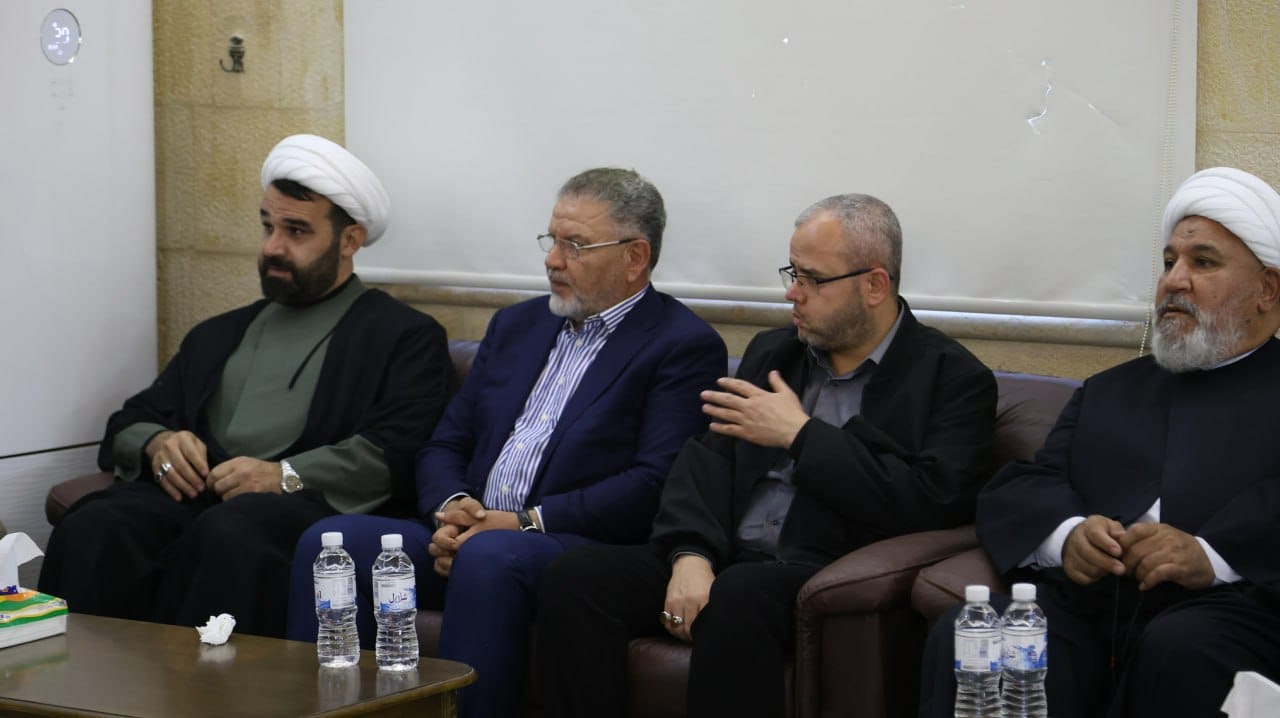
Berri: The framework agreement will not pass!
21:05 · 28 June 2026
4 min read

Speaker of Parliament Nabih Berri commented on the framework agreement between Lebanon and Israel, considering that "it is against itself and cannot be implemented."
He stated that "the majority of Lebanese and non-Lebanese are against this agreement; neither the conditions for its success exist nor is its application possible," pointing out that "Lebanon still adheres to the resolutions of the Arab League, and cannot enter into any agreement of this kind before other Arab countries, just as there are many previous agreements that cannot be abandoned." He added that "there is an existing agreement, which is the agreement of November 27, 2024, and it cannot be abandoned or bypassed, and there is a clear Iranian-American agreement that mentions Lebanon by name three times and can be relied upon."
Berri affirmed his position rejecting the agreement, considering that "the most important thing for him is how to improve the internal stance, restore credibility to internal unity, and prevent any division, fragmentation, or sedition." He saw that "this agreement was designed to sow sedition among the Lebanese, which he will not accept or allow to happen," stressing "the necessity of preserving stability and working within the institutional framework to set things right."
He clarified that "what concerns him is that Lebanon does not pay the price for external conflicts between countries or within some countries on its territory, and Lebanon cannot bear the costs of political projects and ambitions that constitute a starting point for Israeli or American calculations at the electoral level."
Berri considered that "insisting on proceeding with this agreement is an attempt to block what Lebanon could have benefited from in the Islamabad track." He pointed out that "he had just received a call from Iranian Parliament Speaker Mohammad Bagher Ghalibaf, in which he indicated that the Iranians adhere to the inclusion of Lebanon in the agreement with the United States of America, and that Iran will continue to press the Americans not to bypass what was issued in the Iranian-American memorandum of understanding. What the Iranians are announcing is that they are continuing to work to completely halt Israeli military operations in southern Lebanon and the Israeli withdrawal from it, just as they previously worked to neutralize Beirut and the southern suburbs during their negotiations with the United States of America."
Berri stressed that "this agreement cannot pass or be implemented, as it is outside the limits of logic and outside the context of Arab and international positions," affirming that "the basis is to restore credibility to the unity of the internal stance and understanding among the Lebanese, to prevent Israel from achieving its goals through war, sedition, or internal conflict."
He also praised the objecting stances against the agreement, saying that "a political atmosphere is beginning to crystallize in Lebanon and form against it," and he did not deny his complete and total agreement in positions with Walid Jumblatt.
Speaker Berri praised Walid Jumblatt's position, noting that he called him to thank him for it, and said that he is "the owner of the clearest position; in a few words, he said what was necessary to describe the agreement as unilateral."
He added that "Jumblatt does not lose his compass and has taken excellent positions in this ordeal and this war, from embracing the displaced to the political expression of his positions seeking to bring viewpoints closer and present proposals and initiatives from Lebanon to Syria in a manner that preserves the security of both countries."
Berri also praised all positions objecting to the agreement, including the positions of the Association of Muslim Scholars and the Islamic Group, pointing out that the main task for the Israelis is to sow sedition in Lebanon or between Lebanon and Syria to reignite the Sunni-Shiite war, but what is evident to him is that this war or sedition is rejected, and no one wants it.
Berri pointed out that the Israeli project poses a danger to Arab countries as a whole and not just to Lebanon, stressing that "Lebanon must fortify itself with Arab, regional, and international positions that can provide elements of protection."
He said that "the threat to Lebanon is a threat to Arab countries, and the occupation of its south poses a danger not only to it but to Syria as well."
He considered that "all Israeli attempts are to create sedition between the Lebanese or between Lebanon and Syria, which the Lebanese and Syrians want to completely bypass and not fall into any Israeli trap," pointing out that "Israel wants to distance itself from the battle to avoid incurring losses in exchange for dragging the Lebanese into confronting one another or investing in divisions to expand its occupation and influence, and this is what it sought in Syria as well."
Source
المدن
← Previous article
Abdel Ati: Israeli withdrawal is the key to stability in Lebanon
Related Articles

Jumblatt: Lebanon-Israel negotiations will not bear fruit as long as Israel occupies the south

Hasbani: The Dahr al-Baidar incident is a gateway to implementing the government’s decisions regarding the party’s weapons

Contact between Al-Hajjar and his Saudi counterpart... enhancing joint cooperation between the two countries