Cables, plastic, and thick smoke... What happened in the Ogero warehouses?
15:46 · 24 June 2026
4 min read
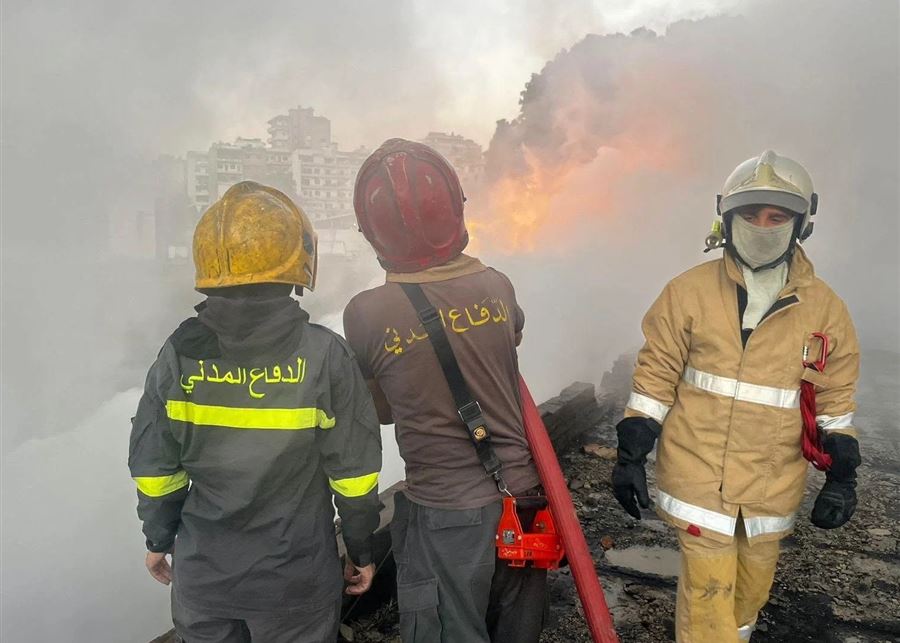
Lebanese Civil Defense elements managed to control the large fire that broke out in the Ogero warehouses in the Dikwaneh area – Matn district, after noon yesterday, Tuesday, in a wide-scale operation involving dozens of teams and vehicles, and it continues to this hour through cooling operations to prevent the fire from reigniting.
The General Directorate of Civil Defense stated that controlling the fire took more than 5 hours.
It indicated that Civil Defense elements continued cooling operations throughout last night, and these operations are still ongoing, as specialized teams are working to open passages within the fire zone and cool the remaining debris and flammable materials to ensure the fire does not reignite.
The statement confirmed that the smoke rising from the site is due to the ongoing cooling operations, following the fire that consumed large quantities of electrical cables, wires, telephone cables, and plastic materials, which led to dense smoke and the expansion of the fire.
During the operations, 8 Civil Defense elements sustained various injuries; 6 of them received the necessary treatment and left the hospital, while 2 injured remain under treatment, and their condition has been described as stable.
The General Directorate of Lebanese Civil Defense indicated that it mobilized its human and logistical capabilities to confront the fire, as 65 teams belonging to the Lebanese Civil Defense participated in the operations, brought in from various Lebanese regions, backed by about 500 personnel specialized in firefighting, ambulance, and rescue, in addition to 98 specialized vehicles and equipment.
Operations continued uninterrupted, as field teams worked to contain the fire, isolate flammable materials, and remove burning materials, in parallel with opening passages within the fire zone to reach hot spots, debris, and flammable materials, which prevented the fire from spreading to neighboring sites.
The central operations room at the General Directorate of Lebanese Civil Defense also followed the course of the fire around the clock, and maintained continuous coordination with the field teams deployed on the ground, which contributed to the sound management of operations and the direction of resources according to intervention requirements.
Minister of Interior and Municipalities Ahmad al-Hajjar monitored the progress of the firefighting and cooling operations through direct contacts with the Director General of the Lebanese Civil Defense, Brigadier General Imad Khoreich, to be briefed on the developments of the field situation, in light of the size of the fire and what it required in terms of extensive coordination between the concerned agencies.
Brigadier General Imad Khoreich followed the work in the field throughout the intervention period until the fire was controlled, and thanked all the personnel participating in the firefighting and cooling operations, praising the great efforts they exerted and the dedication they showed throughout the intervention period.
Khoreich also thanked the Lebanese Army command for its support through military helicopters, the Beirut Fire Brigade, the Municipality of Dikwaneh, the municipalities and citizens who contributed to securing water, the media, and everyone who contributed to supporting the firefighting efforts and making them a success.
This fire gains additional sensitivity as it broke out in warehouses belonging to Ogero, where fire hazards overlap with the nature of the materials present at the site, especially cables, wires, and plastic materials, which are materials whose combustion leads to dense smoke and strong odors and requires careful handling that extends beyond extinguishing the fire.
The cooling phase in such fires is essential, because apparent control over the flames does not mean the complete end of danger, as hot spots and flammable debris remain capable of reigniting the fire if not handled precisely, which explains the continued presence of Civil Defense teams inside the fire zone and the opening of passages to reach the most dangerous points.
The fire also shed light again on the importance of prevention and safety plans within vital facilities and warehouses, especially those related to the telecommunications sector, due to this sector's essential role in the continuation of public services and connecting citizens with institutions, and because of the repercussions any major incident in it might cause that exceed the boundaries of the affected site.
While cooling and treatment operations continue, preventing the renewal of the fire and containing the effects of the smoke remain a field priority, pending the completion of the specialized teams' cooling of the entire affected area and ensuring the final disappearance of the danger.
In this story:
Ahmad al-Hajjar
More from:
Metn news

← Previous article
Katz: We will not withdraw even if Washington asks
Related Articles
The Public Works is constructing two temporary crossings in Burj Rahal and Tairfalsiyeh to mitigate the impact of the destruction of the bridges
Aoun from Tripoli: Division does not protect anyone... and Lebanon’s interest is above all accounts

In the interest of preserving institutions... Mohamed Hazma is reluctant to accept his appointment as governor of Nabatieh