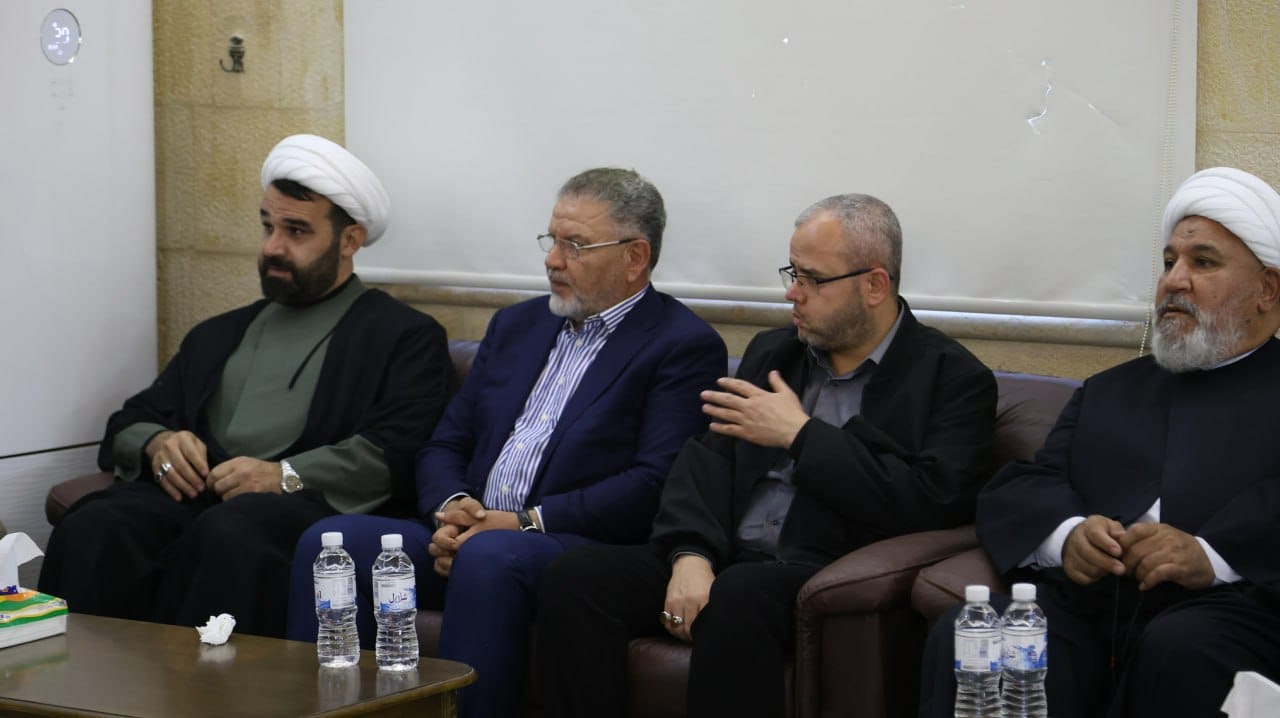
Franjieh is in the penalty area
20:52 · 18 June 2026
4 min read

The US Department of the Treasury, through the Office of Foreign Assets Control (OFAC), announced the imposition of a new package of sanctions targeting Lebanese officials allied with Hezbollah, as well as individuals and companies within a business and financial network linked to the party, in a move it said aims to increase pressure on the financial infrastructure upon which the party relies inside Lebanon and abroad.
The ministry stated that the new sanctions include Marada Movement leader Suleiman Frangieh and Hezbollah Politburo Vice Chairman Mahmoud Qmati, accusing them of contributing to the reinforcement of the party's influence within Lebanese political and security institutions.
According to the US Treasury statement, Frangieh used his strategic alliance with Hezbollah to serve his political ambitions, and Washington accused him of receiving financial support from the party in exchange for supporting its efforts to target parliamentary seats held by reformist and independent MPs during the Lebanese parliamentary elections. As for Qmati, the ministry accused him of working for the party and participating in coordinating operations to smuggle cash from the Islamic Republic of Iran into Lebanon to support its activities.
In parallel, the US Treasury expanded sanctions it had imposed last March on Lebanese businessman Alaa Hassan Hamieh and his financial network, by targeting additional companies and individuals in Lebanon, Syria, Iraq, and the Sultanate of Oman, which it said are involved in fundraising, managing contracts, and operating front companies to provide financial resources to the party.
The statement clarified that Alaa Hamieh and his partner Bahaa al-Din Hashem own Globe Technology Providers SARL in Lebanon, which the ministry described as the technical arm of the Syrian Al-Ahed Trading and Investment Company linked to the party. It noted that a Hezbollah financial official named Mohammad Al-Bazzal played a pivotal role in concluding contracts between the company and the former Syrian regime during 2024, valued at nearly ten million dollars.
The ministry added that the profits generated from these projects were distributed between the Talaqi group linked to the party, the Al-Ahed company, and the Globe company, which it said manages other projects generating revenues for the party's financial team.
The sanctions also included Globe International SPC, registered in the Sultanate of Oman, which the US Treasury considered to have used its bank accounts to process hundreds of thousands of dollars in money transfers linked to projects belonging to Alaa Hamieh and companies subject to US sanctions.
In Iraq, the ministry pointed to the establishment of Al-Shafa Administrative Services Limited in 2025 with the participation of Alaa Hamieh, Mohammad Al-Bazzal, and Maya Bostani, who had previously been subjected to US sanctions, explaining that the company was operating in the field of insurance services management and is led by Wael Constantine, one of Hamieh's associates.
Washington also imposed sanctions on the Lebanese company Tyke SAL, founded by Alaa Hamieh in 2017, after the transfer of ownership of his shares in it to his brother Mohammad Hassan Hamieh, who subsequently took over management of the company.
US Treasury Secretary Scott Bessent affirmed that "Hezbollah must disarm if Lebanon wants a secure and prosperous future," stressing that the ministry will continue to target the financial networks supporting the party and hold accountable anyone who helps it undermine the Lebanese state or obstruct opportunities for lasting peace.
Under the new sanctions, all assets and financial interests belonging to the individuals and entities covered by the sanctions within the United States or under the control of US persons will be frozen, and US individuals and companies are prohibited from conducting any transactions with them.
The US Treasury indicated that foreign financial institutions that continue to conduct significant transactions on behalf of the targeted persons or entities may in turn face secondary sanctions, including the imposition of restrictions on their accounts and banking relations within the United States.
These sanctions come at a time when US pressure on Hezbollah and its financial networks is increasing, coinciding with international efforts to push Lebanon toward implementing new security and political arrangements following the recent US-Iranian understanding.
Tags:
Islamic Republic of Iran
US Treasury
United States of America
Hezbollah
Suleiman Franjieh
Lebanon
Mahmoud Qamati
Washington

← Previous article
With a vision that keeps pace with global transformations... Murad opens Iu in Al-Saloumi
Related Articles
Jumblatt: Lebanon-Israel negotiations will not bear fruit as long as Israel occupies the south
Hasbani: The Dahr al-Baidar incident is a gateway to implementing the government’s decisions regarding the party’s weapons
Contact between Al-Hajjar and his Saudi counterpart... enhancing joint cooperation between the two countries