Karami: It was not possible to cancel the high school exams
12:26 · 27 May 2026
7 min read
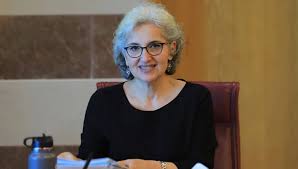
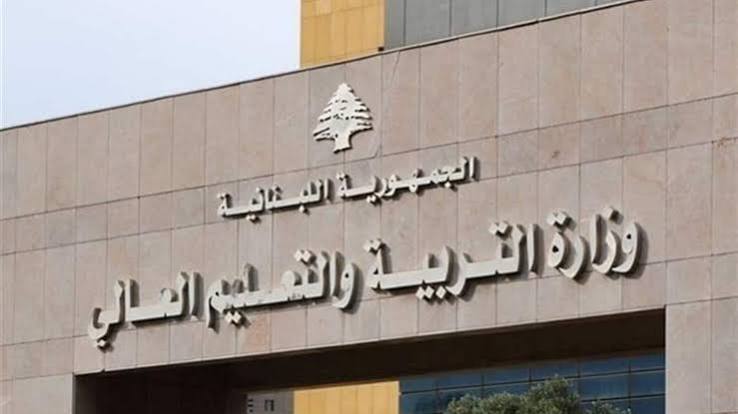
Minister of Education Rima Karami pointed out that "the circumstances are extremely difficult, but the ministry's role requires ensuring the continuity of education despite all challenges, and this has been our main slogan since the first day of the crisis."
She said: "We adopted a flexible strategy to deal with the emerging reality, based on the specificity of the educational sector in Lebanon, given that a large percentage of students receive their education in private schools, compared to a smaller percentage in public education."
She added via "Tele Liban" on the program "Hiwarat al-Saraya" with colleague Mona Saliba: "The ministry directly supervises public schools, while private schools enjoy a wide margin of administrative and organizational freedom. In times of crises, it is imperative to adopt flexibility and grant broader powers to the authorities closest to the field reality, which is why we issued a circular allowing private schools to choose the educational format appropriate for them, whether in-person, blended, or distance learning, provided that the circumstances of the parents and the needs of students are taken into account, and without imposing any option that does not align with the security and social reality of families. As for public schools, spread across all Lebanese territory, they have also been affected by the war, especially in the South, the Bekaa, and Baalbek. Therefore, our decision was to launch education as quickly as possible wherever readiness was available, while adopting a gradual approach in the affected areas. We were keen on continuous consultation with teachers' syndicates and educational administrations, because decisions in such circumstances cannot be completely centralized, but rather require a careful reading of the field reality. Donors, notably UNICEF, helped us activate the 'Microsoft Teams' platform, and we cooperated with the Ministry of Telecommunications to secure the free use of the application during daylight hours. Likewise, a specialized team worked on facilitating the transition of teachers to e-learning and easing the technical burdens on them through training, daily monitoring, and providing the necessary support."
She continued: "Although we gave schools located under bombardment extra time, a large number of teachers and administrators took the initiative on their own to communicate with students and resume education, even in the most affected areas. The Lebanese educational body has shown great resilience and a sense of responsibility, despite the immense psychological and living pressures. We also took advantage of the crisis to update the educational database, as we now have accurate information about where students are located, whether in shelter centers or displacement areas, which helped us determine their educational needs and develop plans that take their various circumstances into account. We sent repeated questionnaires to schools and teachers to gather accurate information that helps us make appropriate decisions."
She said: "Regarding the official exams, the decision was extremely difficult. We canceled the Brevet certificate exams in their traditional format for this year, given the nature of this educational stage, and because students will remain within the educational system and their learning gaps can be compensated for later. As for evaluation, it will take place through school exams subject to controls and standards set by the Ministry of Education and the Center for Educational Research and Development, ensuring the minimum level of fairness and the required academic level. As for the General Secondary (Baccalaureate) certificate, it was not possible to cancel the exams, because this certificate is linked to the students' university future inside Lebanon and abroad, and many universities and scholarships rely on it. In addition, we were keen to preserve the credibility of the Lebanese certificate and its academic level, especially after the observations that emerged during past years regarding the decline in confidence in official certificates as a result of successive crises."
She added: "Since the beginning of the academic year, the exam date was set for June 29, and we informed all concerned parties of this early on. Following a long series of consultations with educational syndicates, private school federations, students, principals, and educational offices, it was agreed not to cancel the exams, but rather to organize them in a way that takes into account fairness and exceptional circumstances. Therefore, we adopted the principle of multiple sessions, so that students who are ready can take the exam in the first session, while others are given extra time to prepare through a second session, while maintaining the approved official exam structure. It was also decided to adopt the curricula that were actually taught until the beginning of March, in consideration of students located in the areas most affected by the war. Our primary goal was to affirm that Lebanon, despite all crises, is still capable of continuing educationally, maintaining the quality of education and the level of the official Lebanese certificate, and sending a clear message to the inside and the outside that the Lebanese school is still resilient and capable of performing its national and educational role."
She considered that "educational curricula are among the fundamental structures," pointing out that "the new curricula are now ready and I received the decree today and it will make its way to the Shura Council, hoping that the next academic year will begin with an experimental phase within a plan spanning five years, and the Center for Educational Research, thankfully, has secured the funding necessary to support this transitional phase. This is a product we will all be proud of."
Regarding the controversy over the history book, she noted "the adoption of an approach different from the past, similar to other countries that have emerged from wars and internal conflicts, and we have found a solution to this issue and the curriculum relies on competencies and learning resources away from the traditional schoolbook toward a more developed and interactive method through active learning."
Regarding whether there are guarantees to hold official exams in light of ongoing Israeli attacks, she affirmed that "the safety of everyone working in the education sector is our collective concern, but it is impossible to predict what might happen; however, completing the educational and instructional path is a necessity like any other sector. War causes a disturbing atmosphere, but we must act with the available capabilities and there can be no guarantees, and our choice is to commit to our primary mission in securing certificates for students, and a message can be sent from Lebanon to the whole world focusing on the importance of education for our society. We use all our skills and capabilities to stay away from any risk, but we are in dire need of acting with steadfastness because it is part of reflecting confidence and protection for our students, and when any danger exists, difficult decisions are made because nothing equals the safety of students and their protection."
She pointed out that "the problem lies in the 25 percent of students who are not ready for the official exams in light of war conditions, and we are holding three sessions as an exceptional measure with a trimmed curriculum in consideration of the circumstances of these students, and we must all cooperate to pass this milestone."
On the file of full-time tenure at the Lebanese University: "We deemed it fit in the Council of Ministers to adhere to the number and criteria to achieve equity so that it reflects the distribution ratios of the country's components, and an agreement was reached on a first batch including 400 professors distributed across faculties according to their priorities, but the essential element is their years of service at the university and the number of retirement hours. The file is ready and complete, divided over four years to include 1,600 professors and taking into account all required criteria, and we have a soon-to-be meeting with the Minister of Finance to discuss this matter."
Regarding the quality of education in private universities, she concluded: "We decided not to grant a license to any new university before conducting an inventory of programs and correcting the status of students who enrolled in unrecognized programs, and we are working on a quality assurance program in this framework, in addition to developing a guide for universities specifying the programs they follow, which will see the light soon."
← Previous article
The Israeli army video: This is how we targeted the “party” element!
Related Articles
“As a gesture of good faith”... the Contracted Professors Committee suspends its strike
The Ministry of Education announces the readiness of the educational curricula for the 2026-2027 academic year
The Ministry of Education announces developments in grouping schools and secondary schools