Hezbollah in the centenary of the Constitution: Resisting the occupation is a legitimate and protected national right
09:52 · 26 May 2026
5 min read
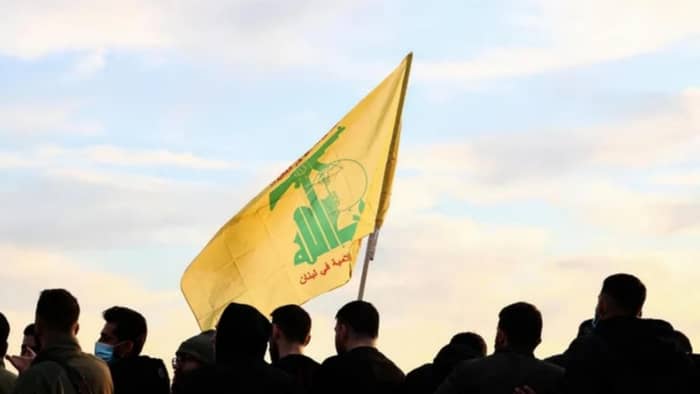
On the occasion of the centenary of the issuance of the Lebanese Constitution, Hezbollah announced that the Lebanese are facing an important milestone at a highly sensitive internal and regional juncture, which more than ever requires a commitment to the Lebanese Constitution, as amended following the Taif Agreement, as a binding reference to regulate disagreements among the Lebanese, manage the affairs of their state, and safeguard their unity and sovereignty. It is not a rigid document in memory, but rather an open national covenant to move past the era of the mandate, high commissioners, and foreign tutelage, because that era has ended and will not return to Lebanon in any form or under any title.
It said in a statement that Lebanon, as its constitution stipulates today, is a definitive homeland for all its sons, unified in land, people, and institutions, within its constitutionally and internationally recognized borders. This finality does not merely mean the stabilization of a geographic entity, but rather means, before and after that, the establishment of a genuine national partnership among all its sons—a fair and balanced partnership that preserves dignities, safeguards rights, and recognizes the existential concerns of the Lebanese communities, which should not be treated as a sectarian issue or a fleeting political demand, but rather as a supreme constitutional matter connected to the nature of the state, the meaning of partnership, and the guarantees of coexistence.
The party pointed out that Lebanon cannot be a definitive homeland for all its sons through slogans, but rather by protecting its land and people, through a clear national consensus on rejecting occupation and aggression, and by fully adhering to the right of the Lebanese to defend their country, sovereignty, and dignity, especially against the occupation and Zionist ambitions that are clearly evident today.
It affirmed that all projects of partition, division, federalism, or naturalization, whatever their titles and pretexts, are confirmed to contradict the essence of the Lebanese Constitution and the idea of a single Lebanon for all its sons, within which there is no place for confronting entities, sectarian cantons, security zones, or disguised secession projects that would turn Lebanese diversity into a pretext for dismantling, fighting, or relying on external backing, and that threaten the unity of the land, people, and institutions.
It noted that the Lebanese experience has proved that the sectarian system is no longer capable of producing a fair, effective, and stable state. Therefore, true loyalty to the constitution is not achieved by freezing its texts or dealing with them selectively, but rather by fully implementing the constitutional reforms endorsed by the Taif Agreement, without reduction, truncation, or political exploitation. Foremost among these reforms is the clear national goal stipulated by the constitution: the abolition of political sectarianism, as an essential entry point for developing the political and social contract, and ensuring a fair and non-prejudicial participation of all Lebanese in managing their country and its institutions.
It stressed that the call to abolish political sectarianism is not a call to abolish specificities or bypass guarantees, but rather a call to build a state of fair citizenship that reassures everyone, preserves everyone's rights, and prevents the monopoly, hijacking, or transformation of the state into an instrument of dominance by one party over another. There is no true reform without a genuine partnership, no genuine partnership without justice, and no justice without serious development of the political system, in harmony with the constitution, the spirit of Taif, and the requirements of coexistence.
Hezbollah affirmed that resisting occupation and aggression is not a departure from the state nor an infringement upon the constitution, but rather a legitimate national right protected by the principles of the Lebanese Constitution and Lebanon's Arab and international commitments. No political or governmental decision can strip our people of their natural right to defend their land, nor strip legitimacy from the resistance to the occupation. The constitution, which links Lebanon to the charters of the Arab League, cannot be read in isolation from the Arab texts that recognize the right of peoples to resist foreign occupation, including their right to liberate their land and safeguard their sovereignty.
It pointed out that the Taif Agreement, by affirming the necessity of taking the necessary measures to liberate Lebanese land, and by cementing adherence to the 1949 Armistice Agreement, leaves no room for ambiguity in describing the relationship with the Zionist entity as one of hostility, occupation, and permanent threat, rather than a relationship of normalization, surrender, or acceptance of thefait accompli. Hence, the insistence of some on stripping Lebanon of its elements of strength in light of the ongoing aggression, occupation, and threat is a departure from the Taif Document and the constitution amended according to its provisions.
The party added: What is required today, on the centenary of the constitution, is the implementation of Taif and the constitutional texts without reduction or selectivity, protecting Lebanon from aggression, preventing foreign tutelage, and rejecting projects of partition, division, and naturalization. Lebanon is not built by dictates, nor is it protected by relying on external backing, and it does not stabilize by ignoring the concerns of its main components.
It continued: This occasion must constitute an opportunity to rescue the state from paralysis, sovereignty from mortgage, partnership from quotas, reform from selectivity, and unity from dismantling projects. It should be an occasion to affirm that Lebanon only lives as a unified, sovereign, independent, and just entity among its sons, resisting the occupation and rejecting any tutelage, mandate, or external project that wants the Lebanese to abandon their right to their land, state, and future.
In conclusion, the party affirmed that the Lebanese Constitution is not a rigid document in memory, but rather an open national covenant that must lead to state reform, the protection of sovereignty, the safeguarding of partnership, and the building of a Lebanon worthy of all its sons.

← Previous article
Decline in fuel prices... How much?
Related Articles
“I am fed up with this kind of thing.” Geagea: The Dahr al-Baydar explosives threaten national security.

Al-Ahrar: Our positions are issued exclusively through our well-known official channels
After the Semaan Gallery incident... Hezbollah clarifies: We have no connection to the warehouse