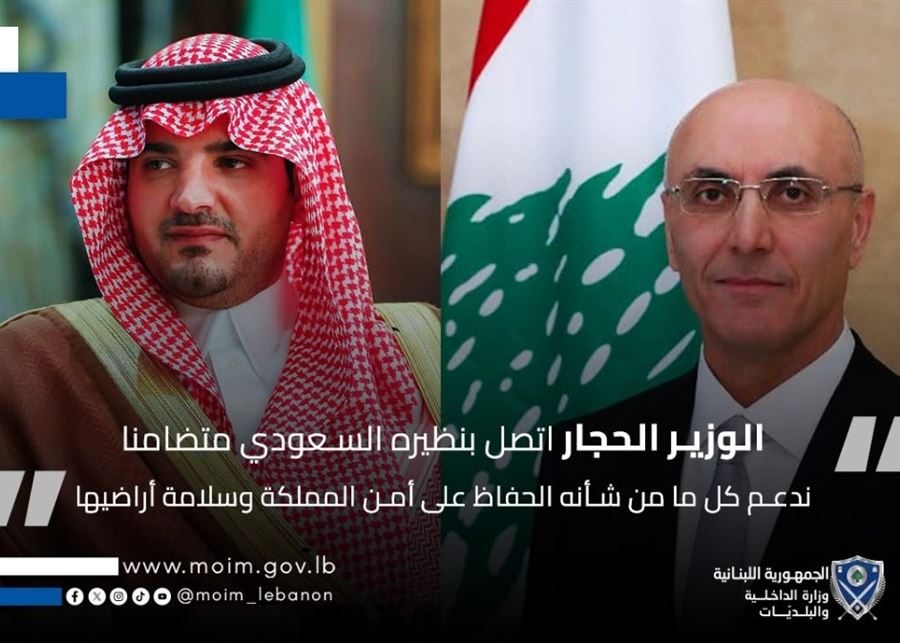
Geagea: Enough cheating, Sheikh Naeem... The decision to negotiate lies with Aoun and the government
07:56 · 14 May 2026
8 min read

Lebanese Forces leader Samir Geagea affirmed that "Sheikh Naim has the right" to declare whatever position he wants, but he does not have the right to obstruct the state's path, especially since Hezbollah has been ignoring, for nearly forty years, the existence of an authority in Lebanon that stems from the popular will through parliamentary elections, and which produces governments that make decisions that must be implemented.
Geagea pointed out in a television interview that "Sheikh Naim's last message contained fallacies that he must review 'for the sake of his credibility,' including his statement that Lebanon constitutes, for the Israeli authority, a part of Greater Israel. Therefore, I say to him 'You have memorized one thing while other things have eluded you,' for Israel abandoned this dream and withdrew from Lebanon in 2000, and his party is the one that brought it back. So enough deceiving his followers, who are the only ones left 'deceived' by him."
As for Parliament Speaker Nabih Berri's position on the negotiations, Geagea considered that "Berri is the Speaker of Parliament and not the head of the executive authority that handles the negotiation process. When the result of the negotiations is sent to parliament, he can, as the head of a parliamentary bloc, give his opinion on it. He is the Speaker of the House and not the master of the deputies, and he is free, like Sheikh Naim, to take whatever position he wants on the condition that there is no obstruction."
And regarding whether it is useful to sit at the same table with the Israeli, at a time when Hezbollah refuses to surrender its weapons, which deprives official Lebanon of its card of strength?
The head of the Lebanese Forces answered, "The only card of strength is the card of legitimacy, whereas Hezbollah, after the government decisions on August 5 and 7, 2025, has become illegitimate, which puts the government in a confrontation with an outlaw force."
He continued, "The legitimate authority must implement its decisions without the need to resort to an international force, but it is clear that the deep state is working to obstruct the decisions taken by the authority, sometimes under the pretext of fear of strife, bearing in mind that the implementation of decisions is possible without entering into internal wars, as the state possesses the means to achieve this."
And regarding whether he is satisfied with the level of Lebanese representation in the negotiations, he stressed that "the story is not about representation, but about content." He added, "President Joseph Aoun is the one who secures the content, but we must always be mindful of the balance of power, which is not in favor of Lebanon, which is unable to impose its conditions because Lebanon was dragged by Hezbollah into a battle that exceeds its capacity, as evidenced by the expansion of the Israeli occupation."
Regarding the picture that President Joseph Aoun refused to have taken of him with Israeli Prime Minister Benjamin Netanyahu, Geagea pointed out that "the judgment on that belongs to the President of the Republic, and perhaps it is better for the meeting to take place after achieving progress in the negotiations, but the President of the Republic must do what is necessary to make the negotiations succeed because we have not lived in peace for decades due to this 'resistance' and its misdeeds."
In response to a question, Geagea denied that Foreign Minister Youssef Rajji was excluded from the atmosphere of negotiations, "as he is informed of its details either directly from the President or from the circles of the Presidential Palace."
Regarding his opinion on the enactment of the amnesty expected to be discussed in Parliament, he pointed out that "we went through a similar phase during the era of Syrian tutelage, as we all knew the state of the judiciary, especially the military judiciary, at that stage, and we know what happened to me and my comrades, starting with the dissolution of the party to the arrests that included everyone who opposed the Syrian regime. Therefore, in principle, I am against any general amnesty; rather, I support accountability and the application of the law, but since the application of the law was done in an unjust manner, we had to not stand in the way of the amnesty, according to the formula that will be agreed upon."
Maarab on May 14, 2026
Lebanese Forces leader Samir Geagea affirmed that "Sheikh Naim has the right" to declare whatever position he wants, but he does not have the right to obstruct the state's path, especially since Hezbollah has been ignoring, for nearly forty years, the existence of an authority in Lebanon that stems from the popular will through parliamentary elections, and which produces governments that make decisions that must be implemented.
Geagea pointed out in an interview with MTV that "Sheikh Naim's last message contained fallacies that he must review 'for the sake of his credibility,' including his statement that Lebanon constitutes, for the Israeli authority, a part of Greater Israel. Therefore, I say to him 'You have memorized one thing while other things have eluded you,' for Israel abandoned this dream and withdrew from Lebanon in 2000, and his party is the one that brought it back. So enough deceiving his followers, who are the only ones left 'deceived' by him."
As for Parliament Speaker Nabih Berri's position on the negotiations, Geagea considered that "Berri is the Speaker of Parliament and not the head of the executive authority that handles the negotiation process. When the result of the negotiations is sent to parliament, he can, as the head of a parliamentary bloc, give his opinion on it. He is the Speaker of the House and not the master of the deputies, and he is free, like Sheikh Naim, to take whatever position he wants on the condition that there is no obstruction."
And regarding whether it is useful to sit at the same table with the Israeli, at a time when Hezbollah refuses to surrender its weapons, which deprives official Lebanon of its card of strength?
The head of the Lebanese Forces answered, "The only card of strength is the card of legitimacy, whereas Hezbollah, after the government decisions on August 5 and 7, 2025, has become illegitimate, which puts the government in a confrontation with an outlaw force."
He continued, "The legitimate authority must implement its decisions without the need to resort to an international force, but it is clear that the deep state is working to obstruct the decisions taken by the authority, sometimes under the pretext of fear of strife, bearing in mind that the implementation of decisions is possible without entering into internal wars, as the state possesses the means to achieve this."
And regarding whether he is satisfied with the level of Lebanese representation in the negotiations, he stressed that "the story is not about representation, but about content." He added, "President Joseph Aoun is the one who secures the content, but we must always be mindful of the balance of power, which is not in favor of Lebanon, which is unable to impose its conditions because Lebanon was dragged by Hezbollah into a battle that exceeds its capacity, as evidenced by the expansion of the Israeli occupation."
Regarding the picture that President Joseph Aoun refused to have taken of him with Israeli Prime Minister Benjamin Netanyahu, Geagea pointed out that "the judgment on that belongs to the President of the Republic, and perhaps it is better for the meeting to take place after achieving progress in the negotiations, but the President of the Republic must do what is necessary to make the negotiations succeed because we have not lived in peace for decades due to this 'resistance' and its misdeeds."
In response to a question, Geagea denied that Foreign Minister Youssef Rajji was excluded from the atmosphere of negotiations, "as he is informed of its details either directly from the President or from the circles of the Presidential Palace."
Regarding his opinion on the enactment of the amnesty expected to be discussed in Parliament, he pointed out that "we went through a similar phase during the era of Syrian tutelage, as we all knew the state of the judiciary, especially the military judiciary, at that stage, and we know what happened to me and my comrades, starting with the dissolution of the party to the arrests that included everyone who opposed the Syrian regime. Therefore, in principle, I am against any general amnesty; rather, I support accountability and the application of the law, but since the application of the law was done in an unjust manner, we had to not stand in the way of the amnesty, according to the formula that will be agreed upon."
Source
mtv

← Previous article
UAE on Netanyahu’s visit: Our relations with Israel are public and not based on secrecy
Related Articles
Gemayel: Referring the Dahr al-Baydar file to the Judicial Council is a priority for the next stage
Jumblatt: Lebanon-Israel negotiations will not bear fruit as long as Israel occupies the south
Hasbani: The Dahr al-Baidar incident is a gateway to implementing the government’s decisions regarding the party’s weapons