Politics
10:38 PM | 04 Apr 2026
Morcos: What is happening in southern Lebanon is a dangerous escalation that goes beyond the destruction of civilian homes
Fady Mahouly
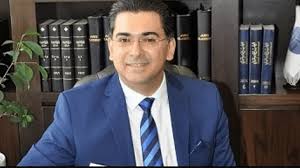
The Minister of Information, Lawyer Dr., confirmed Paul Morcos, in an exclusive interview with the American channel ABC News, said that “what is happening in southern Lebanon constitutes a dangerous escalation that carries very disturbing humanitarian dimensions,” stressing that “Israeli attacks are not limited to pressure to push residents to flee, but rather extend to the systematic destruction of their homes, which constitutes a policy of systematic mass displacement.”
He explained that "what Gaza witnessed during the last period provides a stark example," pointing out that "this approach reflects a trend based on imposing field facts in the south under the pretext of protecting Israeli civilians, but in return it leads to the widespread destruction of life on the Lebanese side."
Similar to what the Prime Minister stated after the cabinet session, he pointed out that “the statements of the Israeli Minister of War translate into operations of invasion and occupation,” considering that what is “actually happening amounts to the level of “cleansing” of southern Lebanon.” He added: "The Israeli steps have become clear in this context, as it seeks to achieve its security goals even if the price is the martyrdom of Lebanese civilians, including journalists."
In presenting the humanitarian reality, Morcos revealed “catastrophic” numbers, as the number of civilian martyrs exceeded about 1,345, in addition to more than 4,000 wounded, including a large number of children. 50 children were martyred and 185 others were injured, which reflects the scale of the worsening humanitarian tragedy.
He touched on the situation on the ground, explaining that the Lebanese state had taken clear decisions “to extend state authority in the south, where the Lebanese army had already begun to deploy with the aim of confining and containing weapons. However, this process faced major challenges, most notably the need for support and assistance from the international community, which took time in stages, in addition to the fact that the Israeli attacks constituted a direct obstacle to the completion of the deployment, which weakened the ability of the Lebanese state instead of strengthening it to complete its tasks.”
In the political context, Minister Morcos indicated to the American station that the President of the Lebanese Republic, General Joseph Aoun, presented an “advanced, bold and clear initiative, based on launching negotiations under the supervision of the international community,” but he expressed that “this will be met by more attacks from the Israeli side.”
He stressed that "the situation is heading towards further deterioration, especially on the humanitarian level, as conditions have become worse than ever before, explaining what was documented by the United Nations High Commissioner for Refugees and enumerating shocking numbers and statistics from UNICEF and other international organizations."
Regarding diplomatic moves, the Minister of Information explained that “the Lebanese President is conducting extensive consultations with friendly countries in order to stop the war.”
Minister Morcos concluded his speech by stressing that "Lebanese efforts are focused at this current stage on the diplomatic track, in order to reach a solution that stops the escalation, limits the accelerating humanitarian deterioration, and enhances shelter, food and medical aid."