Monopoly of weapons takes center stage in stances as Bassel targets al-Sadr: Accountability session not devoid of wrangling
16:42 · 15 September 2026
12 min read
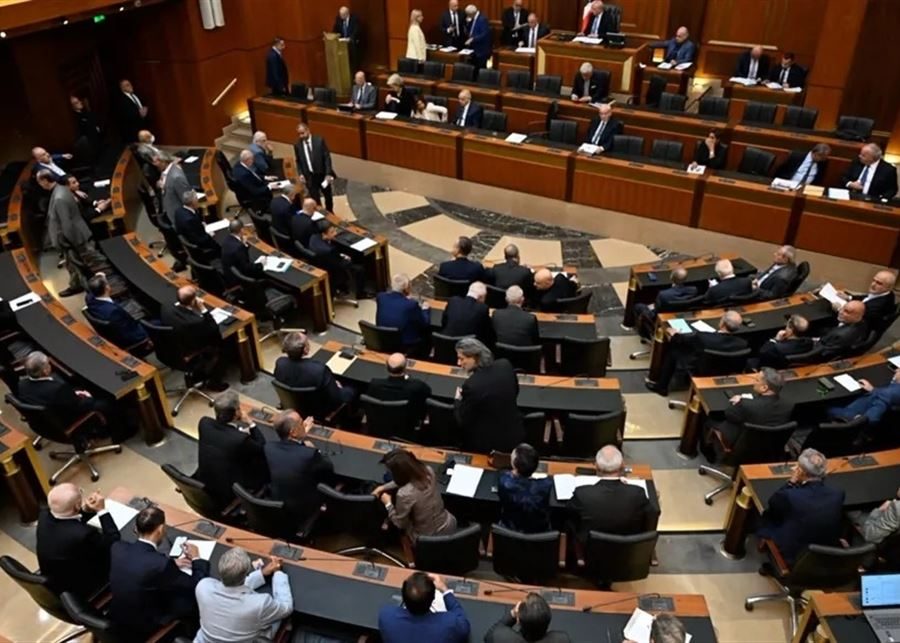
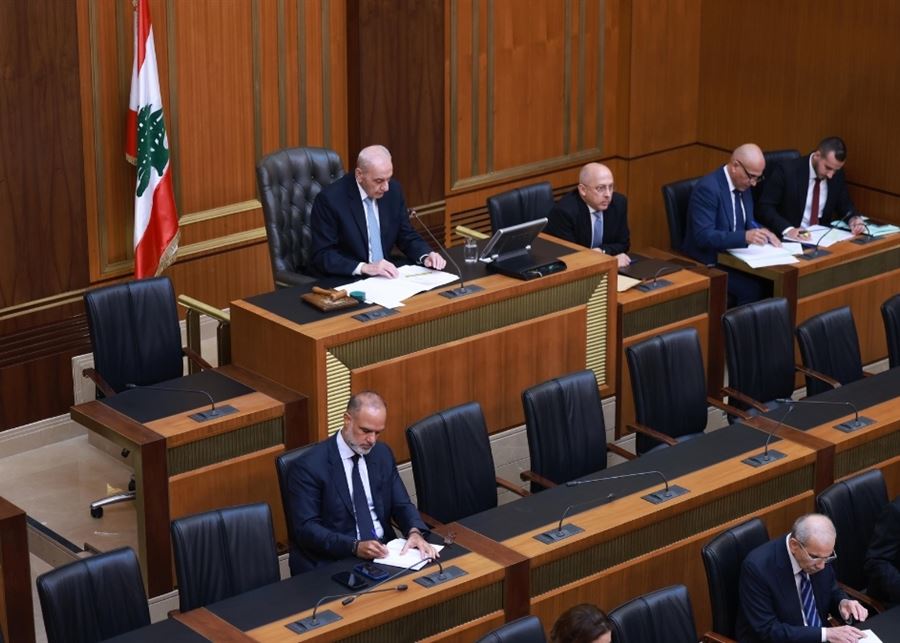
House Speaker Nabih Berri adjourned the general parliamentary session dedicated to discussing the government to 11:00 AM tomorrow, Wednesday. The session had kicked off before noon today with a speech by Prime Minister Nawaf Salam, in which he announced that “the cost of the two wars has cost Lebanon more than 20 billion dollars, and their total cost may exceed 27 billion dollars when the calculation of the 2026 war is completed. But these figures, despite their magnitude, do not express the full true cost, because they do not calculate the value of the migration of competencies, the loss of investment, the impact on education, the decline in the value of lands and assets, and the delay in recovery from the financial crisis ongoing since 2019.”
The session witnessed a sharp wrangle between Loyalty to the Resistance bloc member MP Ali Ammar and MP Ashraf Rifi, with both parties exchanging accusations of treason.
In details, MP Ali Ammar delivered an intervention during the session, saying: “The resistance remains, remains, as long as there is an inch of our land occupied,” to which MP Rifi responded calling on him to “take this resistance to Iran,” noting that “it has destroyed the country.”
In the aftermath, Ammar replied, saying: “You go and get your fill of America and Israel.”
Elias Bou Saab
Deputy Speaker of Parliament Elias Bou Saab said during the government general discussion session: “We do not understand until the moment what the framework agreement is, and we hope the Prime Minister will explain to us what it is and what is expected to be achieved from it.” He pointed out that “the speculations and talk conveyed in the media about divisions and responses are not innocent, but rather prepared for.”
Hadi Abou El-Hassan
MP Hadi Abou El-Hassan registered from Parliament “disagreement with the framework agreement because it drowned us in details and we are facing a major dilemma as a result of the sterility of the negotiations.”
He said: “We want negotiations that guarantee rights and restore them fully,” considering that “what is required is to unify the national stance, reconsider the agreement, and draw up a clear negotiating policy.”
He considered that “there is no longer any room for bargaining on limiting weapons to the state alone,” demanding Lebanon’s friends to support the army to carry out the tasks assigned to it,” pointing out that “protecting Lebanon and preserving it is by returning to the constants stipulated in the National Accord Document and the Constitution, and there is no salvation except through extending the state's authority over all its territories and consecrating the exclusivity of returning to it in decisions.”
Firas Hamdan
MP Firas Hamdan said from Parliament: “We launched an appeal to preserve Nabatieh because people are afraid of bombing, displacement, and occupation.”
He added: “We can no longer bear more grandstanding, and the core of the problem is in the six missiles that were launched, subservience to a foreign agenda, and the occupation of 500 square kilometers of our land.”
He continued: “We are not asking you to hand over the areas to the enemy, but we are asking you to hand over the country's decision to the state of which you are a part.”
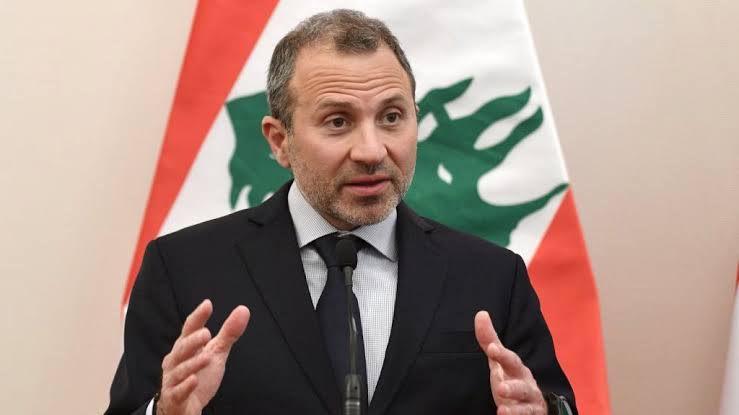
Free Patriotic Movement Chief MP Gebran Bassil
Free Patriotic Movement Chief MP Gebran Bassil delivered a speech during the government general discussion session in which he said: “We are a responsible opposition, and I am the leader of the opposition, and we must take more time for discussion. Our presence in the previous authority does not strip us of the right to opposition, and if you have evidence against us in corruption, then present it to the judiciary, and you are partners with 'the Party' as you share power with it. You can no longer say 'they didn't let us,' and our talk is not populist, and the government has become a government of axes and submission, opened the door to strife, and did not limit weapons to the state, nor does it have a plan for reform.”
He added: “We are with negotiations with Israel to stop the war because Hezbollah's weapons can no longer protect Lebanon, and we are for peace, not surrender. We are for the exclusivity of weapons completely, but disarmament will not succeed by leaning on the outside, and we call for modifying the course.” He addressed “Hezbollah,” saying: “Were the Ali al-Taher hills not enough to stop the fire?”
He called for “building friendly relations with Syria,” considering that “the Syrian file must be approached with a national, not sectarian, background, and the Syrian regime must not be an extension of any sect in Lebanon.”
MP Inaya Ezzeddine
For her part, MP Inaya Ezzeddine considered that “the government's speed in responding to shelter the displaced was not at the required level,” saying: “An crisis of this magnitude cannot be managed in the way it was done.”
She pointed out that “it is not enough to protect the child, but to help him recover his life, and we need exceptional measures in light of the current situation to secure a safe return for students to schools.” She asked about the ministry's plans for the repercussions of the aggression socially and demographically.
MP Jamil El-Sayyed
MP Jamil El-Sayyed said from Parliament: “The framework agreement was signed and nothing reached us to Parliament, as this agreement has executive arrangements resulting from it, and it is therefore contrary to the constitution.”
He pointed out that “agreements that may not be rescinded year by year require the approval of Parliament, and the Legislation and Consultation Commission has become on-demand.”
MP Ibrahim Kanaan
MP Ibrahim Kanaan delivered a speech during the government general discussion session in Parliament, in which he considered that “accountability is not targeting the government, but protecting the state and the citizen. The Lebanese want clear answers: Where is the state's decision? Where is the reform? And where are the deposits?”
Kanaan added: “We trust what the President of the Republic and the Army Commander will carry to Paris, and we demand the international community for effective support to the army, not just contenting with media and political stances.”
MP George Adwan
MP George Adwan directed, during the government accountability session in Parliament, questions to Prime Minister Nawaf Salam, addressing the issue of limiting weapons to the state. Adwan said to Salam: “I have important questions, how do you and your government dare to limit weapons? This is unacceptable, and you must be held accountable on this issue, because your predecessor did not do that.”
Adwan also asked the Prime Minister: “How do you dare to remain silent about what happened with the Minister of Foreign Affairs?” And he said: “Your account with some may be difficult, but the Lebanese are demanding you to continue what you are doing.”
MP Fouad Makhzoumi
MP Fouad Makhzoumi announced his support for the government and the renewal of confidence in it, stressing that “his position comes out of belief in a productive economy, one Lebanon, one decision, and one weapon.” Makhzoumi said: “We granted confidence to the government twice and renew it today.”
He pointed out that “the South is afflicted, and Lebanese territories are still occupied,” and considered that “this tragedy is the result of Hezbollah's weapons and its subservience to Iran and dragging Lebanon into a war it does not want.” He called for “setting clear and specific mechanisms to limit weapons,” stressing “the necessity for the decision and the weapon to be under the authority of the state.”
MP Ali Hassan Khalil
MP Ali Hassan Khalil considered during the government accountability session that “any negotiation and agreement is measured by the result and what it gave Lebanon and what it entailed,” addressing Prime Minister Nawaf Salam by saying: “You said now, Mr. Prime Minister, that the agreement reduces the cost on the Lebanese, and the question is: What cost did it reduce? Was there a real ceasefire achieved?”
Khalil asked: “Where was the cost reduced while scraping and demolition operations continue and villages are erased from records? And what was achieved from the return of the people to the villages?” He said: “We may differ in politics and in reading risks, and differences may reach a limit, but political difference must not turn into a boycott and incitement among the Lebanese.” He added: “We are most in need of opening channels of dialogue, and Lebanon is not built by targeting anyone, but by partnership, dialogue, the state, and its institutions.”
MP Hassan Ezzeddine
MP Hassan Ezzeddine stressed during his intervention in Parliament that “the Israeli enemy is the basis of Lebanon's affliction,” pointing out that “the authority signed the framework agreement with Israeli ink without possessing any winning card.” He said: “The authority is required to present its cards of strength in advance,” stressing that “the internal equation is governed by national understanding, and betting on weakening the resistance is a loser.”
He stressed that “Lebanon is not built by exclusion,” stressing that “leaning on the outside is nothing but an illusion, and Lebanon is not built except by understanding and consensus among all its components.”
MP Michel Daher
MP Michel Daher warned of a “social crisis” in Lebanon, considering that the situation “from today until the end of the year is no longer bearable,” calling for radically addressing the electricity crisis and handing over its management to the private sector. He said: “Lebanon cannot continue with 21 billion dollars of imports and 3 billion dollars of exports,” stressing “the necessity of addressing the economic imbalance in parallel with reforming the electricity sector.”
He added: “Today I am launching a cry because the situation from today until the end of the year is no longer bearable,” pointing out that “the Minister of Energy is one of the cleanest ministers, but electricity must be privatized.”
He explained that “privatization of the sector would contribute to supplying the state treasury,” saying: “Then 600 million dollars from the VAT on electricity enter the state treasury.” Daher also pointed out that “the problem is in tax evasion,” revealing that “one company owes two billion dollars in VAT.”
MP Elias Jaradeh
MP Elias Jaradeh considered that “negotiations under threat are void.” He said during the government accountability session in Parliament: “You justified for the enemy striking the Lebanese people with shameful agreements, and whoever does not want to bear the responsibility of confrontation should not be in government.”
He added: “The southerner has been subjected to all forms of extermination, and the displaced citizen has not received any embrace even on the moral level,” addressing officials by saying: “You should be ashamed of what happened under a free economic system as you used to say.”
MP Mark Daou
MP Mark Daou saluted “the direct negotiation team working to recover our land in the South,” calling on the government to “accelerate its steps in addressing the basic files.” He said during the government accountability session in Parliament: “We protect civil peace by implementing the monopoly of weapons, and we do not accept the return of the game of dialogues which is a permanent argument and excuse to disrupt the state's decisions.”
He added: “You must move faster in the government, not ask people to be more patient.” Daou stressed: “I supported Prime Minister Nawaf Salam's government and still do, and I appreciate the steps it has taken.”
MP Ibrahim Mousawi
MP Ibrahim Mousawi asked: “You ask what the resistance has done? And we ask what the state has done to arm the army and defend the land?” He stressed that “what is required is to provide clear answers about the state's performance and responsibilities, especially regarding arming the army and its ability to defend Lebanese territories.”
Mousawi pointed out during the government accountability session in Parliament, that “in the Information and Telecommunications Committee there is no problem with privatization and public-private partnership,” questioning: “When we direct questions to the state and do not get answers, how do we reform?”
MP Najat Aoun
MP Najat Aoun stressed that “the South is not the monopoly of anyone, and the villages of the South belong to their people and we must protect them,” stressing that “no party has the right to dig tunnels under people's homes.”
She called during the government accountability session in Parliament, to “take measures that contribute to accelerating the reconstruction of affected areas,” and stressed “the necessity of protecting the people and securing appropriate conditions for the return of the people of the South to their villages, in parallel with providing the requirements of reconstruction,” demanding to “open the import of cement and reduce customs, in order to be able to reconstruct.”
MP Osama Saad
For his part, MP Osama Saad addressed in the government accountability session the issues of waste and ongoing negotiations.
He pointed out that “150 thousand tons of waste are piling up on the shoulder of the city of Sidon without treatment, despite paying money,” calling for addressing this file which directly reflects on the health of citizens and the environment.
On the issue of negotiations, Saad considered that “the Lebanese negotiator violated constitutional texts and exempted his team from the provisions of boycotting Israel,” considering that this “imposes on Parliament immediate intervention.”
MP Ziad Hawat
MP Ziad Hawat considered that “discussing the government is a necessary and imperative matter, and it must be permanent,” pointing out that he has “many observations and questions on the work of the government.”
He called from Parliament to “consecrate parliamentary accountability for the government and follow up its performance continuously, in a way that contributes to addressing the raised files and holding those responsible for any dereliction accountable.”
← Previous article
Bassil: Hezbollah failed to defend Lebanon... and we support negotiations with Israel