«The mini-state has brought about woes»... Geagea: Either the party hands over its arms or the state takes a decisive stand
20:57 · 06 September 2026
34 min read
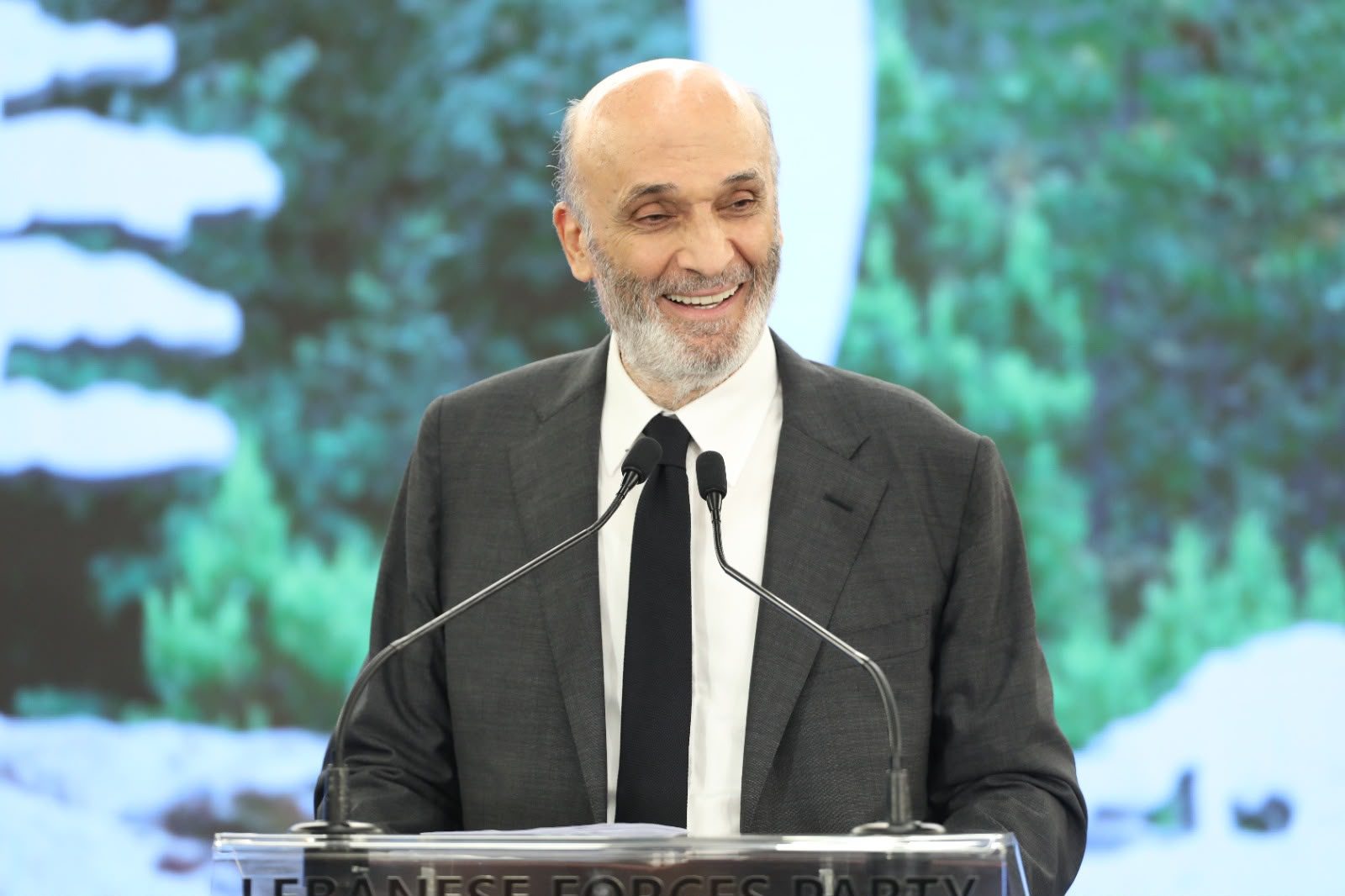
Lebanese Forces party leader Samir Geagea criticized the claims that followed the fall of Ali al-Taher, saying: "Instead of handing over the hill to the Lebanese Army, some claimed that it was empty, unimportant, and nothing more than a stable."
He stressed that "we are reaping what we sowed with the martyrdom of the heroes of the Lebanese resistance. Hence, we did not fear confrontation the day it was imposed upon us, nor did we back down the day the wicked and opportunists ganged up against us. We held fast to hope, in the heart of the confrontation with the axis of arms and hegemony, and we fought all kinds of challenges and won wherever we fought them." He said: "It is certain that the dawn of sovereignty has broken, and we will not accept that anyone halt its emergence, whether through muscle-flexing against the state and sovereign free Lebanese, or through appeasement, procrastination, dilly-dallying, and patchwork."
Expressing his rejection of a mini-state that brings about woes, gets involved, and embroils Lebanon in the wars of others, and defends Iran at the expense of the Lebanese people and Lebanon, he stressed that "President Joseph Aoun took the initiative to light a small candle in the hope of dispelling the darkness created by others, so they began cursing him as well." He also recalled the role of officials in the Lebanese state in bringing stability and peace to the country; if Hezbollah does not care, official authorities cannot afford not to care. These officials must take a decisive stand and make decisions that do not remain merely ink on paper, but rather very practical steps to get rid of the abnormal situation we are in, and consequently reach the desired actual state. The hour for the state's establishment has struck, and its conditions and prerequisites have become available. It only remains for the officials in charge of the state to take a decisive stand and rush to seize this international moment, which will not be repeated.
Geagea made these remarks during the Lebanese Forces' commemoration of the martyrs of the Lebanese resistance, held under the patronage of Maronite Patriarch Cardinal Mar Bechara Boutros Rahi, represented by Patriarchal Vicar for the Maronite Diocese of Jounieh Bishop Youssef Rafic El Warcha, who was assisted by a gathering of priests.
The martyrs' mass, entitled "The Dawn of Sovereignty," was attended—alongside the party leader and his wife, MP Strida Geagea—by Deputy Prime Minister Tarek Mitri, Minister of Justice Adel Nassar, Minister of Social Affairs Haneen El Sayed, and Minister of Interior and Municipalities Ahmed Al Hajjar, represented by Central Security Council Secretary Sami Nassif, Minister of Foreign Affairs and Emigrants Youssef Raji, Minister of Energy and Water Joe Al Sadek, Minister of Industry Joe Issa El Khoury, and Minister of Displaced and Minister of State for Technology Affairs Kamal Shehadeh.
Also participating in the mass were National Liberal Party leader MP Camille Chamoun, Independence Movement leader MP Michel Moawad, "Sanad" party leader MP Ashraf Rifi, "Project Watan El Insan" leader MP Neemat Frem, Progressive Socialist Party leader MP Taymour Joumblatt, represented by MP Raji Saad, Kataeb Party leader MP Samy Gemayel, represented by MP Nadim Gemayel, and National Dialogue Party leader MP Fouad Makhzoumi, represented by Roger Choueiri, in addition to MP Ahmed Al Kheir, representing the National Moderation bloc, and MPs: Michel Douaihi, Melhem Khalaf, and Hagop Pakradounian.
Attending from the "Strong Republic" bloc were MPs George Adwan, Ghassan Hasbani, Melhem Riachy, Antoine Habchi, George Okeiss, Ziad Hawat, Razi El Hajj, Ghiath Yazbek, Fadi Karam, Ghada Ayoub, Said Asmar, Nazih Matta, Elias Estephan, Elias El Khoury, and Jihad Pakradounian, alongside bloc secretary Said Malek.
From former ministers, attendees included May Chidiak, Richard Kouyoumjian, head of the Lebanese Forces Foreign Relations Department, Joe Sarkis, Alain Hakim, Ziad Baroud, and Selim Wardeh. Former MPs Antoine Zahra, Elie Keyrouz, Eddie Abillama, Wehbe Katicha, Joseph Ishak, Jawad Boulos, Tony Abou Khater, Othman Al Alamuddin, Sami Fatfat, and Rami Fing also attended.
On the military and security level, Army Commander General Rudolf Haykal was represented by Intelligence Director Brigadier General Antoine Kahwaji, and Mount Lebanon Branch Head in the Directorate of Intelligence Brigadier General Tony Mouawad. Internal Security Forces General Director Major General Raed Abdullah was represented by Regional Gendarmerie Unit Commander Brigadier General Jean Awwad, General Security General Director Major General Hassan Choucair was represented by Colonel Rami Romanous, and State Security General Director Major General Edgar Lawandous was represented by Brigadier General Joe Chabib.
From public administrations and institutions, attendees included Chairwoman of the Board of Directors of Télé Liban Alissar Nadaf Geagea, Governor of Beirut Marwan Abboud, Governor of Akkar Imad Labaki, General Director of the Ministry of Industry Adel Gerges Al Shabab, General Director of Water Resources at the Ministry of Energy and Water Elias Akl, General Director of the Beirut and Mount Lebanon Water Establishment Rabih Khalifa, General Director of Investment Fadia Hayek, and Supreme Customs Council member Charbel Nassيب Khalil.
Also attending were Change Movement leader Elie Mahfoud, World Syriac Union Party leader Ibrahim Mourad, National Bloc Party Secretary-General Michel Helou, Tashnag Party Secretary-General Albert Balabanian, Ramgavar Party leader Avedis Dakessian, Hunchak Party leader Vanik Dakessian, and Maronite League President Maroun Helou.
In addition to Beirut Bar Association President Imad Martinos, Tripoli Bar Association President Marwan Daher, Beirut Order of Physicians President Elias Shalala, Private School Teachers Syndicate President Nehme Mahfoud, Association of Lebanese Industrialists President Salim El Zenni, Tourism Syndicates Federation and Hotel Owners Syndicate President Pierre El Achkar, Sea Tourism Establishments Syndicate President Jean Berouti, Kesrouan-Ftouh Traders Association President Jack El Hakim, and Restaurant and Cafe Owners Syndicate President Tony El Rami, along with Voice of Lebanon Radio General Director Charbel Azar, and Nidaa Al-Watan newspaper Editor-in-Chief Amjad Iskandar.
From the Lebanese Forces, attendees included Party Secretary-General Emil Mkarzel, assistant secretaries, deputies, members of the Executive Council, members of the Central Council and General Assembly, alongside Head of the Media and Communication Bureau Charles Jabbour, advisors to the party leader, several heads of bureaus, departments, and regions, party cadres, alongside the families of the martyrs of the Lebanese resistance, prominent figures, mayors, municipal union presidents, and a crowd of political, syndical, economic, media, and social figures.
In his speech, Geagea said: "Our commemoration of the martyrs of the Lebanese resistance this very year brings to mind a pivotal milestone in Lebanon's history: the fiftieth anniversary of the official establishment of the Lebanese Forces in September 1976. Fifty years have passed since several resistance parties and groups united under one leadership and one flag, because Lebanon was then facing an imminent existential threat. Fifty years of sacrifice, perseverance, resistance, persecution, arrest, and confrontation. But despite all of that, they were also fifty years of unwavering faith, endless giving, and continuous loyalty. Fifty years in which we embodied what is stated in the Second Epistle to the Corinthians: 'We are hard pressed on every side, yet not crushed; we are perplexed, but not in despair; persecuted, but not forsaken; struck down, but not destroyed.'"
He added: "Today we remember the leaders, the fighters, the wounded, the disabled, the missing, the displaced, the fathers, the mothers, and the children. We remember a society that rose up across its various factions seeking life. We remember ordinary people who wrote exceptional chapters of heroism and secured a place for themselves in history and in our hearts forever and ever. In particular, and above all else, we remember our martyrs, not as mere numbers, not as photographs, not as names carved in rock or stone, but as unlived lives, torn families, and the future of thousands offered as a sacrifice so that we may live and Lebanon may not perish."
He continued: "Today we remember our founder, this name that still echoes across generations: Bashir Gemayel. Bashir, who not only saw the fragile reality in which we lived, but saw beyond the horizon; he saw what this reality could be, and he was martyred leaving behind a great legacy and unforgettable stances as the president of a strong republic that they aborted in its infancy.
We believed in our capability as a nation, and we worked to gather our strength and stand as an impenetrable dam in the face of all hardships. Here we are, remembering every single comrade who carried this cause in the darkest of nights. Some carried it for a short period, while others carried it for long years, whether they carried it until this very moment or until their last breath on the battlefields or in the arenas of struggle. The flame of the cause and hope has never been extinguished.
Despite all these sacrifices, memory remains mere nostalgia if it does not turn into a responsibility. The Lebanese Forces were never created to live as captives of the past and mere nostalgia for it; rather, we are here to build a future worthy of our children and to defend it. Our history is not a museum, but a trust, a mandate, and an action."
Geagea addressed the mothers of the martyrs, the fathers, wives, husbands, sons, daughters, sisters, brothers, and every family where a chair remained empty and a wound in its body has not healed, saying: "We make you one firm promise: our beloved martyrs did not die so that Lebanon remains merely a country struggling to survive from one crisis to another; rather, they were martyred so that Lebanon may live free, sovereign, pluralistic, secure, and worthy of its sons. Until this Lebanon is fully realized, be certain that our mission is not yet over, and that we are continuing the confrontation until we reach this Lebanon."
Addressing his comrade martyrs, he said: "Before delving with you today as usual into the conditions of the cause as a whole, I want to touch upon three matters that are directly linked to you, to you specifically: The first matter is that a young angel recently departed from among us to join you: as we were making the necessary preparations for today's celebration, our comrade Charbel Nohra was martyred. He was a vanguard leader in the Patriarch Elias El Howayek Batroun Regiment in the Freedom Scouts, and he had not yet completed his nineteenth year. Charbel Nohra was martyred for no reason other than that he did not want, under any circumstances, to miss the bus that was to take him and his comrades to Maarab to complete the required preparations by the Freedom Scouts for the celebration. He fell as a result of a painful accident that claimed his life. It is true that Charbel was not martyred on the battlefront, but he was martyred with the exact same spirit of a fighter on the hardest fronts; he was martyred because he was determined to perform his duty along the path of the cause, whatever the cost, even if that cost was his life.
My comrade Charbel, the preparations for our mass today have been completed in the best possible way, and the celebration is taking place just as you wished and looked forward to. I heard the stamping of your feet among the footsteps of your comrades today, and I saw the phantom of your smiling face pass among the marchers today. Rest in peace, for you have become immortal in the realm of eternity, and immortal through a cause that never dies.
The second matter closely linked to you, my comrade martyrs, is that after the pillars of the cursed former Lebanese-Syrian security regime tried for a period of time to hide the truth about the assassination of our comrade Ramzi Irani—and one of them continued until yesterday to persist in his lies and attempts to cover up the truth—a witness from among his own came forward and narrated the story with sufficient details confirming beyond a shadow of a doubt that the former Lebanese-Syrian security regime was behind the crime. I open a small parenthesis to say that the most heinous criminal in this assassination operation is the one who insisted on misleading the investigation from the very first moment, at a time when he was in a security position entrusted with protecting the Lebanese, and then in a political responsibility position, to my utmost regret. He is the one who tried, falsely and slanderously, to cast the blame on others, and as recent confessions showed, he was at least aware of the real perpetrator, if not in collusion with him, if not a partner in committing the crime.
Be that as it may, we will pursue the criminals judicially one by one, whether they were perpetrators, accomplices, accessories, instigators, or concealers, no matter how high their status and how great their immunity.
The third matter, my comrade martyrs, is linked to the assassination of our former Jbeil coordinator, comrade Pascal Sleiman, whose indictment in his assassination was issued after a long wait, confirming that the matter was a premeditated murder and not a mere incident. We will complete the required judicial procedures, especially regarding the extradition of the fugitive accused who fled to Syria, because their extradition will lead to uncovering the complete truth, especially the party truly standing behind the assassination operation. A right behind which there is a demand never dies; so how much more so when they are rights, and when behind them are believing, struggling claimants whose arms history has never been able to bend."
He added: "My comrade martyrs, even if the sunrise is delayed after the dawn breaks here, it is enough that it is shining in your skies for its sunrise to become inevitable with us. It is your dawn—the dawn of sovereignty, freedom, justice, truth, and a dignified life. It is your debt upon us, and we will repay it to you. You struggled, fought, and were martyred in the darkest and blackest of conditions and days for the sake of this dawn, and here it is finally dawning. Without you, we would not be here, nor would we have land, sky, air, freedom, and a state—even a state as it currently is. It is your dawn, after which a sun that never sets will shine. Some wonder at our ability to be patient, endure, withstand, and resist in all circumstances and with modest capabilities, but they forgot that we are the sons of John Maron and the sons of Lebanese history. They forgot that we are the sons of a struggle whose age is much longer than the age of the Lebanese state. They also forgot that often in history, the stone the builders rejected has become the cornerstone, and that the youth who were persecuted and subjected to all kinds of oppression at the height of repression and bans have become a movement advancing to the forefront of the nation, embraced by a people yearning for the freedom for which you fell. Today we are reaping what you sowed with your martyrdom and watered with your blood. Therefore, we did not fear confrontation the day it was imposed upon us, we did not back down the day the wicked and opportunists ganged up against us, we held fast to hope and faith in the heart of the confrontation with the axis of arms and hegemony, and we fought all challenges and won wherever we fought them. And no wonder, for we are from the school of tireless struggle, the school of martyrs and loyalty to martyrs, from the quarry of dignity, and from the core of faith as deeply rooted as the Cedars of the Lord. When we said 'the guards do not sleep,' we knew full well that their eyelids would not close while awaiting the coming dawn. When we said 'they did not leave,' 'we remain,' and 'the resistance continues,' we knew that our steadfastness, struggle, and resistance would lead Lebanon out of darkness and injustice toward the coming dawn. And when we said 'tomorrow is ours,' we knew that this tomorrow certainly belongs to a sovereign, free Lebanon, and the dawn of this tomorrow is inevitably coming."
He said: "Today, it is certain that the dawn of sovereignty has broken, and we will not accept that anyone halt its emergence, whether through muscle-flexing against the state and free sovereign Lebanese, or through appeasement, procrastination, dilly-dallying, and patchwork. The dawn of sovereignty is looming, and after it will shine the sun of sovereignty, the sun of freedom, the sun of a balanced and diverse homeland, and the sun of a state that is mistress of its land and its decision—a state that believes in itself first, and in which we believe. We want a state that decides, resolves, cuts short, and governs.
We reject a mini-state that brings about woes, gets involved, embroils Lebanon in the wars of others, and defends Iran at the expense of Lebanon and the Lebanese.
Between the state and the mini-state, we absolutely and definitively reject the continuation of the deep state, because this deep state takes from the state for the benefit of the mini-state, the mafias, and the corrupt.
The deep state is not just another state above the state; it is a state that resides in the shadow of the state, using its institutions when needed and circumventing them when its interests conflict with them, whereas the mini-state does not always need to abolish the state, but rather uses the deep state to make the state slow, paralyzed, and shackled.
I confide in you today that the deep state among us is what aborts the radical changes happening around us, impedes progress and the reach of an actual state. The deep state is a network of interests and benefits across institutions, agencies, security, military, and judicial authorities, belonging to the era of tutelage that was Syrian and has become Iranian, holding the joints of the state and its administrations. It will be impossible to progress on the path of the actual state unless the deep state is dismantled and cleansed, and institutions and authorities are rebuilt on new foundations."
After explaining that the deep state "deepens wounds in the body of the state, obstructs the path of its decisions, exhausts its capabilities, and retains its private, sectarian, and self-serving loyalties at the expense of the loyalty of the state, law, and conscience—we know that 'the worm of the vinegar is from within it,' but we will not surrender to this saying."
Pointing out that "Lebanon has its own constitution and international resolutions, which we have repeatedly called to implement before it is too late, and it has been too late once and twice, but there will not be a third time," Geagea stressed that the slogans of "army, people, and resistance," "arms build and protect," and "unity of path and destiny" have fallen irrevocably and proven that they were the cover for the biggest deception in modern Lebanese history, and the time has come to expose this deception and put a final end to it.
Addressing the Lebanese, he said: "We are in a very difficult situation, tragic in some of its aspects: hundreds of thousands displaced so far, devastation and destruction the likes of which Lebanon has never witnessed in its darkest days, a faltering economy, Mr. Prime Minister, and an unclear horizon, not to mention human losses exceeding ten thousand."
In a related context, he continued: "Despite all of this, we see some continuing with the very same approach, and we even see many times others who ought to be more aware, sober, and bold following the same path: Israel, Israeli aggression, and Israeli evil, as if cursing the darkness ever led to a glimmer of light. To illustrate what I am saying, and by way of example and not limitation, Israel withdrew from the south in 2000, and you held a celebration for liberation 'and have not stopped celebrating since,' but Lebanon remained in its ordeal and continued and continued until this very moment.
The President of the Republic took the initiative to try to light a small candle in the hope of dispelling the darkness created by others, so they began cursing him as well.
O Lebanese people, this is the hour of truth and difficult decisions, as always in difficult days.
We can curse Israel as much as you wish, but this will not stop an aggression, nor will it rebuild a single destroyed house in the south.
It is true that politics is reality and ideology, but practical political steps are reality and calculations. Let the cursers of darkness tell us: what do we do practically, now, aside from high-sounding speeches full of curses, imaginary heroism, and false facts? After the fall of Ali al-Taher, instead of handing it over to the Lebanese Army, some claimed it was empty, unimportant, and a stable. Now, what do we do now to stop the current war, and by extension the series of wars to which we have been exposed for decades? None of them has an answer other than cursing the darkness, then cursing the darkness, and after that cursing the darkness."
Geagea went on to address the Lebanese, saying: "The choice made by the President of the Republic through the framework agreement is the only available opportunity to stop the current war, and above all else, to stop the series of repeated wars on our southern borders. But alongside the importance of the framework agreement, there is a very pivotal point upon which the success of the framework agreement, or any other attempt to escape from where we are, depends: the dissolution of the military and security wings existing outside the state, whether Lebanese or Palestinian, and foremost among them the wings of Hezbollah.
Any talk that does not start from this very point will inevitably lead to no result. First: the Lebanese have suffered immensely from illegal armed organizations over the past four decades, which pushed our country decades backward, impoverished it, and struck its political, security, and economic systems by paralyzing the state and causing continuous instability, and through successive wars—wars in which the Lebanese had no camel or camel-share.
By the way, someone comes out to tell his constituency: 'Store your anger... anger has its time and might explode...' And I say to him, O Sheikh: 'What about the anger of the overwhelming majority of the Lebanese? What about the anger of our people in all Lebanese regions and those outside Lebanon? What about the anger of the youth whose dream of living in peace and prosperity in a homeland you have riddled with wounds and endless wars has been stolen? Do not all of these have the right to be angry, to revolt, and to explode? Fear God, have mercy on His people, 'get off our backs,' and stop playing with people's fates and futures blindly.'"
He added in this context: "Second: These organizations, foremost among them Hezbollah, have persisted in striking Lebanon's Arab and international relations, leaving Lebanon in a stifling isolation that only began to recede after the recent presidential elections and the formation of the new government, and the promises made to establish an actual state in Lebanon free of illegal organizations.
All friendly countries, Arab and foreign, view Hezbollah as a faction of the Iranian Revolutionary Guard, and nothing illustrates this more than what the Speaker of the Iranian Shura Council said while discussing the war that Hezbollah had launched in Lebanon on March 2: 'Hezbollah elements and fighters in Lebanon suffered more than four thousand dead and twelve thousand wounded during the recent clashes; they fought for one hundred and four days defending Islamic Iran, while Iran fought for thirty-eight days.' Consequently, how do you expect these friendly countries to maintain their friendship with Lebanon while Iran shows hostility toward these countries?"
O Lebanese people, the majority of the Lebanese, all Arabs, and the overwhelming majority of the international community—all of them want to get rid of the abnormal situation in Lebanon and enter the phase of the actual state. All the theorizing we hear daily from some people that we should not submit to American and Israeli conditions on the issue of arms is misleading theorizing, because collecting illegal weapons is primarily a Lebanese demand, secondly a pan-Arab demand, and thirdly a nearly universal international demand, not merely an American or Israeli demand."
He continued: "Let someone tell me: how can we confront Israel or any of our existing problems, whether strategic or economic, if we are at odds with the entire Arab group and the overwhelming majority of the international community, and if we do not meet the demands of the majority of the Lebanese and respect their will? What is Lebanon without all of these? There is no Lebanon without the majority of the Lebanese, and Lebanon has no might or power without all Arab countries and the overwhelming majority of the world's nations.
The dissolution of the illegal military and security wings of all organizations, foremost among them 'our friend' Hezbollah—before being an American or Israeli demand—is the pre-condition and necessary prerequisite for the establishment of an actual state in Lebanon, and for this actual state to restore Lebanon's genuine Arab relations and its fruitful international relations. 'Get off the state's back before you ask it to work for you.'"
He stressed that "we cannot waste any more time. We have wasted about a year and a half so far, and what was the result? More wars, dead, devastation, and destruction.
So what are we waiting for, when before us—according to all analyses issued by reliable authorities regarding the strategic Lebanese, Arab, and international scene—lie even more difficult days if we do not act? The President of the Republic, of course in agreement with the governmental majority, took a first step in the right direction. Why hasn't Hezbollah responded until this hour?
Hezbollah was waiting for Iran, but it has now become clear that Iran itself is under siege and is waiting for a flash of salvation from somewhere that does not actually exist. Therefore, what is Hezbollah waiting for?
Either Hezbollah proceeds with clarity, boldness, and without procrastination or trickery to dissolve its military and security wings, or the Lebanese state must take a decisive stand.
If Hezbollah can afford to waste time and opportunities until a new war destroys whoever remains of the citizens of the south, and whatever remains of the Lebanese people's assets, hopes, and ambitions, the Lebanese state cannot afford to do so."
'The Kataeb leader' [Editor's note: Geagea] reminded us of the role of officials in the Lebanese state, starting with the President of the Republic down to the deputies in Parliament: "They are elected officials in every sense of the word, and the Lebanese people have a natural right over them to spare them killing, destruction, and deterioration, and to bring stability and peace to the country so they can live their lives normally. Therefore, if Hezbollah does not care, official authorities cannot afford not to care.
State officials, if Hezbollah does not take swift initiative, must take a decisive stand and make decisions that do not remain mere ink on paper, 'Mr. Prime Minister,' but rather very practical steps to get rid of the abnormal situation we are in and reach the desired actual state. Time is for actions, not words, and the time has come for the state to reclaim its full prestige and role, proving that it is capable of fulfilling its commitments and executing its decisions, and that it is truly a state worthy of restoring internal and external trust and deserving of it...
The hour for the state's establishment has struck, and its conditions and prerequisites have become available. It only remains for the officials in charge of the state to take a decisive stand and rush to seize this international and Arab moment, which will not be repeated, and this opportune moment that, if lost, will not return... Before resolving Hezbollah's dilemma in Lebanon one way or another, you are plowing the sea."
He opined that "even if resolving the dilemma of Hezbollah's weapons is the primary pre-occupation of official authorities, this does not exempt them at all from their other responsibilities, especially regarding the required reforms in the country after decades of loss, irresponsibility, statelessness, and corruption, beginning from the days of Syrian tutelage down to Hezbollah's tutelage over many state institutions."
He said: "It is true that the current government has undertaken some reforms, and it is also true that no odors of corruption have emanated from it, but integrity is not measured solely by the absence of scandals, but also by the speed of reform, transparency of decisions, regularity of institutional work, and effectiveness of accountability. A lot, lot more is required, while work is slow and sometimes not carried out according to sound institutional procedures. What draws attention most in this regard are the required financial laws, especially those related to restoring deposits, restoring confidence, and relaunching the banking sector anew. There is no society without an economy, and no economy without a banking sector, and the banking sector in Lebanon is currently semi-paralyzed.
The current government certainly bears no responsibility for the paralysis of the banking sector, but it is also unnatural for more than a year and a half of the government's tenure to pass while confusion remains the master of the situation, and depositors are still awaiting a clear answer regarding the fate of their money, while the economy and the banking sector pay the price for the delay daily.
Some will naturally rush to say that yesterday the banking reform law was passed in its revised version, and that this delay was due to deliberations with the International Monetary Fund, and that Parliament is delayed in discussing and passing laws...
However, if we want to pass the buck of responsibilities, we can do so as much as we wish, while this does not feed bread nor quench thirst. In this context, I want to say to our friends in the executive and legislative authorities: now is not the time for petty political tactics. History will not later address who maneuvered better than whom, or who outsmarted whom; history will suffice to mention who took the required steps to save the situation and who did not."
Geagea considered that responsibility in all these areas lies primarily with the executive authority. If the matter requires discussion with the International Monetary Fund, let it be so, but at a very rapid pace, and under pressure from Lebanese government officials, and not the reverse—"what are we waiting for, for the IMF to come?" If the matter relates to some delay in Parliament—which we do not find surprising at all—the government must also raise its voice.
He said: "In matters upon which the relaunch of the economy depends or does not depend, the government must pursue Parliament openly and publicly, and let every official bear his responsibility. The government's responsibility does not stop at drafting a bill and sending it to Parliament; rather, its responsibility dictates following up on sensitive and necessary draft laws right inside Parliament and pressing publicly for their prompt passage. The most prominent example before us is the financial gap law, upon which the fate of the Lebanese people's deposits and the relaunch of the banking sector depend. The government says it sent it to Parliament, some in Parliament say the IMF asked the government to withdraw it and make some amendments, while those in the government say let parliamentary committees do so. Thus, for more than six months we have been lost between the government's 'Hana' and Parliament's 'Mana,' people still cannot access their deposits, and the banking sector is paralyzed.
It is true that legislation is Parliament's responsibility, but it is the government's responsibility to turn the world upside down if very necessary laws are delayed in Parliament, such as the financial gap law. The importance of this law lies not only in being a decisive necessity to revive the banking sector, but in being what opens the door for the Lebanese to recover their deposits after a long wait, injustice, and deprivation—a recovery that constitutes the key to confidence not only in the banking and monetary system in Lebanon, but also in Lebanon's economic and financial future as a whole."
He added: "On the other hand, we prayed hard to reach a state of actual institutions, and we considered that by electing President Joseph Aoun and designating Prime Minister Nawaf Salam, we had crossed into the phase of the state of institutions. But it appears our belief was not entirely in place. For example, and not limited to, the Prime Minister issued an administrative decision in September 2025 stipulating strictness in preventing the use of public land, marine spaces, archaeological and tourist sites, or those bearing a collective national symbolism, without obtaining the necessary licenses and permits from the relevant authorities properly. Days later, a group from Hezbollah used the Pigeon Rocks for one of their partisan celebrations in full view of all official apparatuses present, and no one lifted a finger.
By way of example also, the Army Commander—whose integrity and clean hands we salute and appreciate—delivered a speech during an extraordinary meeting with the command staff in March 2026, saying that the command makes its decisions in accordance with the prevailing complex circumstances to protect internal stability and national unity, as if the political level is not the one doing this, in a clear, major, and dangerous violation of the provisions of the Lebanese Constitution and the Lebanese system."
In a related context, the 'Lebanese Forces leader' asked: "Who can explain to us what kind of state of institutions this is where the President of the Republic or the Prime Minister does not take the Minister of Foreign Affairs with them on their foreign visits, when he is the minister originally concerned with everything related to foreign relations? And likewise, in the same context, how does a political decision come out of the Ministry of Foreign Affairs considering the former Iranian ambassador Mohammad Reza Shibani persona non grata, and then a regular government administration grants him residency by administrative decision, even if as a courtesy? Everyone knows we share many common denominators with the President of the Republic and Prime Minister that need not be listed now, but this does not negate the existence of loopholes harming the cause and the practice of governance, which must be corrected as soon as possible so as not to increase the impression that we have not yet entered the phase of the state of institutions, let alone anything else. In this context, I direct a warm salute to the Lebanese Forces MPs and the ministers representing the Lebanese Forces for all that they do. It is enough pride for these ministers that they are role models in love for the homeland, high morals, good administration, and clean hands, and I specifically mention Minister of Foreign Affairs Youssef Raji due to the injustice and unfairness deliberately inflicted upon him by distant and near alike. This minister whose only crime was that he adhered to the policy of the actual state, starting from the inaugural speech, through the ministerial policy statement, and ending with relevant government decisions.
By the way, authority is a responsibility, and responsibility often entails clear, direct, and explicit stances. Nothing has been more harmful to Lebanon in past decades than officials evading clear positions under various pretexts. If you truly love Lebanon, declare it at least through clear positions."
Geagea continued, addressing Lebanese women and men: "Often we as Lebanese Forces, and I personally, are subjected to the ugliest programmed and systematic campaigns of incitement and treason from near and far. I take the opportunity of today to address you from the deepest of consciousness, with complete frankness and full-mouthedly:
I, Samir Geagea, believe that my sect is my mother, Lebanon is my father, and all the Lebanese are my brothers. I do not forfeit any of them except to the extent that he forfeits himself, and what befalls them befalls me. I lived alongside my Shia brothers when I grew up in Ain el-Rummaneh-Chiyah, and we entered Said Official Secondary School together. I am the son of Bsharri and the son of Deir El Ahmar, located on the shoulder of the Bekaa and in its heart. I say to all the residents of the Bekaa: they seek to frighten you with a Syrian invasion across the eastern border to justify keeping their weapons. First, this is not in the dictionary of the new state that arose in Syria after the Assad regime, and second, protecting the borders is the duty of the Lebanese Army and security forces, and if duty calls, we will not hesitate for a single moment to defend all Lebanese territories, just as we previously defended the areas where we were present, so there is no need for fear or anxiety.
When our Sunni brothers felt they were being wronged, I stood with them in enacting the general amnesty law without question, answer, or calculations, because this is a moral duty. If our Druze brothers one day, God forbid, face any hardship, I will undoubtedly be by their side. Political stance is one thing, and national duty when it is a genuine national act not serving Iran is something completely different."
He said: "Fifty years we were tested by fire, prison, occupation, assassination, exile, treason, and war, and yet here we are: steadfast we remained, Forces we persisted, free we remained, Lebanese we remained. We did not bow at the height of the occupation's might, so how can we hesitate now when the dawn of sovereignty has broken? We did not surrender in the darkest darkness, so how can we lose our way now when the light of dawn has appeared? We did not preserve Lebanon while it was dying for the past fifty years to abandon it today as it shakes off its ashes. A salute to fifty years past of courage, of faith, and of every sacrifice made in silence. A salute to our heroes and martyrs, a salute to every home inhabited by a wound, to every wounded comrade, to every bereaved family, and to every partisan and supporter steadfast in silence. A salute to every Lebanese who continued to believe the day believing itself was madness, and the greatest salute to the coming years—years that will not be for resisting occupation, because no occupation will remain, but years for building the republic; years that will not be for death, but years for life."
In conclusion, the 'Lebanese Forces leader' reassured the Lebanese, saying: "Years that will not be for emigration, but years in which we return, remain, create, and flourish. No matter how the winds of the future blow, and no matter what the road ahead of us is, this is our pledge to you: we, your Lebanese Forces, will remain loyal, strong, rebellious against injustice and hardships, and by your side forever and ever. Lebanon is rising, but its rise depends on us. The future is not something we wait for; the future is something we make. The choices we make today will draw the homeland our children will inherit tomorrow. Let us roll up our sleeves more than ever before; we are approaching the shore of safety, and I see a great light at the end of the tunnel. Whoever seeks the path of salvation does not perish, and whoever perseveres to the end is saved. For the sake of all our martyrs, for the sake of all our children, the time has come to be worthy of the challenge, for the sake of Lebanon entrusted to us, and the Lebanon to which we will entrust future generations."
← Previous article
How much has the death toll been since March 2?
Related Articles
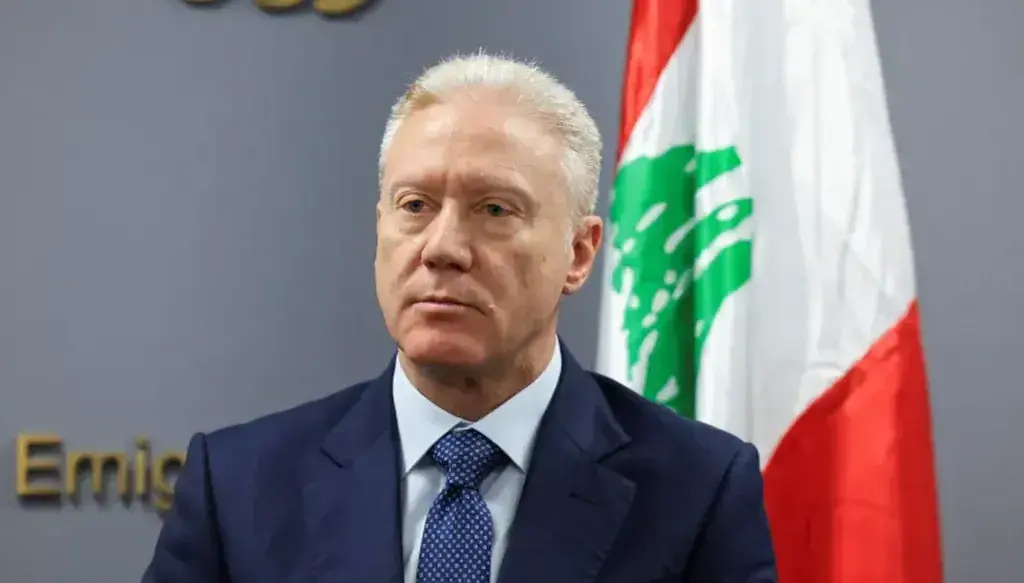
Youssef Rajji: No option to end the Israeli occupation except through negotiation
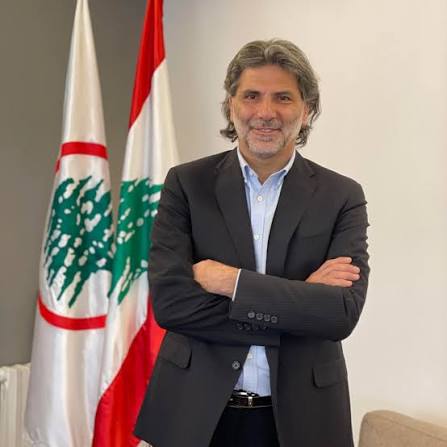
"He will not be among the ministers of depravity"... A "Lebanese Forces" MP on the Energy Minister: "A man of good upbringing"
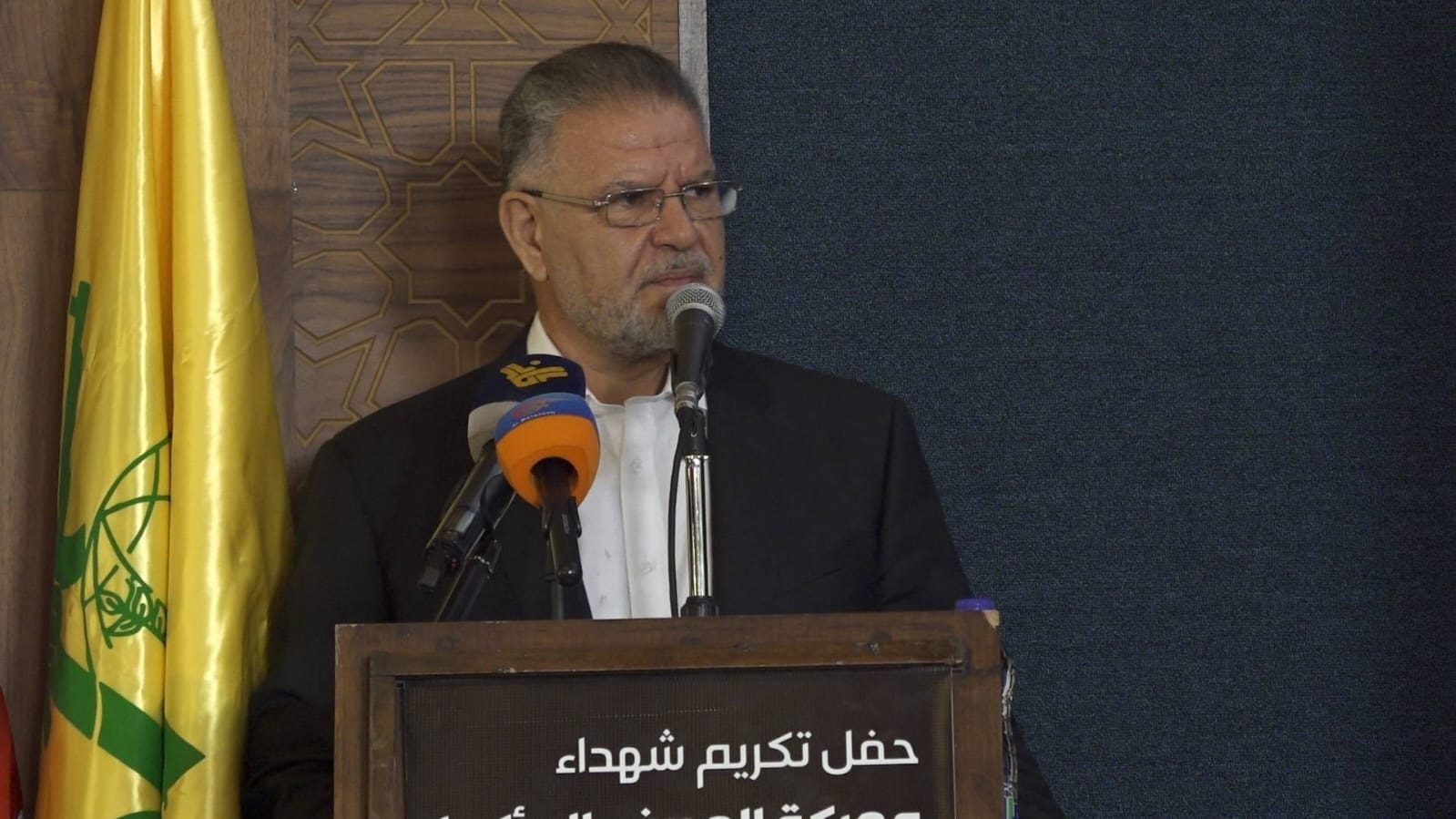
Fayad to the Authorities: It Is Time to Acknowledge the Failure of Your Choice