Hasbani to Barak: Any solution must pass through the Lebanese state
17:28 · 23 August 2026
4 min read
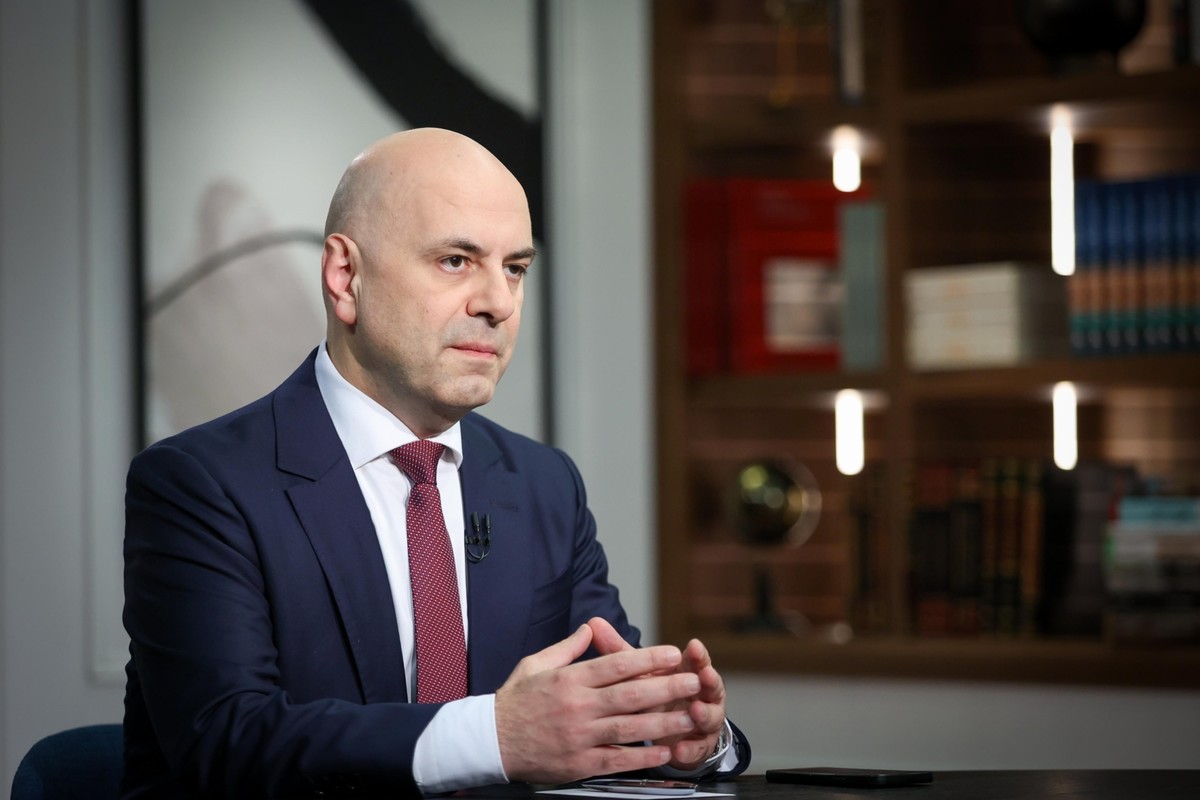
MP Ghassan Hasbani addressed an "open letter to Mr. Tom Barak," which stated:
"I followed carefully your recent interview in which you suggested negotiating directly with Hezbollah since it is the actual decision-maker. This brought to mind a conversation we had during your last visit to Lebanon, when we discussed the very same topic from the exact same angle.
First, I thank you for your continuous interest in and affection for Lebanon, which prompts me to reiterate what I told you directly: the reality of the Lebanese situation is that there is a legitimate, elected authority that alone holds the right to make decisions in the name of the Lebanese state and people, regardless of what the positions and actions of forces imposed on the ground might suggest.
Lebanon has a parliament legitimately and democratically elected by the Lebanese people. This council elected President Joseph Aoun with a majority of nearly a hundred votes, and it has twice granted confidence to Prime Minister Nawaf Salam's government in less than two years. Consequently, Lebanon is not a state without authority or institutions; rather, it is a state with a legitimate authority and elected constitutional institutions, and they alone are the decision-makers.
From here, any solution must pass through the Lebanese state and its legitimate institutions that express the will of the Lebanese people, rather than through granting parallel legitimacy to those who reject the state's decisions, rebel against the constitution, possess an Iranian weapon that has inflicted severe damage on Lebanon, confirm every day that their allegiance is to Iran—as you yourself said—and keep the country as one of its spheres of influence. Legitimacy is neither acquired by possessing illegal weapons, nor by the ability to obstruct government decisions, but is derived from the constitutional institutions that represent all Lebanese.
As for your statement that Hezbollah is stronger than the Lebanese Army, it suggests that your reading of field realities in Lebanon still relies on data that has changed since this idea was previously put before you. The Lebanese Army, when backed by the entirety of the state's judicial, security, and administrative apparatuses, was and remains stronger than the party. What it lacked was political decision-making, which is present today, in addition to enjoying international support and the backing of a wide segment of the Lebanese people. The issue here is not related to salary levels or material capabilities, but to commitment, discipline, and military ethics.
Furthermore, the recent war brought by Hezbollah upon Lebanon and upon itself, alongside the isolation that both it and Iran suffer from, has placed it in one of its weakest phases. Added to this is the ongoing and escalating international and local judicial and financial pressure, which increasingly limits its operational capabilities.
In addition to the above, the United States itself recently renewed its designation of Hezbollah as a terrorist organization linked to the Iranian Revolutionary Guard Corps, and imposed sanctions on individuals accused of contributing to the smuggling of funds to the party via Turkey. How can it be, under such circumstances, that the Lebanese state is asked to sit at the same table with a party that rejects its decisions and possesses weapons outside its institutions, while the American stance and American designation treat Hezbollah as a terrorist organization linked to the Iranian Revolutionary Guard Corps?
Mr. Barak, with all due respect to your opinion and the pragmatism that characterizes your approach to commercial and political deals, and with my appreciation for the importance of the practical approaches based on dialogue that you encourage, Lebanon—at this stage and after the exorbitant prices it has paid—does not need additional legitimacies created outside its constitutional legitimacy, nor negotiation platforms that grant illegal weapons a position parallel to that of the state.
The logic of the state and the rule of law must prevail, at this stage, over the logic of pragmatism, especially after long years of dialogues and incentives used to buy time, which have contributed significantly to weakening a number of Middle Eastern countries, foremost among them Lebanon, over decades.
What Lebanon needs today is the implementation of state decisions, support for its legitimate institutions, and empowering the Lebanese Army to extend state sovereignty over all Lebanese territory. Trust will not return, and the doors of investment will not open, except when the state is present and genuinely active, with no challenger to its authority, and when the rule of law prevails without bestowing any parallel legitimacy on those who challenge the state's legitimacy or violate its decisions."
← Previous article
"The Movement" responds to Al-Asmar: Political accountability cannot be faced by summoning security
Related Articles

Jumblatt: Lebanon-Israel negotiations will not bear fruit as long as Israel occupies the south
Hasbani: The Dahr al-Baidar incident is a gateway to implementing the government’s decisions regarding the party’s weapons
Contact between Al-Hajjar and his Saudi counterpart... enhancing joint cooperation between the two countries