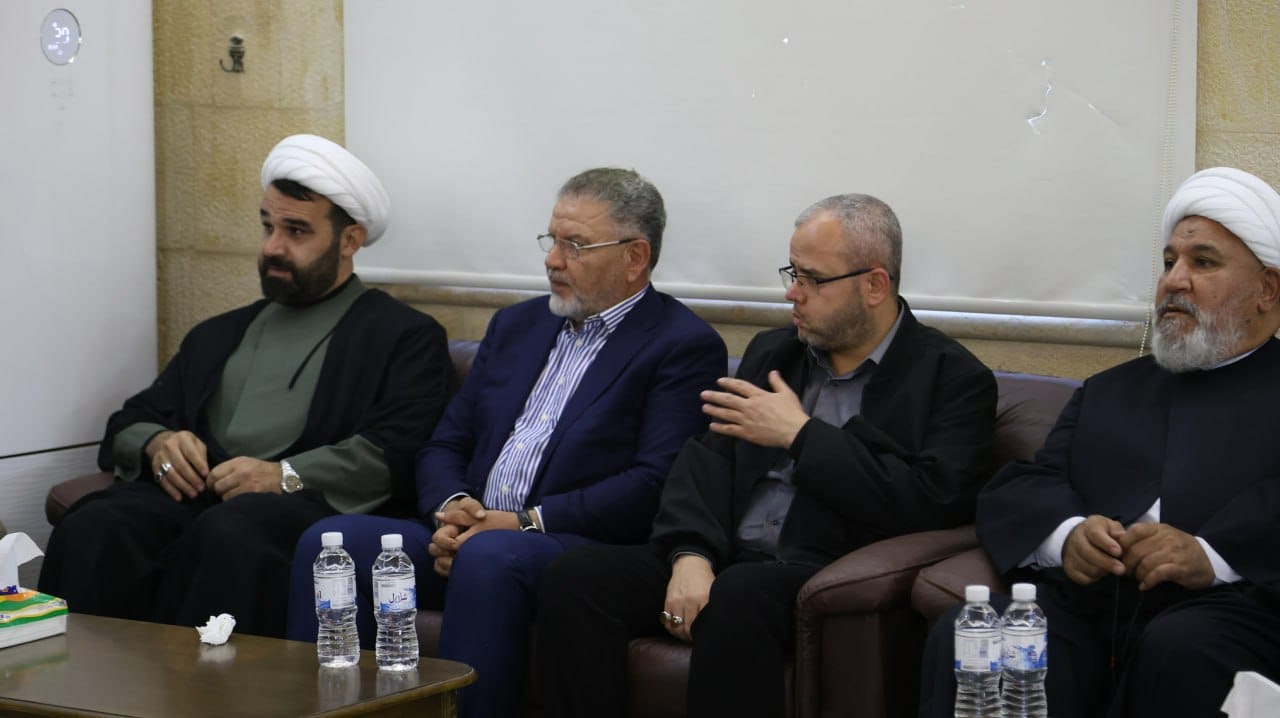
President Aoun launched a new 4-point initiative to stop the escalation
19:41 · 09 March 2026
9 min read

President General Joseph Aoun announced an initiative aimed at putting an end to the renewed Israeli escalation against Lebanon, which is based on the following four points:
Establishing a complete truce, with a halt to all Israeli land, air, and sea attacks on Lebanon.
Moving swiftly to provide the necessary logistical support to the Lebanese Armed Forces.
C. These forces shall immediately take control of the recent tension areas, confiscate all weapons therein, and disarm Hezbollah, its storehouses, and depots, in accordance with the information and data available to them.
Simultaneously, Lebanon and Israel shall begin direct negotiations under international auspices to reach the implementation of the details of all the above.
President Aoun's initiative came during a speech he delivered at the virtual meeting organized this afternoon by European Council President António Costa and European Commission President Ursula von der Leyen, which brought together a number of heads of state to discuss the conditions the Middle East region is experiencing as a result of recent military developments and their repercussions on Lebanon.
During the meeting, which was held via video teleconference (VTC), speakers included, in addition to President Costa and President von der Leyen: King Abdullah II bin Al Hussein of Jordan, Egyptian President Abdel Fattah al-Sisi, King Hamad bin Isa Al Khalifa of Bahrain, President General Joseph Aoun, Syrian President Ahmed al-Sharaa, Turkish Vice President Cevdet Yılmaz, Armenian Prime Minister Nikol Pashinyan, Iraqi Prime Minister Mohammed Shia al-Sudani, Qatari Prime Minister Mohammed bin Abdulrahman bin Jassim Al Thani, Kuwaiti Prime Minister Sheikh Ahmed Abdullah Al-Ahmad Al-Sabah, UAE Deputy Prime Minister and Minister of Interior Sheikh Saif bin Zayed Al Nahyan, Saudi Foreign Minister Faisal bin Farhan Al Saud, Foreign Minister of the Sultanate of Oman Sayyid Badr bin Hamad Albusaidi, and GCC Secretary-General Jasem Mohamed Albudaiwi.
President Aoun's Speech
President Aoun delivered a speech in which he stated:
"I am speaking to you now while more than 600,000 citizens of my people are displaced and homeless. Some of them are on the roads. Without shelter and even without the most basic necessities of life. And more than 400 people of my kin have fallen within days. Among them are 83 children and 42 women. In addition to more than 1,100 wounded, in the span of just a few days."
"The direct cause of this situation is that there is an attempt to plunge my country between an aggression that knows no respect for the laws of war, nor for international laws, and particularly international humanitarian law, and an armed faction outside the state in Lebanon that attaches no weight to Lebanon's interest nor to the lives of its people."
"More than that, what happened at dawn on Monday, March 2, with the firing of a few rockets from Lebanon into Israel, was a semi-exposed trap and ambush for Lebanon, the Lebanese state, and the Lebanese people, based on the following logical and rational questions: Did these limited-number rockets (6 rockets), which were devoid of impact and effectiveness, constitute a decisive element in the balance of the ongoing confrontation between the Iranian regime and Israel, or between Israel and Lebanon? Of course not. Did they provide a deterrent element to prevent Israel from carrying out an aggressive response against Lebanon and its people? Absolutely not. Quite the contrary. Did they achieve, even on an emotional level, a convincing revenge in response to the assassination of Supreme Leader Khamenei? Certainly not."
President Aoun added:
"We believe that what happened was an ambush set for Lebanon and the Lebanese Armed Forces. Some wanted these rockets to draw the Israeli army into an incursion inside Lebanon, to invade some of its areas, and perhaps even to occupy them. This is in order to corner Lebanon between two options: either enter into a direct confrontation with the Israeli aggression, which is untethered from any legal or humanitarian constraints, leading to turning Lebanon into a second Gaza, and turning two million Lebanese or more into displaced, homeless, refugee runaways without a home, and perhaps later without a country, meaning the collapse of the Lebanese state from without; or to refrain from that confrontation, and consequently have that same armed faction emerge with a populist campaign under the alleged pretext of the state's inability to protect its people, thus returning to its misleading slogans that its weapons—which are outside the state and outside the consensus of the Lebanese—are legitimate and necessary, thereby collapsing the Lebanese state from within. Whoever fired those rockets wanted to buy the fall of the Lebanese state under aggression and chaos, even at the price of destroying dozens of our villages and the fall of tens of thousands of our people, for the calculations of the Iranian regime. This is what we have thwarted so far, and what we will continue to work to thwart and defeat."
The President of the Republic said:
"Months ago, we put forward an initiative based on removing the pretexts of both parties step by step: the Israeli government withdraws from at least one point of our occupied land, and in return we take full control of it. Then the sponsoring international parties verify the accuracy of what we have accomplished, so that we then move on to the next point until we finish actual, full control over all our land. And we conclude an agreement with the Israeli government on a permanent cessation of hostilities and on permanent arrangements for security and stability on our border, as a step on the road to a comprehensive peace, in accordance with international and UN resolutions. Unfortunately, this was not met with a response. Today, we are facing a more advanced and dangerous situation. In the face of the new escalation, the government of Lebanon took a clear and irreversible decision on March 2 to ban any military or security activity by Hezbollah. This is what we want to implement clearly and decisively. Therefore, we now call upon the whole world, through this esteemed gathering, to help us support and implement a new initiative consisting of the following:"
A- Establishing a complete truce, with a halt to all Israeli land, air, and sea attacks on Lebanon.
B- Moving swiftly to provide the necessary logistical support to the Lebanese Armed Forces.
C. These forces shall immediately take control of the recent tension areas, confiscate all weapons therein, and disarm Hezbollah, its storehouses, and depots, in accordance with the information and data available to them.
D- Simultaneously, Lebanon and Israel shall begin direct negotiations under international auspices to reach the implementation of the details of all the above.
President Aoun concluded by saying:
"Lebanon reiterates its full solidarity and absolute support for all brotherly Arab countries that were treacherously and condemnably targeted by the Iranian regime: Saudi Arabia, Qatar, the UAE, Kuwait, Bahrain, Oman, Iraq, and brotherly Jordan. As well as with all friendly countries, from Azerbaijan and Turkey all the way to friendly neighbor Cyprus, whose supportive stance towards us and understanding of everything happening we appreciate."
Positions of Participating Leaders
During the virtual meeting, an important part of the discussion was devoted to the situation in Lebanon and the challenges it faces in light of the recent military escalation and the resulting displacement waves and humanitarian and economic pressures on the country. The participating leaders expressed their solidarity with Lebanon and the Lebanese people at this critical stage, affirming their support for Lebanon's sovereignty and territorial integrity and their keenness to prevent the deterioration of the security and humanitarian situation therein.
A number of leaders praised the stance taken by the Lebanese state, led by President Aoun and the Lebanese government, in preventing Lebanon from being drawn into military actions, considering that this decision constitutes an important step to protect Lebanon's stability and strengthen the sovereignty of the state and its institutions. Several participants also expressed concern over the massive humanitarian repercussions of displacement in Lebanon, pointing to the importance of supporting host communities and assisting the Lebanese state in managing this compounding humanitarian crisis.
Jordanian King Abdullah II affirmed his country's support for Lebanon, stressing the importance of backing the Lebanese army and enhancing its capabilities, pointing out that Jordan is already providing forms of support to Lebanon and calling on international partners to increase their contributions in this field.
For his part, Egyptian President Abdel Fattah al-Sisi stressed that the situation in Lebanon is extremely sensitive, calling for a halt to attacks on Lebanese territory and the protection of critical infrastructure in the country, and affirming Egypt's solidarity with Lebanon and with the efforts exerted by President Aoun to strengthen state authority and address the issue of illegal weapons.
A number of leaders, including the leaders of Iraq, Oman, and Armenia, also affirmed their support for Lebanon, its government, and its people, stressing the need to respect the sovereignty of countries in the region and prevent the use of their territories to settle regional conflicts. The participants further stressed that continued escalation in the region will have wide-ranging repercussions on regional and global stability, including energy markets, supply chains, and global food security.
At the conclusion of the meeting, the European Union announced its intention to step up its support for Lebanon, alongside Syria and Jordan, particularly in humanitarian fields and in supporting stability and infrastructure. A new humanitarian aid package was also announced to support about 130,000 people in Lebanon, in addition to organizing a humanitarian air bridge whose first flights are scheduled to arrive the following day, carrying about 45 tons of essential aid, including first aid materials, mattresses, basic household supplies, and items designated for children.
The participants in the conclusion of the meeting stressed the importance of intensifying international coordination and joint diplomatic action to contain the escalation in the region and support affected countries, foremost among them Lebanon, to maintain stability and alleviate the humanitarian repercussions of the crisis.
In this story:
Joseph Aoun

← Previous article
After sentencing members of Hezbollah... the Minister of Justice opens an investigation into pressure on the military court
Related Articles
Jumblatt: Lebanon-Israel negotiations will not bear fruit as long as Israel occupies the south
Hasbani: The Dahr al-Baidar incident is a gateway to implementing the government’s decisions regarding the party’s weapons
Contact between Al-Hajjar and his Saudi counterpart... enhancing joint cooperation between the two countries