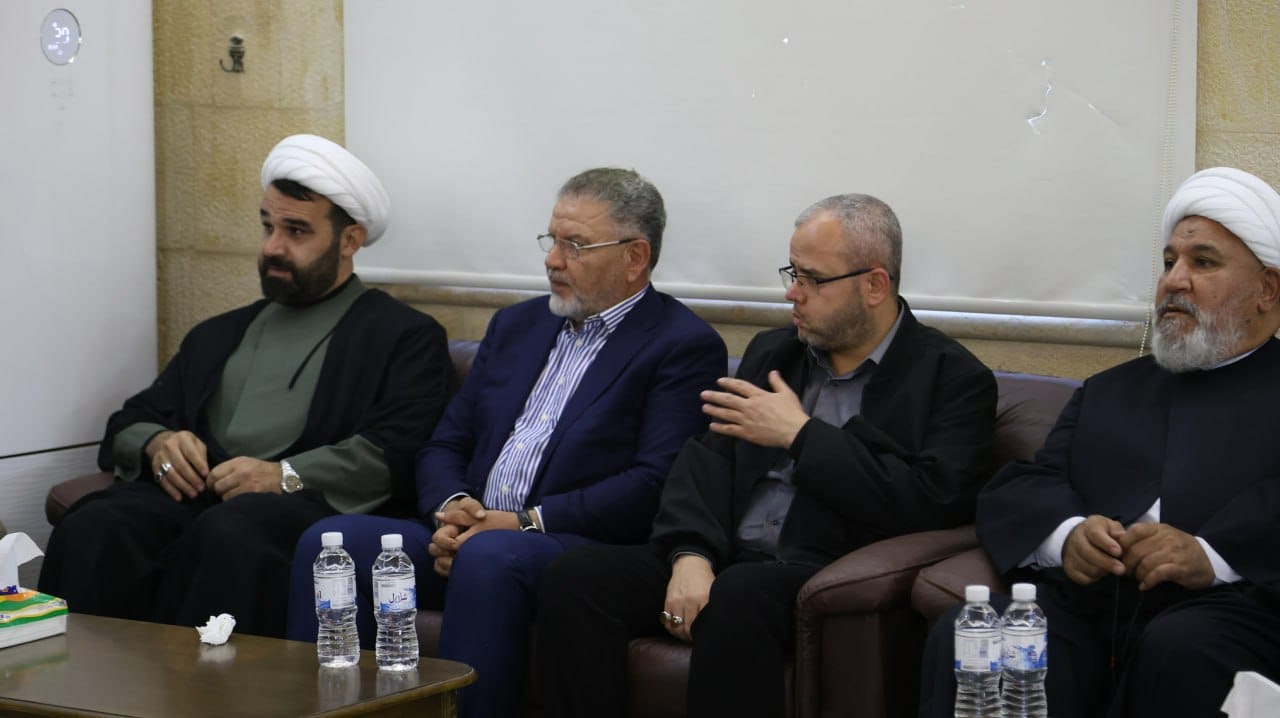
Geagea: The regional war is expanding and Lebanon will not ask Syria to intervene
20:21 · 17 July 2026
6 min read

Lebanese Forces party leader Samir Geagea pointed out that "the call we launched more than 20 years ago regarding confining weapons to the state and strengthening its sovereignty did not go in vain, but rather achieved significant results."
He explained that "the only person who spoke about a Syrian military intervention in Lebanon is US President Donald Trump. As for Syria, Lebanon, or the region, starting from Turkey all the way to the Kingdom of Saudi Arabia, there is a consensus against this intervention."
Regarding his rhetoric concerning the Lebanese situation and the disarmament of Hezbollah, and the fact that some are asking how long Geagea will persist in using these terms to no avail, he said: "First, 'to no avail' is incorrect, and the proof is that today we have crossed more than half the way. The current government differs radically and qualitatively from previous governments and presidents... It is enough to see that it has entered into negotiations with Israel in Washington, even though everyone knows Hezbollah's position rejecting this path, not from a national standpoint, but because of its affiliation with Iran and its desire to use Lebanon as a card within its major negotiations."
In response to a question, he considered that "political work is based on accumulation; you have to present your vision, convictions, and the truth as you see it, and continue to present it until you are able to build a majority that supports this option, especially in a system like Lebanon. If Lebanon overcomes Hezbollah's influence, it will return to a true democratic system, such that the majority determines the direction, not the minority that imposes its opinion. Political work needs long patience; it requires you to perform a first political process, a second, and a third, and this is the difference between it and military action. While military action may achieve a result through a single operation, political work needs accumulated steps until reaching the goal."
He said: "We continued to be optimistic even in the most difficult circumstances during the period of the former Syrian regime's control over Lebanon, and we continued political work. Today, I believe we have crossed more than half the way. In my opinion, the Lebanese people have crossed about 60 to 70 percent of the way toward building an actual state, and this is the key to any success."
In response to a question, he said: "Unfortunately, the regional war is expanding and does not look close to its end; it may go through phases of escalation or retreat, but its actual end is still far away, because it is a regional and international war in the region. As for Lebanon, the current course of the Lebanese government, especially the path led by the Lebanese authority through the Presidents of the Republic and the Council of Ministers in Washington, has begun to detach the Lebanese crisis from the ongoing conflicts in the region. This matter was required long ago and this is what is happening today."
He said: "I believe that the Washington track will allow Lebanon more and more to exit the status of an arena and enter the status of an independent state holding decision-making power. It is true that we have not yet fully reached this stage, but we are moving in this direction."
In response to a question, he said: "It is true that Iran is the one moving the illegitimate military force in Lebanon, but this force has become very weak today and is no longer able to carry out the actions it used to do previously. In the best case scenarios, what this force seeks is to preserve what remains of it. Furthermore, the Lebanese government signed an agreement with Israel in Washington, and although Hezbollah opposes this path, it has not been able to prevent it or change it on the ground because it no longer possesses the components that allow it to continue fighting."
He announced that "the only person who spoke about a Syrian military intervention in Lebanon is US President Donald Trump. As for Syria, Lebanon, or the region, starting from Turkey all the way to the Kingdom of Saudi Arabia, there is a consensus against this intervention. As for the possibility that the Lebanese government might request this, I believe that Lebanon will not request it under any circumstances before it does what is required of it internally. So far, Lebanon has not done what is required of it in this regard, and there are many considerations for the President of the Republic, who always prefers to resolve matters peacefully and amicably as long as that is possible."
Regarding whether the current Syrian leadership has the intention to intervene in Lebanon, he said: "This matter is out of the question for the Lebanese government and for the Syrian government. Syrian President Ahmed al-Sharaa has always been clear that he does not want this task, because it may endanger the Syrian regime... Even if we theoretically assume a Syrian intervention in Lebanon occurs, Iran will not stand idly by and may try to respond by moving what remains of its influence in Iraq on the Syrian-Iraqi border, or through its affiliated cells inside Syria... Therefore, the matter is not that simple or easy."
He continued: "I have not sensed any intention by any Lebanese official at various levels to request help from Syria in this regard, nor have I sensed any Syrian intention to do so... Two weeks ago, Syrian Foreign Minister Asaad al-Shaibani was in Lebanon and this issue was not raised at all."
In response to a question, he said: "The Syrian Foreign Minister conveyed to me a gracious invitation to visit Damascus, and I have had a desire to fulfill it since the beginning of the new phase in Syria. I am trying to accept the invitation as soon as possible; it is not just a protocol duty, but I have a genuine desire to do it. There is a delicate security situation, especially since reaching Damascus requires passing through several areas inside Lebanon, particularly the border areas, so the visit needs study and arrangement. I spoke with Minister al-Shaibani about this and he agreed with me."
Geagea concluded: "I do not deal with the matter with emotion, but rather in a scientific way, and since the current leadership took over in Damascus until now, I have not noticed anything to worry about. What I heard from political discourse is the discourse we had hoped for a long time ago, and what I saw from steps on the Lebanese-Syrian border or inside Syria gives reassurance. If I want to be scientific, a final judgment cannot be issued; the coming days will clarify a lot, but it can be said that everything that has happened so far calls for reassurance, and we are awaiting the developments of the next phase. Therefore, the matter is not that simple or easy."
Source
عكاظ
Tags:
Israel
Lebanese Forces
Kingdom of Saudi Arabia
Hezbollah
Donald Trump
Samir Geagea
Syria
Lebanon
Washington

← Previous article
Labor, immigration and transportation files are on the table of the Minister of Labor
Related Articles
Jumblatt: Lebanon-Israel negotiations will not bear fruit as long as Israel occupies the south
Hasbani: The Dahr al-Baidar incident is a gateway to implementing the government’s decisions regarding the party’s weapons
Contact between Al-Hajjar and his Saudi counterpart... enhancing joint cooperation between the two countries