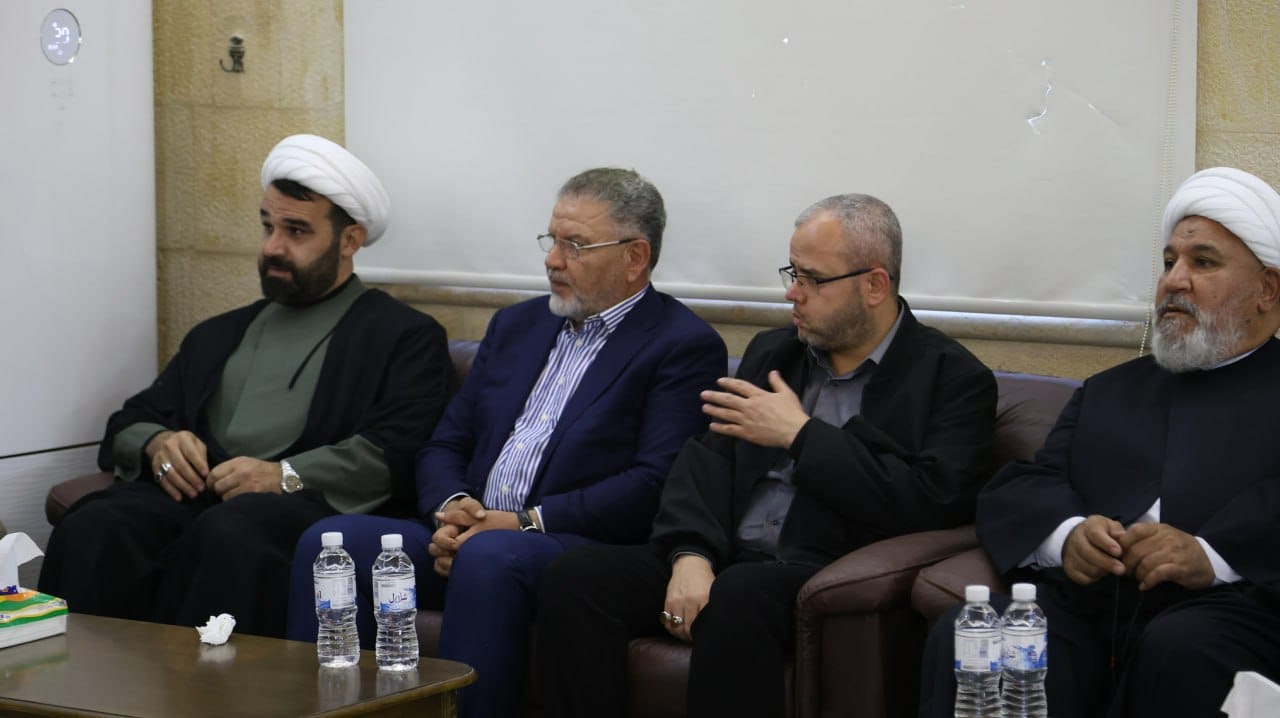
Haider inspected the work department at Saraya Sidon: The damage of the aggression was presented to international forums
16:25 · 04 July 2026
5 min read

Minister of Labour Mohammad Haidar visited the Sidon Serail as part of a tour of the South and Nabatieh governorates to inspect their commercial markets and industrial areas and assess the damage inflicted upon them by the recent Israeli aggression. Upon his arrival at the Serail, accompanied by a delegation of advisors and heads of departments from the ministry, he inspected the conditions of the regional labour department in the South. He was received by its head, inspector Zeina Farhat, and a number of employees, during which he was briefed on the smooth running of work there and whether there were any difficulties to be addressed, praising the efforts of Farhat and the work team during this delicate phase to serve citizens and meet their needs.
An economic and labour meeting was then held in the President Martyr Rafic Hariri Hall at the Serail, in the presence of MPs Michel Moussa and Osama Saad, representative of the South Governor Mansour Daou, head of the administrative department in the South Lebanon Governorate Shawqi Matirak, head of the Chamber of Commerce, Industry and Agriculture in Sidon and the South Mohammad Saleh, President of the General Confederation of Lebanese Workers Bechara Asmar, Hezbollah representatives in Sidon Ahmad Jbeili and Mohammad Kouthrani, head of the Federation of Workers and Employees in the South Abdul Latif Al-Teryaqi, head of the National Gathering for Agricultural Bodies Jihad Bolouk, Vice President of the Association of Lebanese Industrialists Georges Nasrawi, and a number of unionists. The Minister listened to the concerns of business owners and workers in various economic, industrial, and agricultural sectors affected by the Israeli attacks, and ways to support and back them, whether through compensation or improving social security services and other foundations to enable them to endure and stay on their land.
The meeting began with a speech by the Governor's representative Daou, in which he conveyed his greetings due to his inability to attend because of official engagements, and his appreciation for Haidar’s visit, to which he attaches special importance as it embodies the approach of direct communication with citizens and closely examining the conditions and needs of the governorates.
He considered that "this visit acquires special national and developmental importance as it comes at a delicate stage our country Lebanon is undergoing after the recent Israeli aggression, which caused severe damage directly affecting various economic, productive, and living sectors."
For his part, Haidar thanked "Governor Daou and the officials in the South Governorate for their massive efforts during the Israeli attacks and their embrace of the displaced people of the South, and for continuing to prove the presence of the state through the work of the departments in the governorate to secure everything necessary to run the affairs of the people." He also thanked "the General Confederation of Lebanese Workers and the Chamber of Industry in Sidon, who accompanied the displaced to provide the best means for their continuity, and everyone who contributed to supporting and helping the displaced." He pointed out that his visit today "is not protocol-based, but rather to listen to you, to conduct a tour of the economic sectors, check on the conditions of workers in the region, and inspect the ground firsthand to evaluate what we can prepare for the upcoming phase, and what is required of the government and the ministry to enable you to make a solid and swift return to contribute to the revival of the South region in general and the city of Sidon in particular."
He said: "I know that you have gone through many problems, a large part of which you were able to overcome, but there are matters that need us to be briefed on," wishing the General Confederation of Lebanese Workers and the Chamber of Industry to brief him on the atmosphere to build upon the mechanism for dealing with all developments."
He noted that "the volume of damage resulting from the Israeli targeting in the South to the various industrial, economic, and agricultural sectors and properties was raised by me in a report to international forums during my participation in the Geneva conference, as well as to the Arab Labour Organization, and I will also convey it to the Arab League next week."
Vice President of the Association of Lebanese Industrialists Georges Nasrawi affirmed "the association's standing alongside the owners of factories destroyed in the region due to the aggression and examining the extent of the damage that befell them in order to work on securing their needs, while for us, the workforce is a partner and not a passing worker, because the continuity of industry lies with the worker."
As for MP Moussa, he pointed out that "the Israeli events in the South, which violate all international norms and laws, cost dearly the people of the South who left their land, homes, businesses, and factories, and consequently there is a major crisis in the country and a reconstruction workshop awaiting everyone, in which the Ministry of Labour has a fundamental role," hoping that "the war will stop and the real and serious reconstruction process in the country will begin."

← Previous article
Instead of destroying them...this is what was decided regarding smuggled apples
Related Articles

Jumblatt: Lebanon-Israel negotiations will not bear fruit as long as Israel occupies the south
Hasbani: The Dahr al-Baidar incident is a gateway to implementing the government’s decisions regarding the party’s weapons
Contact between Al-Hajjar and his Saudi counterpart... enhancing joint cooperation between the two countries