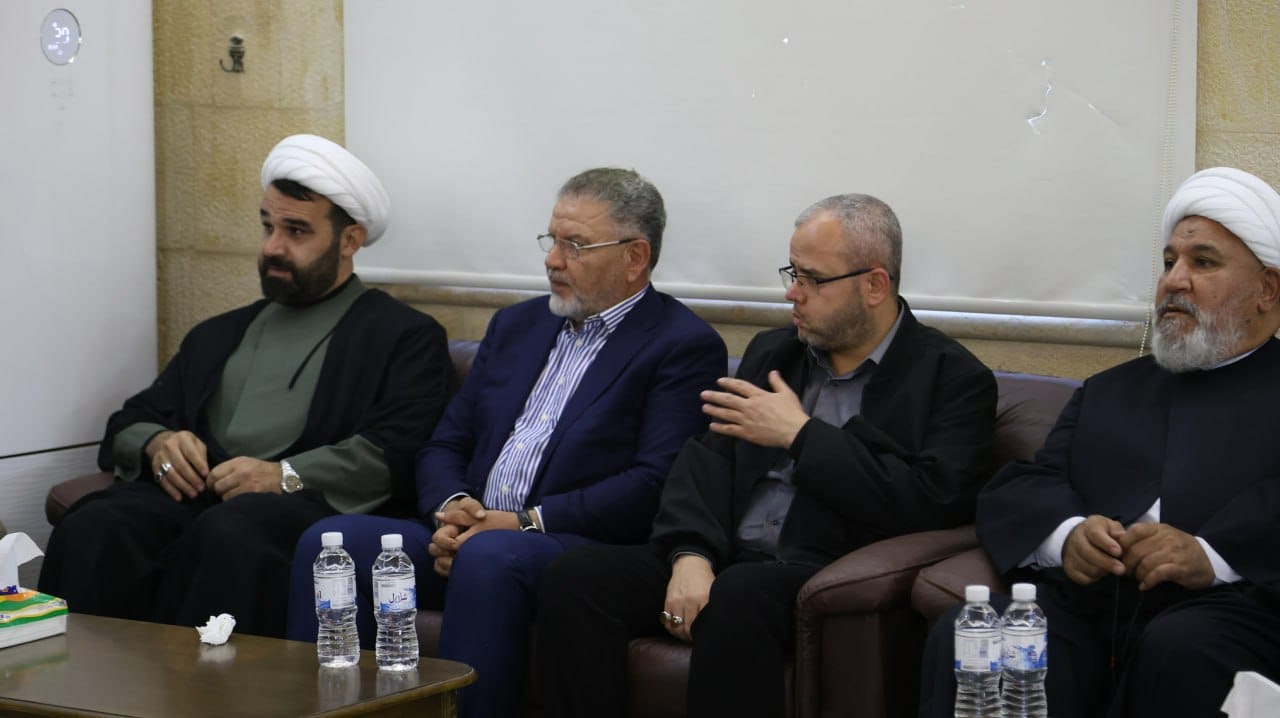
Qasim: We are ready to pay the price... and we are in the field
21:54 · 23 June 2026
11 min read

Hezbollah Secretary-General Sheikh Naim Qassem affirmed that we are "now in a new phase in the history of Lebanon, its resistance, its army, its people, and its future—a phase named breaking the Israeli project," explaining that "after all of Israel's attempts during the past two or three years, we have reached a phase where the project has been broken. This does not mean they will not try again or that there will not be other phases, but there was a grand project called ending Hezbollah militarily, politically, culturally, socially, and humanly, and abolishing its existence and the existence of all those with it along the path of Greater Israel. This project has been broken. Now they need a long period of time to try to return; whether they can or cannot, let them try their luck, but we are in the phase of breaking the Israeli project."
During the central Ashura gathering in the Southern Suburb, he considered that "the role of the field is fundamental; that is, had the resistance not been in the field, and had there not been the legendary, great, self-sacrificing youths who filled the world with their high-minded model ready to sacrifice life, wealth, bloodshed, the loss of homes, family, and everything, solely so that it would remain standing and prevent the occupation from achieving its objectives—had these people not been present in the field, we would not have reached this result."
He said: "Had we not had Sayyed Hassan, the martyred leaders, the wounded, the prisoners, and the great families that rallied around the resistance, had we not had these exceptional preparations, we would not have broken the project. Therefore, the field is the fundamental. When we used to say 'the field,' they would tell us: 'You are not stronger than Israel.' Who said we are stronger than Israel? We say we are in the field, and Israel in the field will not endure, and cannot achieve its objectives even if time drags on."
He added: "Therefore, had the field fallen, Israel would have taken a step in its project to end Hezbollah and achieve the Greater Israel project, but the steadfastness of the field broke the project. They were pressuring us very hard—some politicians, some countries, and some who contact us—saying: 'My brother, what are you doing? Israel is strong, and you are not stronger than it.' Yes, we know Israel is strong, but who said we accept giving things to Israel because it is strong? This is our right, and we do not relinquish our right. Consequently, let it manage its affairs, and you manage your affairs if you are frightened, incapable, or complicit—that is your concern and its concern. They say: 'My brother, but there are victims and heavy costs; you rest your minds.' We have made our decision and are ready to pay the price. And know that the stronger party, if you make concessions at a time like this, will take even more, and more, and more afterwards. The one you give to and do not stand up to—who will stand up to him later?"
He pointed out that "the sole guarantee for liberating the land, independence, and sovereignty in our conviction is the resistance in confronting the occupation. By resistance I mean not just our resistance, but every individual resisting, and every individual is required to resist, and we are all required to cooperate for resistance—army, people, resistance, and all the people; I am speaking about the principle. The sole guarantee is the resistance. America guaranteed—they told us America guarantees—it guaranteed the November 27 agreement, but it reneged on it and said, 'We did not guarantee,' and it turned out there was an agreement between it and Israel to 'finish them off.' America is not a guarantor."
Qassem asked: "Who guarantees? The Security Council? Arab and Islamic countries? The major powers?", considering that "no one is capable of guaranteeing, this is not to mention that some actually guarantee our destruction—meaning they do not guarantee giving us our right, the right of Lebanon. Hence, for us, there is no guarantor except our strength: our strength, the resistance, built upon the trinity of power, built upon faith, will, and capability. Hence, if we have hope of achieving something, we can achieve it through the resistance. This was our conviction, and upon this basis we worked. Therefore, we stood firm and we endured, because we consider this to be the sole option; the other option is called surrender—meaning the loss of everything. There is no third option."
He said: "Hence, thank God, our principle and faith gave us additional power and compensated for our limited capabilities. It is an equation: if I want to compare the strength of the resistance with the strength of Israel and say that by the strength of the resistance I want to defeat Israel, my statement would be incorrect. It is impossible by the military strength of the resistance to break Israel's military strength. But if we add to the strength of the resistance the strength of faith and the strength of will, then yes, there becomes a difference, and of course, above all else, we rely on the Almighty God and consider that God supports us. So we came to possess three sources of power: faith, will, and capability. And you have witnessed the applied models, which is martyrological action."
He stressed that "we persevered for 15 months, so perseverance was part of the field. Do not think that perseverance was a retreat; rather, it was part of the field, in preparation and readiness because we settled our option. When we saw that the appropriate moment had come on March 2, we fought this battle and seized this opportunity. We moved from perseverance in the field to fighting in the field on March 2 with a clear and decisive decision because we considered that this timing and these circumstances were appropriate, and thank God it turned out that we entered into the movement of relying on Iran, thus adding strength to our three existing powers—that is cleverness."
He continued: "They started telling us: 'Why did you enter now? Why did you and Iran enter?' Do you know, approximately two or three weeks before the battle against Iran and the war on Iran happened, there remained no Arab or international envoy—and even some pillars of authority—who were not asking us: 'If America fights Iran, and if Israel fights Iran, will you intervene?' We gave no answer; no one got an answer from us. We asked them: 'Why are you asking this question?' They said: 'Because Israel says that if you do not intervene, it will not strike you, and consequently it will complete its battle with Iran and you will be neutralized during this period.' We asked them: 'And after this period, what happens?' They said: 'We do not know.' You do not know? What do you want to do? You say you want to go confront Iran to diminish its capacity and power and the people who can fight alongside it, on the basis that you will finish off Iran and then come to finish us off and kill us one by one. We gave no answer, and we must not give an answer. And when we entered, when Iran was in the battle, we benefited from them and they benefited from us, and these were the results."
He noted that "the enemies—Israel, America, and those with them—did not expect Iran to stand firm, and they also did not expect Hezbollah to stand firm. They were astonished at how Hezbollah entered on March 2 with this exceptional force and this sincere resolve. They are astonished because they do not know us, because they do not know that we have settled our options. The important thing is, thank God, we were able to reach a stage where the timing, the option, the waging of the battle, and all the steps we took were very important in that they bore fruit in the field in favor of what has now happened regarding the ceasefire as a first step, which must be followed by the step of complete withdrawal from Lebanese territory."
Qassem thanked Iran, addressing it by saying: "You are the most honorable of the honorable in the world. All the countries surrounding you will naturally build the best relations with you because it has become clear that the one who used to promise them protection and the fulfillment of the purpose of confronting Iran—which has no necessity for them to confront; why should they confront it? They are brothers, in religion, in the region, and in the life existing in our region—but because they want to tear the world apart, they use everything for the benefit of Israel and America. These people have now discovered, thank God, that Iran can be relied upon, and it is capable of standing firm. Iran possesses loyalty and truthfulness, to the extent that it did not accept to proceed with an agreement to end the war on it except by ending the war on Lebanon. Is there any country or group in the world that does that? We used to read analyses saying that Iran makes agreements, sells out Hezbollah, and cuts off funding on the basis that its interest is more important than Hezbollah's interest. No, you do not know Iran, nor Leader Khamenei—may God protect him and prolong his life; you do not know the Iranian people, nor the Islamic Revolutionary Guard Corps. These people are noble and honorable, raised upon the path of Hussein, peace be upon him. These people are a group that supported Palestine and the oppressed, and bore all burdens for 47 years because they want to work for the truth upon the path of Imam Hussein, peace be upon him."
He explained that "the result we want to reach—what is the scene now? First, there is an Israeli aggression that failed to achieve its objectives, and its project was broken. Second, there is a resistance, a people, and a homeland that paid major sacrifices and stood firm, and the resistance is still standing, ready, and will continue. What we want is our rights, our land, and our sovereignty. We want to liberate Lebanon and stop the aggression. These claims that he is afraid for his security and has the right to protect his security—if he is afraid for his security, he has demolished all our security. Do you treat the one who demolished everything, or do you treat the one who says he is apprehensive? He is also an occupier even in Palestine—meaning he has no legitimacy in the region in the first place; we are the legitimacy, the Palestinians are the legitimacy."
He stressed the necessity that "withdrawal must take place within a timetable; there is no option before Israel except complete withdrawal from all Lebanese territory without keeping a single inch, under any title whatsoever, and implementing the five points: completely stopping the aggression by air, land, and sea; the Israeli withdrawal; the deployment of the Lebanese Army; the return of prisoners; the return of the residents to the furthest borders; and reconstruction. These five points are our right to be implemented. The Israeli withdraws, and the Lebanese Army deploys exclusively south of the Litani, and we cooperate with the Lebanese Army to the utmost limits within the ceiling of mutual security just as we cooperated on November 27 and afterwards during the 15 months. Israel has nothing to do with what we agree upon on the internal Lebanese level, and it must be prevented from intervening, asking, or knowing; it has no business knowing what we will do in the future. It must be prevented from this intervention."
He concluded: "Now the political authority in Lebanon has a tested guarantee called the resistance—the most honorable resistance that broke the tyranny of America and Israel, and prevented Israel from achieving its objectives. We tell you, make use of this resistance to be strong in confronting challenges, and we are present, and every calculation has its price."
In this story:
Naim Qassem
More from:
Dahieh (Beirut's southern suburbs) news

← Previous article
President Aoun: The negotiations in Washington aim to establish a suitable basis for achieving lasting peace
Related Articles
Jumblatt: Lebanon-Israel negotiations will not bear fruit as long as Israel occupies the south
Hasbani: The Dahr al-Baidar incident is a gateway to implementing the government’s decisions regarding the party’s weapons
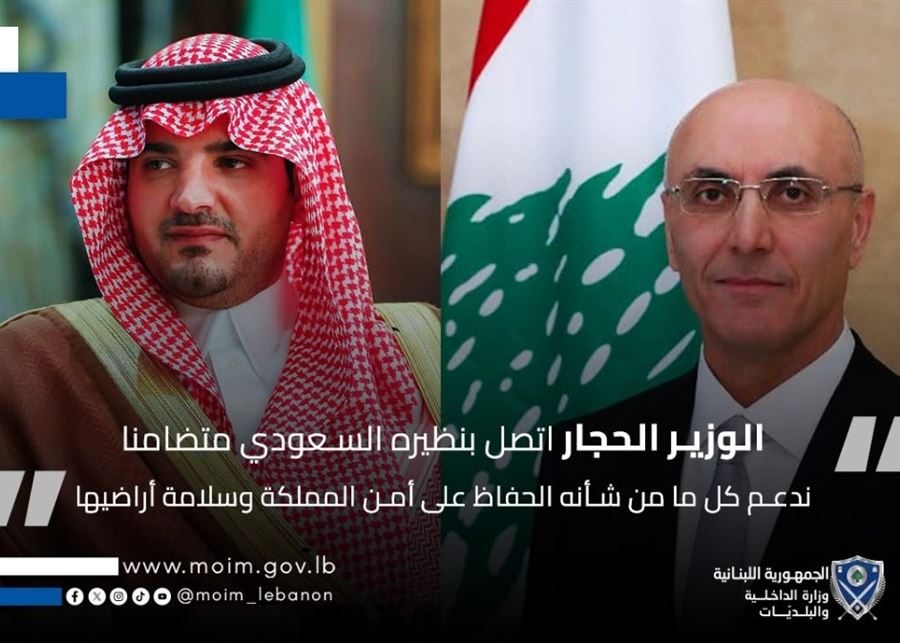
Contact between Al-Hajjar and his Saudi counterpart... enhancing joint cooperation between the two countries