Politics
03:13 PM | 23 Apr 2026
Fadlallah: No to a unilateral ceasefire... and to stop negotiating with the enemy
Fady Mahouly
Member of the “Loyalty to the Resistance” bloc, MP Hassan Fadlallah, confirmed that “the attacks carried out by the Zionist enemy against the southern border villages are continuing,” pointing out that “talk about occupying 55 villages or establishing a buffer zone 10 kilometers deep is inaccurate,” and said: “There is an uneven presence between the regions, and that the resistance fighters are present near the border at some points.”
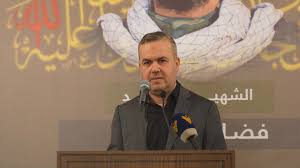
Fadlallah explained, in a press conference held in the House of Representatives, that “fire attacks include these villages via drones, artillery shelling, or direct fire,” stressing that “these crimes will not discourage our people from continuing resistance until their entire territory is liberated.” He said: "The resistance is exercising its legitimate right to defend the country and the people, and will not accept a unilateral ceasefire while the enemy continues its attacks without response."
He announced that "the appropriate response will be decided by the resistance leadership according to field data." He said: “Lebanon is facing continuous aggression, and the resistance will not allow the enemy to establish its red lines,” recalling that “these lines fell previously due to the resistance from the years 1978, 1982, and 1985 to 2000 and 2006, and the security belts that the occupation had established in the south also fell.”
Likewise, Representative Fadlallah called on the authority to “depart from the path of concession that it has involved Lebanon in,” demanding “to stop all forms of direct communication with the enemy,” considering that “the latter practices deliberate killing, destruction, and assassination against civilians.”
He stopped at what happened in the town of Al-Tiri, noting that “the enemy prevented rescue teams from reaching the civilians it targeted,” considering that “the Israeli enemy benefits from the political cover it gets from Washington to cover up its crimes.” He believed that "failing to take a decisive national stance to stop communicating with the enemy constitutes a major mistake," considering that "this communication gives him a free political image that covers up his crimes."
He stressed that "time has not run out for the authority to remedy the dangers that threaten Lebanon's fate, unity and sovereignty," and said: "The enemy chose the timing of its crime on the eve of a new negotiating session in Washington to humiliate the Lebanese authority."
He stressed that "this behavior constitutes a further separation of power from its people and their pain," calling again for "the cancellation of direct negotiations with the enemy, and a return to the option of national understanding and unity to confront the aggression with a unified position that preserves sovereignty and preserves the blood of the martyrs."
Regarding Al-Tiri’s crime, Fadlallah considered that “the enemy promoted a completely false narrative,” explaining that what happened was “a described war crime that targeted unarmed civilians,” namely the journalist Amal Khalil, Mukhtar of Bint Jbeil, Ali Nabil Bazzi, and Muhammad Ayman Hourani.
He explained that the martyrs "were civilians who set off from Sidon towards Tibnin, then to the town of Al-Tiri, with the aim of taking a tour near their towns," noting that "one of them was accompanied by his children before continuing on his way."
He stressed that "targeting them while they were heading to their areas constitutes a described crime," stressing that "the story that the enemy tried to spread about targeting armed elements is incorrect."
Fadlallah concluded by affirming that “media personality Amal Khalil was martyred while performing her duty, and she was a free voice alongside the people and the resistance,” stressing that “Lebanon will remain a homeland of resistance, freedom, responsible speech, and true sovereignty.”