Security
10:29 AM | 15 Apr 2026
From a fragile truce to border demarcation...the course of the Lebanese-Israeli negotiations and agreements ink on paper
Fady Mahouly
|
Source: الشرق الأوسط
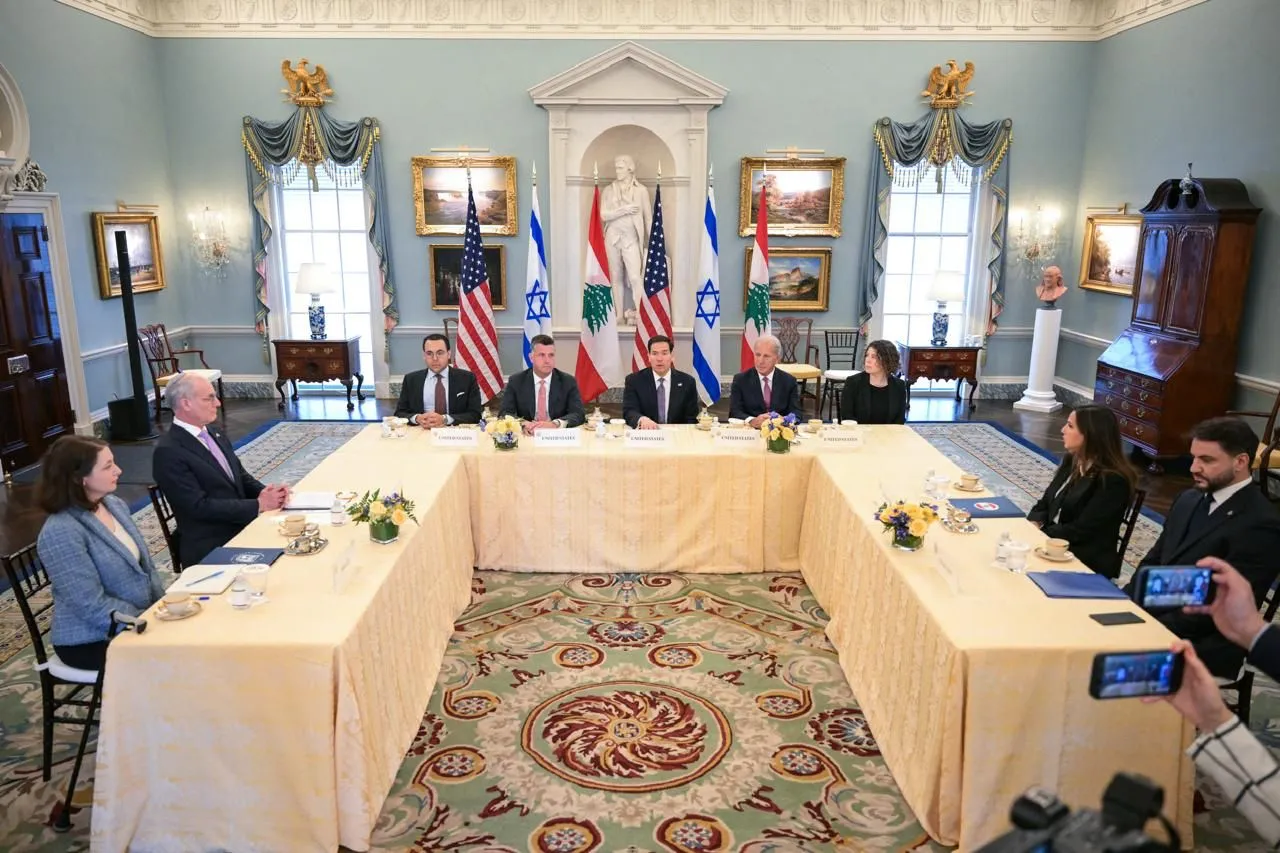
Direct peace talks began in the American capital between Lebanese and Israeli representatives for the first time in decades, according to Agence France-Presse.
The following are rare precedents for negotiation between the two parties since the declaration of the establishment of the State of Israel.
1949: A fragile armistice agreement
On May 15, 1948, the day after the declaration of the establishment of the State of Israel, the first Arab-Israeli conflict broke out. Eight countries (Egypt, Syria, Jordan, Lebanon, and Iraq) fought a war with the new state, after they had rejected the United Nations plan that stipulated the division of Palestine into two states, Arab and Jewish, which was voted on in November 1947.
In 1949, armistice agreements were signed between Israel and neighboring countries. Lebanon signed this agreement with the Hebrew state in Ras Naqoura on March 23 of that year. But during the 6-day Arab-Israeli war in June 1967, Israel broke these armistice agreements.
1983: A peace agreement remained a dead letter
On June 6, 1982, Israeli forces invaded Lebanon, in an operation called “Peace of Galilee,” which aimed to expel Palestinian fighters, but it ended in an occupation that lasted about 18 years.
On May 17, 1983, Lebanon and Israel signed an agreement stipulating the withdrawal of Israeli forces from Lebanese territory. After direct negotiations that lasted 4 and a half months with the participation of the United States, this agreement was reached, but it was canceled less than a year later, in March 1984, under pressure from Syria and Lebanese parties allied with it.
1991 - 1993: Negotiations in Washington
At the end of 1991, bilateral negotiations were launched between Israel, on the one hand, and Syria, Lebanon, Jordan, and a Palestinian delegation, respectively, following the International Conference for Peace in the Middle East, which was held in Madrid.
10 bilateral negotiating sessions were held in Washington over a period of 20 months until 1993, without achieving results.
2022: Agreement on maritime borders
After years of negotiations under American mediation, Lebanon and Israel announced on October 27, 2022, that they had reached an agreement according to which their maritime borders were demarcated, and an end to a dispute over a region rich in natural gas in the “Mediterranean”.
No direct contacts took place between the delegations of the two countries during those negotiations, while the agreement took the form of two separate letters, one between Lebanon and the United States, and the other between Israel and the United States.
2024: Ceasefire agreement
In November 2024, an agreement was reached that put an end to the war between Israel and Hezbollah, but Israel continued to bomb the border areas to destroy Hezbollah positions and liquidate its leaders.
In December 2025, civilian officials participated alongside Lebanese and Israeli military personnel in meetings of the South Lebanon Ceasefire Monitoring Committee (led by the United States, and including France and the United Nations).