After 21 hours of negotiations... nuclear disputes are hindering the agreement, and Washington is threatening a blockade
11:14 · 12 April 2026
4 min read

The successive rounds of negotiations held by the American and Iranian delegations in Islamabad, which lasted for 21 hours, did not result in an agreement between the two parties to completely end the war and reopen the Strait of Hormuz.
The Pakistani Foreign Minister called on the United States and Iran to continue committing to the ceasefire.
The Iranian Foreign Ministry announced "reaching an understanding on some points while views differed on three issues," pointing out that "we entered the negotiations in an atmosphere of distrust and suspicion, and we did not expect to reach an agreement during a single round."
For his part, US Vice President JD Vance announced today, Sunday, that the talks with Iran did not result in an agreement, pointing out that he is leaving Islamabad after presenting the "final and best offer" to the Iranians.
Vance's statements carried an indication that he is still giving Iran enough time to consider the offer presented by the United States, following the announcement of a two-week truce that began at dawn on Wednesday.
Vance told reporters that the US delegation, after 21 hours of talks in the Pakistani capital, is leaving after presenting "our final and best offer. We will see if the Iranians accept it."
He added that the main dispute centers around nuclear weapons. Vance said: "The simple fact is that we need a firm commitment that they will not seek to acquire a nuclear weapon, and will not seek to acquire the tools that would enable them to quickly build a nuclear weapon."
He continued: "The simple question is: Do we see a fundamental commitment of will by the Iranians not to develop a nuclear weapon (...) not only now, and not just two years from now, but in the long run?", pointing out that "we have not seen that so far, and we hope to see it."
In his brief remarks at the hotel in Islamabad that hosted the talks, Vance did not shed light on the dispute over another major issue, which is the reopening of the Strait of Hormuz, the strategic corridor through which one-fifth of the world's oil passes.
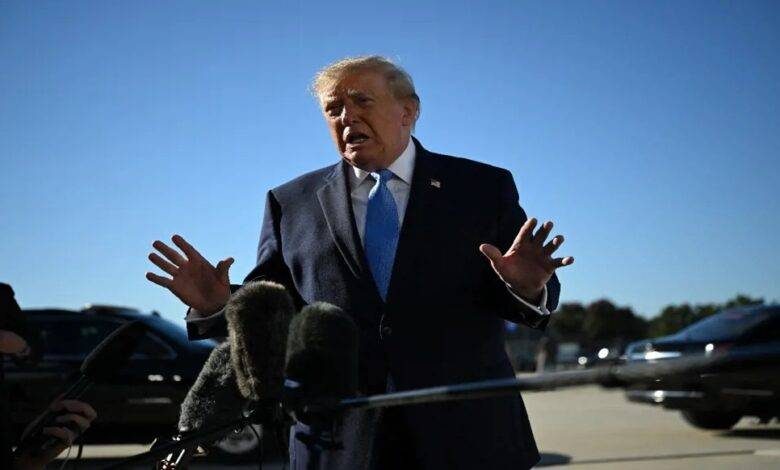
He pointed out that President Donald Trump, who expressed on Saturday in Washington his indifference as to whether the two sides reach an agreement or not, was lenient in the talks.
He said: "I think we were very flexible. We were very cooperative. The President told us: You must come here in good faith and do your best to reach an agreement."
He added: "We did that, but unfortunately, we were not able to make any progress."
He also hinted at imposing a naval blockade on Iran if it does not back down from its positions.
Trump shared via his account on the "Truth Social" platform an article published by the "Just the News" website, talking about the possibility of imposing a naval blockade on Iran similar to what happened in Venezuela unless Iran backs down.
Iranian Foreign Ministry
In the first Iranian comment on the failure of the negotiations, an Iranian Foreign Ministry spokesperson said: "We reached an understanding in the negotiations on some points and views differed on 3 issues, and we discussed the 10 Iranian clauses and the points of the American side."
He added: "We discussed complex issues in complex circumstances and new files like the Strait of Hormuz and regional issues," pointing out that "we entered the negotiations in an atmosphere of distrust and suspicion, and we did not expect to reach an agreement during a single round."
He stressed that "the path of diplomacy has not been closed and it is a permanent means to safeguard our national interests," announcing that "contacts and consultations will continue between Iran, Pakistan, and our other friends in the region."
Post-Negotiations
Furthermore, Fars News Agency quoted a source close to the negotiating team as saying that "Iran has no plans for the next round of negotiations," pointing out that "the American team was looking for a pretext to leave the negotiating table."
It reported that "the Americans were not ready to lower the ceiling of their expectations," as "the United States demanded during the negotiations what it failed to achieve in the war."
For its part, the Iranian Tasnim News Agency quoted an informed source as saying that "Iran is not in a hurry regarding the negotiations," stressing that "as long as America does not agree to a reasonable agreement, there will be no change in the situation in the Strait of Hormuz."
In this story:
Donald Trump
← Previous article
Disagreements hinder the agreement... The failure of the US-Iranian negotiations in Islamabad