Bassil to the government and the Ministry of Energy: “What did you say and what did you do?”
15:33 · 26 September 2026
8 min read
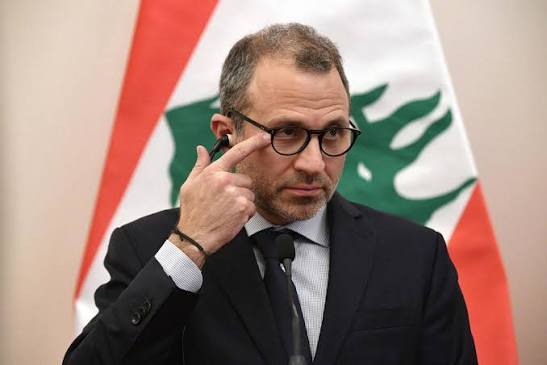
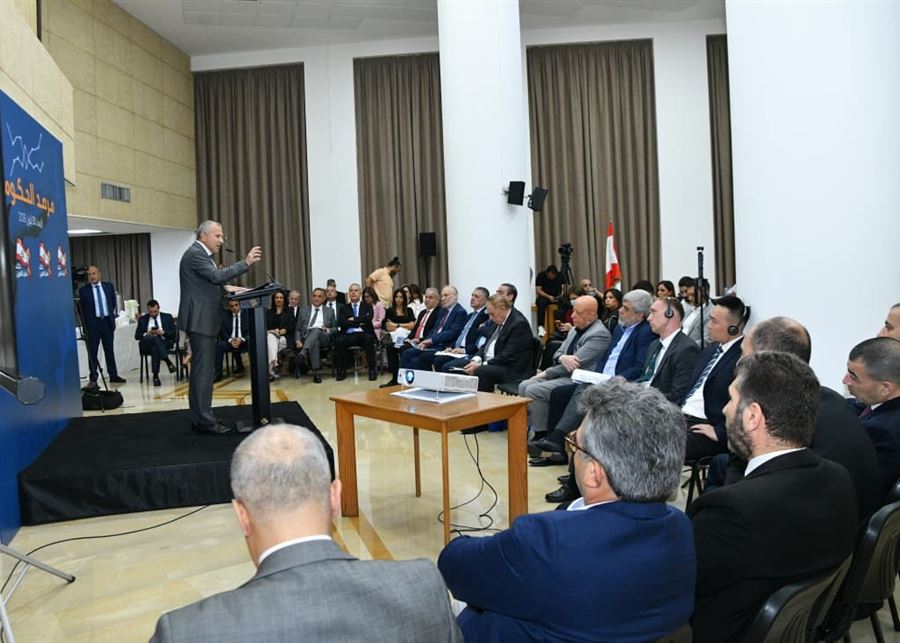
The head of the Free Patriotic Movement, MP Gebran Bassil, addressed the government and the Ministry of Energy with a series of questions under the title “What did you say and what did you do?”, presenting the promises made in the electricity file and the situation in the sector, and accusing those in charge of causing a decline in nutrition and increasing burdens on citizens.
Bassil said: “Today I want to start with what you said and what you did, Ministry of Energy,” adding: “First, you said that within six months you would provide electricity 24/24. What did you do after 20 months? You intentionally turned off all the factories and brought the country into darkness 24/24.”
He pointed out that nutrition “was never at this level,” noting that in previous stages it reached 20 and 21 hours a day, “and we felt short-lived because it did not reach 24 hours as a result of the disruption of the 24/24 electricity plan in 2015.” He added that even after the 2019 crisis, the supply during the era of former Energy Minister Walid Fayyad reached about ten hours, considering that the current ministry received an electricity tariff that has become three times higher than the previous tariff, and that it would not cause a deficit for the Electricité du Liban or support from the state.
Bassil continued: “Secondly, you said that you would cost the state zero money on electricity. What did you do with the money? The Electricity of Lebanon had 700 million dollars, and the oil facilities had 60 million dollars when you received it. You spent the 760 million dollars, and brought the treasury to zero dollars and electricity to total darkness.”
He added that this money is “not the money of the state and the depositors?”, considering that the followed policy causes the state to bear a loss estimated at about $360 million annually for every four hours of electricity that can be secured with the available capabilities.
In response to holding previous policies responsible for the money spent on subsidizing electricity, Bassil said that the forces in power today were “partners in the $22 billion spent since the 1990s on subsidizing electricity,” because they were voting in the Council of Ministers and Parliament in favor of the subsidy policy, while the “current’s” plans were based on rejecting the continuation of this subsidy.
An additional $3 billion for generators
Bassil stopped at the promise to reduce the cost of electricity for citizens by ensuring 24/24 state nutrition, and said: “What have you done? You have increased the generator bill by 3 billion dollars a year, which they take from the pockets of the Lebanese as a motor bill in addition to the electricity bill.”
He asked: “Isn’t this money from people’s pockets and from depositors’ money?” He considered that those in charge of the sector have adopted a policy that is in the interest of the generator owners and the diesel cartel. He said that the decrease in the state’s electricity hours means operating the generators for longer hours and increasing their profits and the profits of diesel importers.
He added that these amounts could have remained with the Lebanese or entered the banking and economic cycle, instead of paying an additional cost for private electricity.
Regulatory Authority: It was appointed, but electricity did not come
In the regulatory body file, Bassil said: “You said when the regulatory body is formed, all problems will be solved and electricity will come. What did you do? You wrote it without amending the electricity law, even though your minister himself said that the law must be amended.”
He pointed out that the head of the authority and a member of it resigned, considering that it was unable to carry out its role, and that what it issued was limited to “a plan or paper that was not within its authority.” He described it as containing generalities and constructive rhetoric “without numbers, dates, or executive program,” and accused it of practically leading to “legitimization of large generators.”
He said that the minister is still exercising part of the authority’s powers and signing matters, and the law does not give him the authority to sign them after appointing them, adding: “Why? Because you do not want to amend the law so that it does not appear after years of talk that we were right when we said that it is not permissible to appoint the regulatory authority before amending the law.”
He continued: "Today, the authority was appointed, but the electricity did not come. The magic turned against the magician, and you got yourselves and the electricity sector into the problem."
“You mocked us for what they left us with... and today you say they did not leave us alone.”
Bassil touched on the criticism previously directed at the “Movement” because of the phrase “they did not leave us,” and said: “You mocked and exaggerated about what they left us, but you did not present a plan or put forward an idea.”
He added that the Minister of Energy, upon assuming his duties, said twice in the House of Representatives and the Energy Committee that there was no need to develop a new plan because the plans already existed in the ministry and needed to be implemented.
Bassil pointed out that the minister’s political team “did not let him implement it so that it would not appear that he was implementing our plans,” adding: “Today you are insinuating to the Lebanese that they have not abandoned you, but you are lying, because you did not abandon yourselves and did not let your minister work and complete the existing plan for which there is no other solution.”
He added that a team placed in the minister’s office “became the front,” considering that it was not left to the minister to implement electricity, water, or gas projects, and that the priority was “political discontent,” before the team itself, after the results of the work appeared, began to hint at the presence of obstruction.
He asked: “Where did they leave you? Show us.”
30 draft resolutions in 20 months
Bassil said that within 20 months, the Ministry of Energy submitted about 30 draft decisions to the Council of Ministers, “all of which were accepted except for one draft last June that was postponed due to confusion over the issue of Iraqi fuel.”
He added that these projects did not include projects that lead to increasing electricity production, securing water, or extracting oil, but rather revolved around travel requests, presenting topics, dismissals, and appointments.
He said: "30 draft resolutions were accepted, but there is nothing among them to provide electricity, provide water, or extract oil."
Forensic audit, ships and fuel
Regarding the criminal audit file on the ships, Bassil said that “nothing will come of it because it is a new lie,” stressing at the same time that he welcomes the audit of the file. He added that three of the requests submitted to the government were “in violation of the law” and related to the entry of ships and unloading their cargo in violation of the rules, indicating that those in charge of the file tried to manipulate the fuel issue. He pointed out that the file is now before the court and that the financial plaintiff has claimed it, pointing out that the “Movement” has filed a complaint and is pursuing the case judicially.
$250 million dues to state administrations
Bassil touched on the Electricité du Liban’s dues to state administrations, noting that the Council of Ministers approved in April 2026 a decision requiring the administrations to pay their dues. He said that the argument presented today is that there are about $250 million in dues accumulated over the years from state departments and institutions, and that paying them allows for securing electricity.
He asked: “You spent $700 million and did not bring electricity, but rather the supply declined. So how did $250 million today become the solution?”
He pointed out that about half of these dues, or approximately $125 million, are due to water institutions, which in turn fall under the responsibility of the Ministry of Energy, calling for their situation to be addressed instead of pushing them into further deficit.
He said: “Do you want to bankrupt the water institutions further and cut off water to the people after you cut off their electricity?”
Dams: “Who prevented you from completing the projects?”
Bassil moved to the file of dams and water, and said that those in charge of the ministry spent about 30 months auditing dam projects, and that today they are talking about hiring international committees and companies to re-evaluate them.
He added that the studies of these dams were originally prepared by international companies, noting that an international company had previously been used to audit the studies, and that its approval was a condition for implementing them.
Basil concluded by asking: “These dams were studied by international companies, and we brought an international company that examined them and gave approval to them before we accepted them. Who prevented you from completing the water projects except you?”
In this story:
Gebran Bassil
← Previous article
In pictures: The Strait of Hormuz turns into the “Trump Strait”!
Related Articles
Al-Tayyar, in response to Al-Moussawi: He is an expert in lying
Bassil opens government files: 64 violations of the ministerial statement and more than 50 questions and interrogations
Hezbollah: We have no connection to the cell allegedly arrested in the Yarmouk Basin area in Daraa