Salam: No one negotiates and speaks on behalf of Lebanon
18:19 · 25 September 2026
15 min read
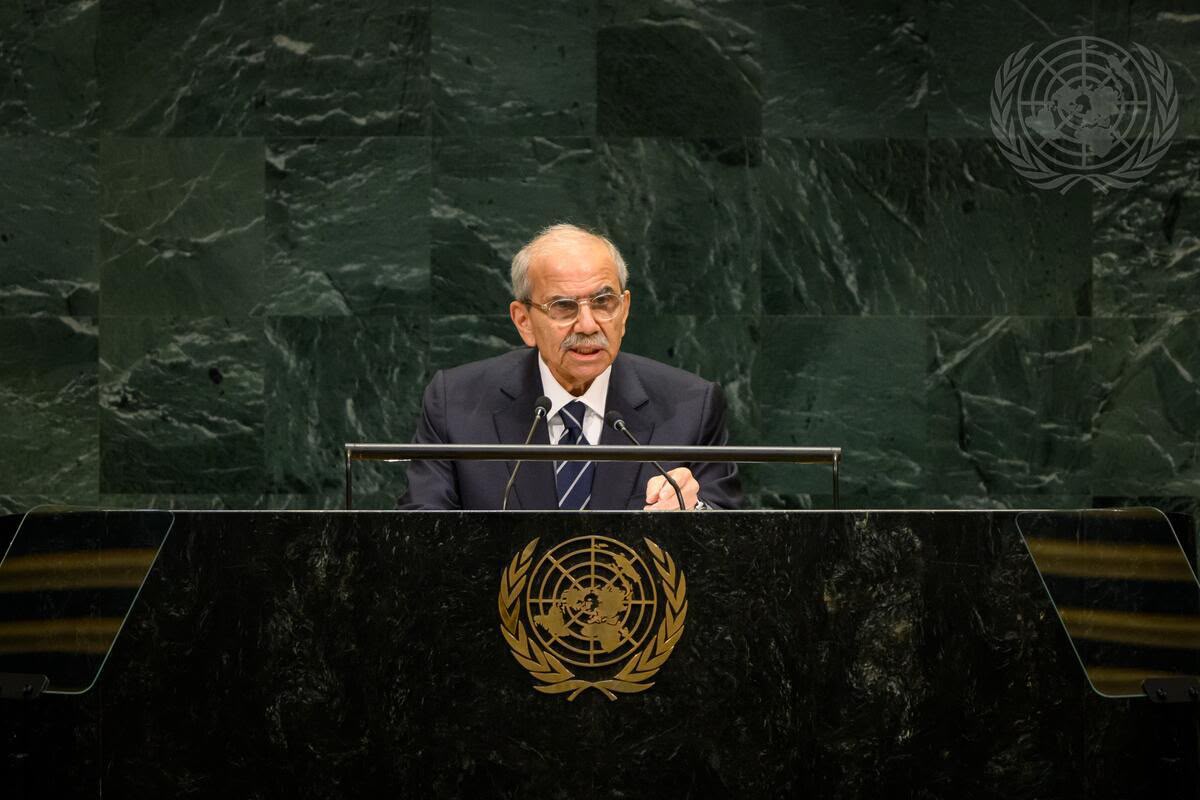
Prime Minister Nawaf Salam explained in a speech he delivered before the United Nations General Assembly that “we assumed responsibility while our country faces three crucial challenges: to regain the confidence of its people after the financial collapse and the Beirut port explosion and the tragedies and wounds they left behind; to restore its national decision, so that there is no authority above the authority of the state, no weapons outside its armed forces, and no decision for war and peace outside its constitutional institutions; and to regain its entire land from the Israeli occupation, and extend its sovereignty over the entire Its national territory, with its own strength, in implementation of the Taif Agreement, and in sincere respect for the international resolutions related to Lebanon, perhaps the most important of which is Resolution 1701, which remains to this day a basic reference regulating the relationship between Lebanon and Israel.
He stressed in his speech that “no one speaks on behalf of Lebanon, and no one negotiates on its behalf, except the Lebanese state through its constitutional institutions. Lebanon's future cannot be decided on its behalf, and its security and stability cannot be the price for settlements concluded in its absence.
He pointed out that "our position on the war was clear from the beginning: we want it to stop, we want to establish a ceasefire, and we want Israel to withdraw from all Lebanese territory up to our recognized international borders, in accordance with the 1949 Armistice Agreement, as reaffirmed by Resolution 1701. We want the release of all our prisoners, a safe and dignified return of our people to their villages and towns, and the reconstruction of what was destroyed by the war."
He explained, "The sovereignty that we adhere to is indivisible: it requires Israel's withdrawal from all Lebanese lands. It also requires extending the authority of the Lebanese state, by its own forces, over all of its territory, and confining weapons to its hands alone. On these two principles, and on the principles of reciprocity and interim, the tripartite framework that was reached in the negotiations is based."
Salam stressed "the necessity of working to avoid the vacuum that the withdrawal of UNIFIL forces might create if it was not agreed upon on a new international force to replace them, ensure the continuation of monitoring, reporting and communication tasks, and complement its role with the requirements of implementing the tripartite framework," continuing, "The reconstruction of the south is not just a process of rebuilding the stone; it is rebuilding people's lives, restoring their livelihoods, and confirming their right to live in safety and dignity on their land. The Lebanon that stands before you today does not shirk its responsibilities, nor does it ask others to do what they do." He has to do it.”
The following is Prime Minister Nawaf Salam’s speech before the United Nations General Assembly:
Mr. President,
His Excellency the Secretary-General,
The more I carefully considered the title of this session of the General Assembly, “Restoring Confidence, Managing Transformation: A United Nations that achieves results for all,” the more I became certain of the correctness of its choice. Without mutual trust, security and peace cannot be established between countries, nor can cooperation between them grow.
More than eighty years ago, the United Nations was established on the promise that the force of law would replace the law of force. But we still live in a world in which wars and conflicts are increasing, and more is spent on armament than on development, while civilians remain the first victim, and millions face displacement, hunger and deprivation.
The problem is not the absence of rules, but rather the selectivity of their application, if not the lack of them. It is not possible for the sovereignty of states to be inviolable here and negotiable there, and for the rules of international law to be applied to some and not to others.
Restoring confidence requires respecting international law, and investing in preventing conflicts before they break out, and in development before poverty and deprivation turn into a source of violence, extremism, and terrorism.
Development is also an issue of peace. There is no sustainable peace in a world in which economic gaps are widening, and in which countries spend more on servicing their debts than on the health of their citizens and the education of their children.
This does not absolve developing countries of their responsibilities in reform, combating corruption, and building institutions. But these efforts need a more equitable and just international economic system that provides them with real opportunities for advancement.
Mr. President,
Our shared responsibility also emerges in the face of the major transformations our world is witnessing. Climate change threatens the lives and livelihoods of millions, while the countries that contribute least to it bear the most severe repercussions, which requires equitable funding for adaptation and technology transfer.
On the other hand, the artificial intelligence revolution opens unprecedented horizons for progress in various areas of life, but it poses challenges related to the future of work and human rights and freedoms, which calls for international governance that places the human being, in his freedom and privacy, at the heart of this transformation. Most importantly, we must not allow an artificial intelligence gap to emerge in addition to existing wealth and development gaps.
Restoring confidence requires a person to feel that the law protects him, that development does not exclude him, and that progress does not exceed it.
Mr. President,
If restoring confidence is a challenge facing our world today, for Lebanon it is not a slogan we raise, nor is managing transformation an option we discuss. They are the essence of the mission that we undertook before our people, before our Arab brothers, and before the entire world, on the day I was appointed to head the Lebanese government.
We have assumed responsibility while our country faces three crucial challenges: to regain the confidence of its people after the financial collapse and the Beirut port explosion and the tragedies and wounds they left behind; And to restore its national decision, so that there is no authority above the authority of the state, no weapons outside its armed forces, and no decision on war and peace outside its constitutional institutions; And to regain its entire land from the Israeli occupation, and to extend its sovereignty over its entire national territory by its own forces in implementation of the Taif Agreement, and in sincere respect for the international resolutions related to Lebanon, perhaps the most important of which is Resolution 1701, which remains to this day a basic reference regulating the relationship between Lebanon and Israel.
Trust is built, decisions are restored, and land is liberated. This is the formula for the advancement of Lebanon.
This is not a trilogy of separate challenges, but rather three aspects of one issue: restoring a state that its citizens trust, owns its decisions, and exercises sovereignty over its entire territory.
Mr. President,
First, the trust we want to restore is not trust in words, but rather in institutions that protect rights, in the judiciary that ensures justice, and in an economy that restores prosperity to people and gives youth their opportunities for a better future.
We cannot talk about restoring confidence without bringing up the Beirut port explosion. The wound of August 4th is still open, and it cannot be healed without truth, justice, and accountability. It is coming inevitably.
Some may argue that our government has not yet delivered on everything it promised. We do not claim that the mission is accomplished. But fairness requires that we not ignore the size of the legacy we inherited: paralyzed institutions, an administration whose effectiveness has declined, an economy that has lost its growth potential, and a state weakened by accumulated crises and foreign interventions that have spanned decades.
However, we did not use the difficult circumstances as an excuse to back down from our commitments.
Lebanon has begun a reform workshop on more than one level, in activating the administration, enhancing the independence of the judiciary, modernizing the media law, and abolishing the death penalty. It is progressing on the path to completing financial reforms with the aim of restoring order and restoring deposits, and in a way that allows for reaching an agreement with the IMF, as it constitutes an indispensable lever for restoring international confidence in Lebanon, and a gateway to obtaining the required financing from other regional and international partners in the paths of economic recovery and reconstruction.
Our goal of reform is not to ask our people to renew their confidence in the state; Rather, through reform, we want to rebuild a state that deserves the trust of its people.
Secondly, the state does not regain the confidence of its citizens through reform alone, but rather by restoring its national decision.
From this standpoint, we did not content ourselves with emphasizing the exclusiveness of weapons in the hands of the state and restricting the decision on war and peace to its constitutional institutions. Rather, we translated this commitment into decisions taken by the Council of Ministers, especially in August and September of last year, and then in March of this year, after Lebanon found itself facing a war that it did not choose, but rather that was imposed on it despite our repeated warnings of the dangers of being drawn into it.
With the expansion of the war in the region and the multiplicity of initiatives aimed at ending it, we adhered to an uncompromising principle: No one speaks on behalf of Lebanon, and no one negotiates on its behalf, except the Lebanese state through its constitutional institutions.
It is true that Lebanon is affected by what is happening in its surroundings, but that does not mean that we accept that it will return to being an arena for others’ conflicts, or a negotiating card in their hands.
Lebanon's future cannot be decided on its behalf, and its security and stability should not be the price for settlements concluded in its absence.
Third, our position on the war has been clear from the beginning: we want it to stop, we want to establish a ceasefire, and we want Israel to withdraw from all Lebanese territory up to our internationally recognized borders, in accordance with the 1949 Armistice Agreement, as reaffirmed by Resolution 1701. We want the release of all our prisoners, a safe and dignified return of our people to their villages and towns, and the reconstruction of what was destroyed by the war.
From this standpoint, the Lebanese state entered into negotiations with Israel, under the grateful auspices of the United States of America and its president, in order to reach arrangements that would guarantee an end to the war and the restoration of Lebanon’s full sovereignty.
The sovereignty that we adhere to is indivisible: it requires Israel's withdrawal from all Lebanese lands, and it also requires extending the authority of the Lebanese state, by its own powers, over its entire territory, and confining weapons to its hands alone.
On these two principles, and on the principles of reciprocity and interim, the tripartite framework that was reached in the negotiations is based.
But the success of any agreement is not measured by declared intentions, but rather by the implementation of commitments. Therefore, what is required today is to complete the translation of this framework into practical steps, within a clear timetable and a verification mechanism that guarantees the implementation of all its provisions.
Mr. President,
In this context, I must pay tribute to the role played by the United Nations Interim Force in Lebanon, UNIFIL, and the courage of its leadership, members and staff, and their sacrifices in order to maintain stability, support the Lebanese army, and implement Resolution 1701.
To all the countries that contributed to this force, all thanks and appreciation from Lebanon.
We have taken note of Security Council Resolution 2790 of 2025, which stipulated the end of UNIFIL operations at the end of this year, and the gradual commencement of its withdrawal, and requested the Secretary-General to explore available options for continuing the implementation of Resolution 1701. What is important for us to stress, today and here, is the necessity of working to avoid the vacuum that the withdrawal of UNIFIL forces may create if it takes place without agreeing on a new international force to replace them, ensuring the continuation of monitoring, reporting and communication tasks, and integrating its role with the requirements of implementing the framework. Triple.
Mr. President,
Restoring the land does not only mean the withdrawal of the occupation forces from it, but it also means the return of its people to it, and the return of life to their villages and towns.
The war in Lebanon has left a massive humanitarian crisis, major destruction to housing, public facilities, infrastructure, and productive sectors, and deprived large numbers of Lebanese of their homes and sources of livelihood.
As we thank the United Nations agencies and our international partners for their humanitarian contributions, we call for continuing to provide the necessary funding to meet the basic needs of those affected, especially the displaced, in parallel with the requirements of early recovery, reconstruction and development.
The reconstruction of the South is not just a process of rebuilding stone; It is rebuilding people's lives, restoring their livelihoods, and establishing their right to live in safety and dignity on their land.
Mr. President,
The Lebanon that stands before you today does not shirk its responsibilities, nor does it ask others to do what it must do.
We bear our responsibility for reform and extending state authority over our entire territory. But we have the right to ask the international community to shoulder its responsibilities in ensuring respect for Lebanon’s sovereignty and implementing the resolutions of international legitimacy.
Mr. President,
There is no sustainable stability in Lebanon without sustainable stability in our region. There will be no stability as long as this organization remains incapable of enabling the Palestinian people to exercise their inalienable right to self-determination, just like all other peoples of the earth, nothing less and nothing more. This is despite dozens of resolutions issued by this Assembly and the Security Council, which lay clear foundations for this, not to mention the Arab Peace Initiative.
As for the tragedy of wounded Gaza, it has put the conscience of the world and the impotence of its institutions before a test from which it is impossible to escape.
Here I must stress that drying up UNRWA's funding or undermining its mandate does not eliminate the rights of Palestinian refugees - if that is what some seek - but rather it doubles their suffering, threatens the chances of a just and lasting solution to their issue, and increases the burdens on the countries hosting them, most notably Lebanon.
Regarding the security situation in our region, Lebanon is important to renew its solidarity with the Arab Gulf states and Jordan in the face of the Iranian attacks that threaten the security of the region and the freedom and safety of maritime navigation. The effects of these attacks do not remain limited to the battlefields of confrontation, but rather extend to supply chains, the prices of goods, especially food and energy, and inflation rates.
Mr. President,
Allow me to conclude my speech by returning once again to the title of this session of the General Assembly: “Restoring confidence, managing transformation” for “a United Nations that achieves results for all.”
The truth is that we cannot demand that the countries of the world change their behavior while we do not make the required change in our organization in order to achieve the desired results and regain the confidence of the peoples of the world in it.
The reality is that the world has changed radically since 1945.
The number of member states in the United Nations has nearly quadrupled,
Colonialism ended, Africa rose, Asia was transformed, and new powers emerged.
The balance of the global economy has changed,
But the basic composition of the Security Council remained captive to a historical moment dating back to the end of World War II.
Africa and the Arab world cannot remain outside permanent representation in the Council, nor can small and medium-sized countries remain mere spectators to decisions related to their security and future.
We know that Security Council reform is a complex issue.
But the difficulty of reform is not an argument against its necessity. Rather, reform of the United Nations must begin from here, from the Security Council, because it has been entrusted with the primary responsibility for maintaining international peace and security.
Therefore, I renew the inclusion of Lebanon's voice with the majority of our organization's members in their call to expand the Security Council in order to achieve more comprehensive and fair representation.
Because we are realists, we do not call for the abolition of its veto, but rather for restricting its use when it comes to genocide, war crimes, crimes against humanity, and serious violations of international humanitarian law.
Our insistence on reform in the United Nations is only because we want it to be a more representative, more democratic, and more effective organization. An organization that is faithful to the principles and goals it set forth, but always renewed, to be up to the challenges of our rapidly changing world, and to meet the aspirations of our peoples and new generations.
In this story:
Nawaf Salam
More from:
Beirut news
← Previous article
Iran awaits US response to proposal to reopen the Strait of Hormuz within 7 days
Related Articles
Salam: Our commitment has not changed... and Lebanon will not wait for regional settlements
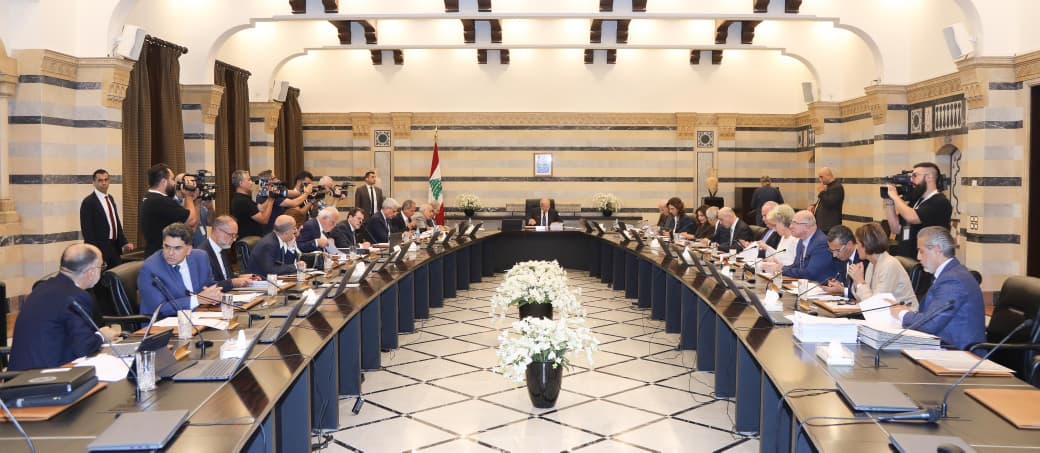
The Council of Ministers approves the 2027 budget and raises the transportation allowance to 5 liters of gasoline per day
Al-Hajj about poor communications: We received a worn out network and the war set the sector back 6 months