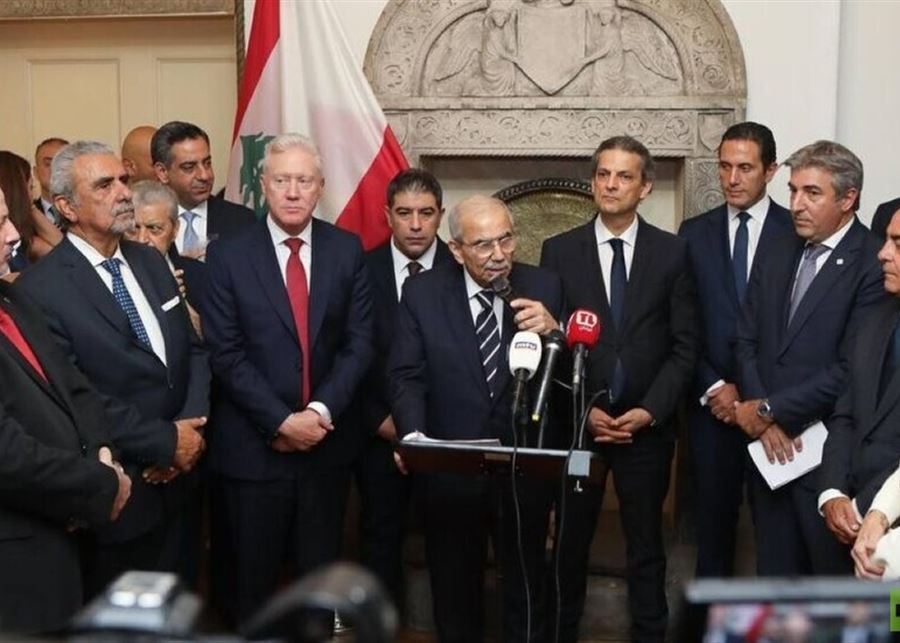
Salam: Supporting the South and reconstruction cannot wait for the crisis to end
21:41 · 23 September 2026
5 min read
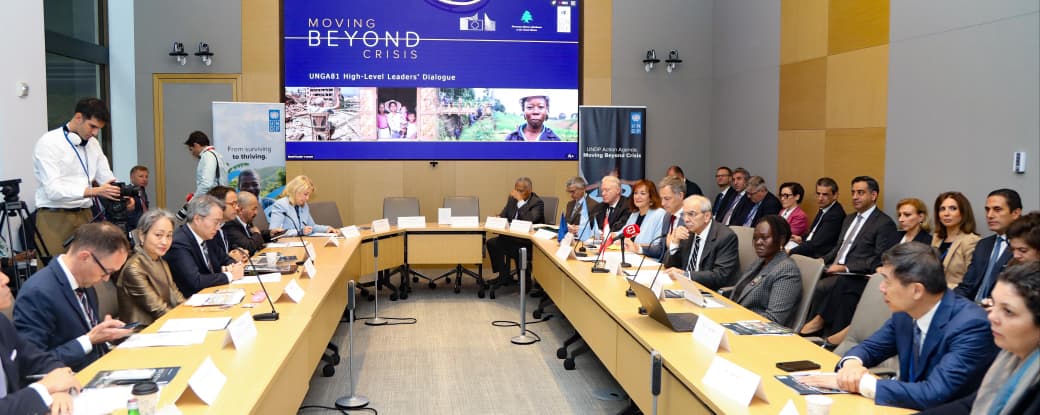
Prime Minister Nawaf Salam, along with European Commissioner for the Mediterranean Affairs Dubravka Świca, and Director of the United Nations Development Programme, Alexander De Croo, chaired a high-level meeting entitled Moving Beyond Crisis, held in New York on the sidelines of the work of the United Nations General Assembly, at a joint invitation from Lebanon, the European Union, and the United Nations Development Programme.
A number of senior officials and representatives of countries and international and financial institutions participated in the meeting, including the Executive Director of UNICEF, Catherine Russell, and the Director General of Operations at the World Bank, Anna Purdy, along with high-level representatives from Japan, Germany, the Republic of Korea, the Democratic Republic of the Congo, Haiti, and a number of international financial and development institutions.
The meeting focused on developing a more effective international approach to dealing with protracted crises, in light of Lebanon's experience in confronting the war in the south.
The research also addressed ways to enhance the role of the state and its institutions in leading the response and recovery, and to direct international support in a way that enhances its capabilities instead of creating parallel systems, in addition to providing more flexible financing tools that allow the transition from emergency response to recovery and reconstruction without interruption.
The meeting witnessed the launch of the global United Nations Development Program Moving Beyond Crisis.
President Salam opened the meeting with a speech in which he said:
“For Lebanon, the transition beyond the crisis is not a theoretical concept, but rather a reality we live in today, from which lessons can be learned that extend beyond the borders of our country.
We have become accustomed to looking at relief, recovery and reconstruction as successive phases. But today's crises have become longer, more frequent, and more intertwined, such that waiting for the end of one stage to begin the next may mean waiting for an indefinite period.
Lebanon today is one of the clearest examples of this. In light of the war in the south, we are still providing assistance to displaced families, while at the same time working to support the steadfastness of the people of the south, stabilize their return to their towns and villages, rehabilitate schools, water and electricity networks, and roads, restore livelihoods, and proceed on the path of recovery and reconstruction.
Return is not separate from recovery, and recovery cannot wait for the end of humanitarian needs. Hence, the first lesson from our experience is clear: in protracted crises, relief, return, recovery and reconstruction cannot be dealt with as separate phases, but must proceed in parallel and complement each other.
This raises a fundamental question: How should the international community organize its support in such circumstances?
During the 2026 crisis, we sought to adopt an approach based on strengthening the role of the state and its institutions, not creating parallel systems. The government developed a national response plan and mobilized its institutions and resources, while our international partners provided funding, expertise and support, and Lebanese NGOs and civil society played an essential role on the ground.
The principle was simple: complementarity, not substitution. A national response led by the Lebanese state and supported by its partners.
The goal is not for our partners to do less, but rather for their support to be more effective and sustainable by strengthening state institutions and capabilities, and helping the people of the affected areas, especially in the south, to return, withstand and restore their lives.
This brings us to financing. If relief, return, recovery and reconstruction proceed in parallel, their financing cannot remain in separate phases. Emergency funding cannot end, and then we must wait months or years before recovery funding arrives.
We need more flexible, timely financing instruments that help stabilize people's returns, restore services and livelihoods, and support the institutions that will take responsibility for leading recovery and reconstruction.
Therefore, the question is not only: when will the recovery begin? But how does it start? And who leads it? Does international support contribute to enhancing the state’s ability to carry out its responsibilities?
For Lebanon, the answers to these questions begin today. Supporting the steadfastness of our people, ensuring the return of the displaced to their towns and villages, and restoring basic services and livelihoods cannot wait for the end of the crisis or the start of a new phase called “reconstruction.”
What we need today is for our partners to stand alongside the Lebanese state on this path, and for us to move together from responding to emergency needs to supporting return, recovery and reconstruction, in a way that enables the people of the south to return, stay and restore their lives, and strengthens the presence of the state and its institutions in the affected areas.”
← Previous article
Alleged Government Reshuffle... "The Forces": Has No Connection to the Truth
Related Articles
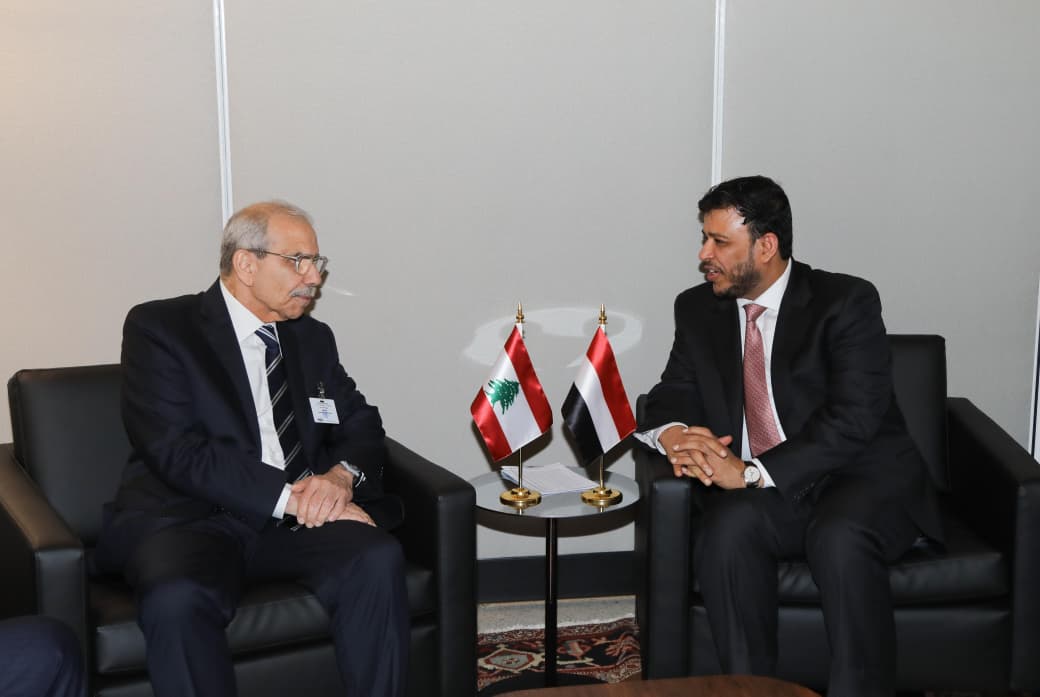
Salam Meets Al-Alimi: To Extend State Authority Over All Territories of Lebanon and Yemen
Salam Meets Pedro Sánchez... Here Is What Was Discussed
Rajji to Vatican Secretary of State: Negotiation is the only way to ensure Lebanon's security and peace