Salam: We want to build Tripoli's role in the economy of the future
12:44 · 15 September 2026
4 min read
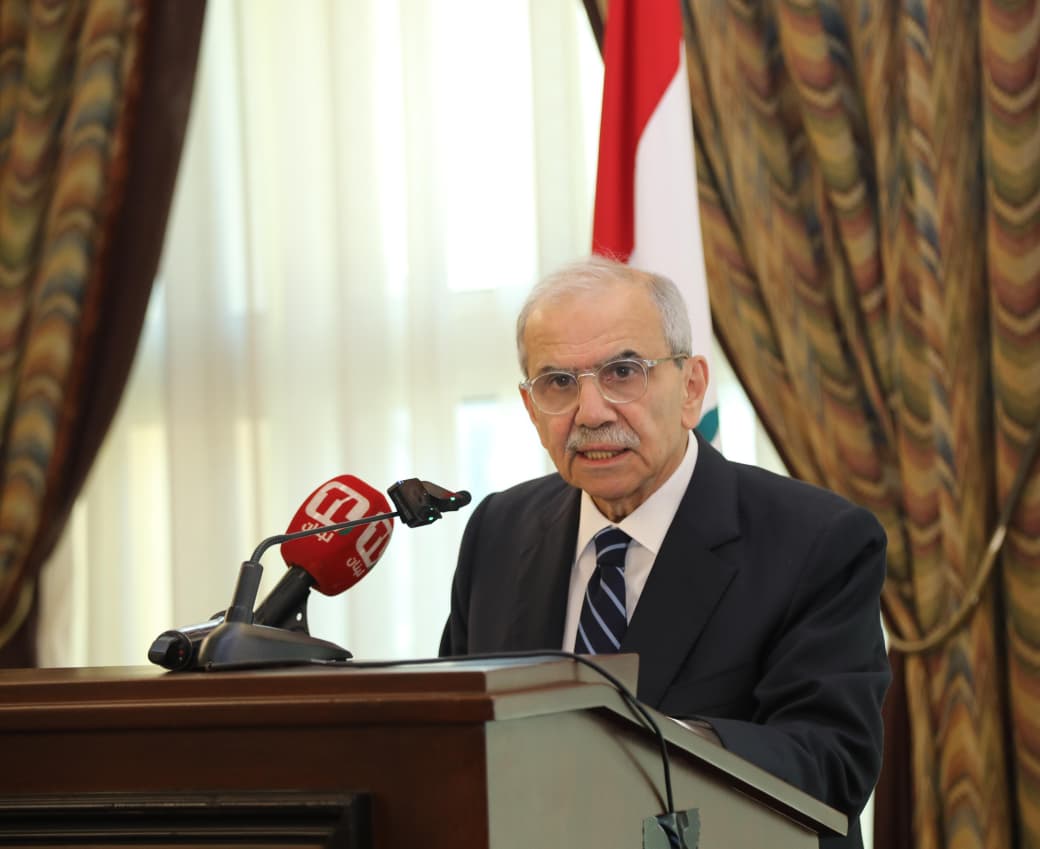
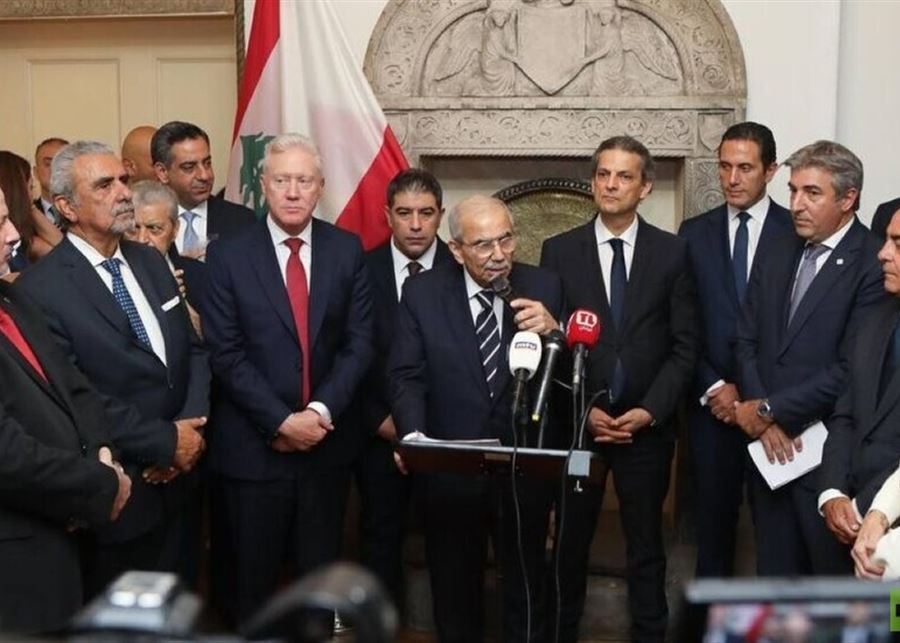
Prime Minister Nawaf Salam presided at the Grand Serail over a ceremony for the signing of project contracts and memoranda of understanding under the title "Tripoli: Strategic Partnerships, Investment Future, and Sustainable Development," organized by the Tripoli Special Economic Zone, the Tripoli Port Investment Authority, and the Railway and Joint Transport Authority.
The ceremony was attended by Deputy Prime Minister Tarek Mitri, Ministers of Culture Ghassan Salameh, Public Works and Transport Fayez Rassamny, Energy and Water Joseph Sadiq, Social Affairs Hanine El Sayed, Education and Higher Education Rima Karami, Administrative Development Fady Makki, Secretary General of the Council of Ministers Judge Mahmoud Makkieh, along with a number of MPs, Arab and foreign ambassadors, economic figures, and concerned stakeholders.
On this occasion, Salam delivered a speech, stating:
"Your Excellencies, Ladies and Gentlemen,
I am pleased that we meet today at the Grand Serail on an occasion that brings together the Tripoli Port Investment Authority, the Tripoli Special Economic Zone, and the Railway and Joint Transport Authority, around projects and agreements that are at the core of our vision for the future of Tripoli, the North, and Akkar, and for the future of the entire Lebanese economy. When I visited Tripoli, I said that the city, along with the North and Akkar, has suffered for too long from missed opportunities, delayed projects, and unfulfilled promises. And I said that the time has come to move from promises to action, and from managing decline to building new opportunities for growth and investment. What we are gathering for today is a practical step in this direction. Tripoli, by virtue of its location and history, has constituted a meeting point between the Eastern Mediterranean and its land depth, and its port has been a connecting link between the sea and the interior, while the railways formed part of this link. It is true that wars, crises, and neglect have disrupted many of these components, but geography has not changed."
He pointed out that "the question today is not whether Tripoli is capable of restoring its role, but how we transform its location, port, human capacities, economic zone, Qleiat Airport, and transport networks into an actual economic force," explaining that "the answer begins with partnership and integration. The port, the economic zone, and the railways must work as a single system, not as separate institutions. The port opens the road to markets, the economic zone transforms trade into investment, production, and added value, while the railways and transport networks reduce the cost of movement and expand its scope. Instead of presenting the investor with scattered files, we must present him with an integrated investment opportunity, within a clear vision and coordinated institutions."
Salam emphasized that "this partnership also includes professional and economic bodies and the business community, through the engineering, legal, and economic expertise they provide that is necessary for the success of projects, and for securing an investment environment based on clarity and trust. Our vision is to build a logistical system that brings together sea, land, and air: a port capable of serving trade, import, and export; a special economic zone that attracts industry, services, and technology; railways and roads linking it to the interior and border crossings; and an airport in Qleiat that opens an additional window for the North and Akkar to Lebanon and the world."
He added: "If we succeed in linking these elements within an effective system, Tripoli can enhance its position as a Mediterranean gateway for trade, and be ready to benefit from any future development in the movement of trade and land corridors towards Lebanon's surroundings and regional markets. But the goal is not to establish infrastructure merely for the sake of establishing it. The goal is to create jobs and stimulate the economy. Every increase in port traffic, every investment in the economic zone, and every improvement in transport networks means opportunities for small and medium-sized enterprises, for logistical and technical services, and for producers and farmers in the North and Akkar. And it means, above all, that youth will find an opportunity to build their future here, instead of searching for an opportunity abroad being their only option."
Salam pointed out that "this is not a regional project. It starts from Tripoli, the North, and Akkar, but it serves all of Lebanon. Balanced development does not mean distributing projects according to regional calculations, but empowering every region to benefit from its advantages and linking it to the national economy. When we develop the port of Tripoli, enhance transport networks, activate the economic zone, and operate Qleiat Airport, we expand the choices of the producer, manufacturer, and exporter in all of Lebanon. When Tripoli grows, Lebanon grows with it."
← Previous article
Salam: Our position is difficult... and negotiations are not a concession