Salam: Our position is difficult... and negotiations are not a concession
12:00 · 15 September 2026
4 min read
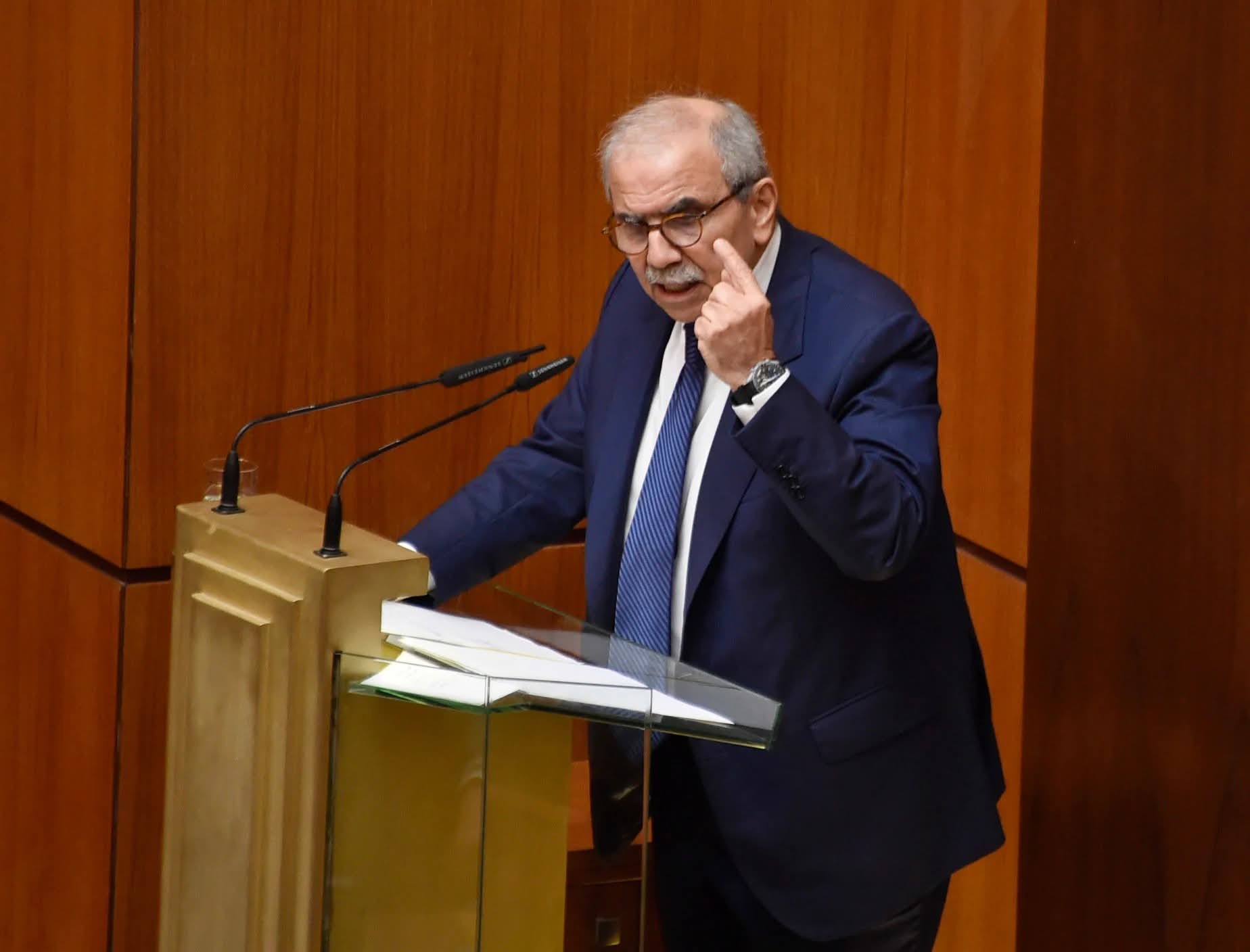
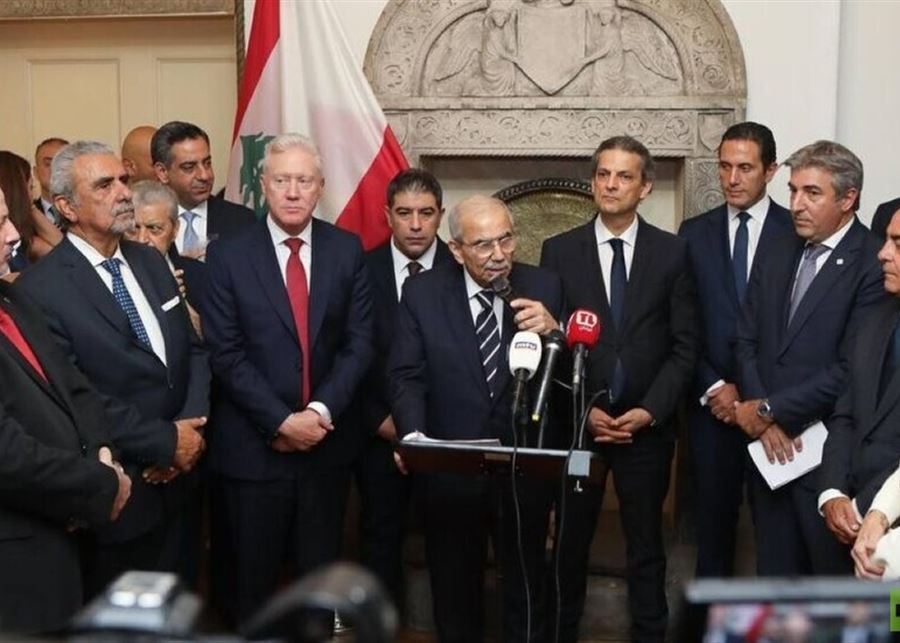
Prime Minister Nawaf Salam was candid with all Lebanese during the parliament session to question the government, saying, "Our position is difficult and very difficult, but finding a way out of it is not impossible." Salam pointed out that "we have warned repeatedly against entering the war striking the region, and we called for exercising reason and good judgment out of mercy for the country and to protect citizens."
He pointed out that "according to World Bank estimates for the first war, its total cost reached about 14 billion dollars." He affirmed that "the direct cost of the recent war so far ranges between 3 and 4 billion dollars, and this figure does not include the economic cost, which reaches 4 to 5 billion dollars, while the greatest cost is the fall of more than 4,000 martyrs and 12,000 wounded."
Salam explained that "9,000 martyrs, more than 30,000 wounded, over one million displaced, and tens of thousands of destroyed homes are the toll of the two wars, while the economic cost is heading toward exceeding 27 billion dollars."
He stressed that "the government has never stopped carrying out its responsibilities toward citizens." Salam said, "I know the pain of Lebanese families and how much the prices of goods and basic needs have risen. If the difficult living reality is the result of accumulated crises, the war has certainly exacerbated it, but we will not surrender to this reality."
Salam explained that the government has spent 52 million dollars on families displaced by the war, affirming his determination to confront this reality. He said, "We are speaking here today while there are still more than 250,000 Lebanese among the displaced."
He noted that "there is a major shortage in international funding and support compared to 2024." Responding to those who allowed themselves to try to exploit people's pain to cast doubt on the state's presence, Salam stated that "the state was strongly present and did what was required of it within its capabilities."
He added: "Directives were given to all concerned parties to work at maximum speed to clear the rubble, open roads, and address the damage inflicted on bridges in a way that reconnects regions with each other and facilitates the return of residents."
He continued: "Confidence in a strong state is necessary for Lebanon to receive the funding it needs from abroad," and said, "We look forward to parliament beginning the discussion of the financial gap draft law, which will complete the framework necessary to address the crisis."
Salam stressed the importance of reaching an agreement with the International Monetary Fund as a fundamental option that our government committed to in its ministerial policy statement, and considered that "addressing the electricity crisis and building new plants require investments worth billions of dollars, and the state today cannot secure them alone."
He pointed out that "reconstruction and recovery require, alongside state resources, Arab and international support and major external funding."
He stressed that the rise in global fuel prices does not give anyone the right to exploit people's need for electricity, nor does it justify private generator owners violating the official tariff.
Salam continued, "After we succeeded in restoring Lebanon's severed ties with its Arab surroundings, we were able to increase our exports to several Arab countries," affirming that "there is no sustainable stability without extending the state's authority over all its territories and confining the decision of war and peace to its hands alone."
He said: "We have worked to enhance the capabilities of our armed forces and are working with our Arab and international partners to provide more support to them."
Salam stressed that "the decision of war and peace must be in the hands of the state alone," and considered that a serious judgment on the negotiations with Israel can only be made after they conclude. He said, "It is understandable that some may not agree with the content of the framework agreement, but to say that it includes new obligations for Lebanon is something that causes astonishment."
Salam concluded that "negotiation in itself is not a concession of rights, but rather a means to recover them through diplomatic channels."
← Previous article
Due to laboratory test violations... Two types of cheese withdrawn