Geagea: Dissolving the Hezbollah organization is an urgent need
Fady Mahouly
18:35 · 21 August 2026
3 min read
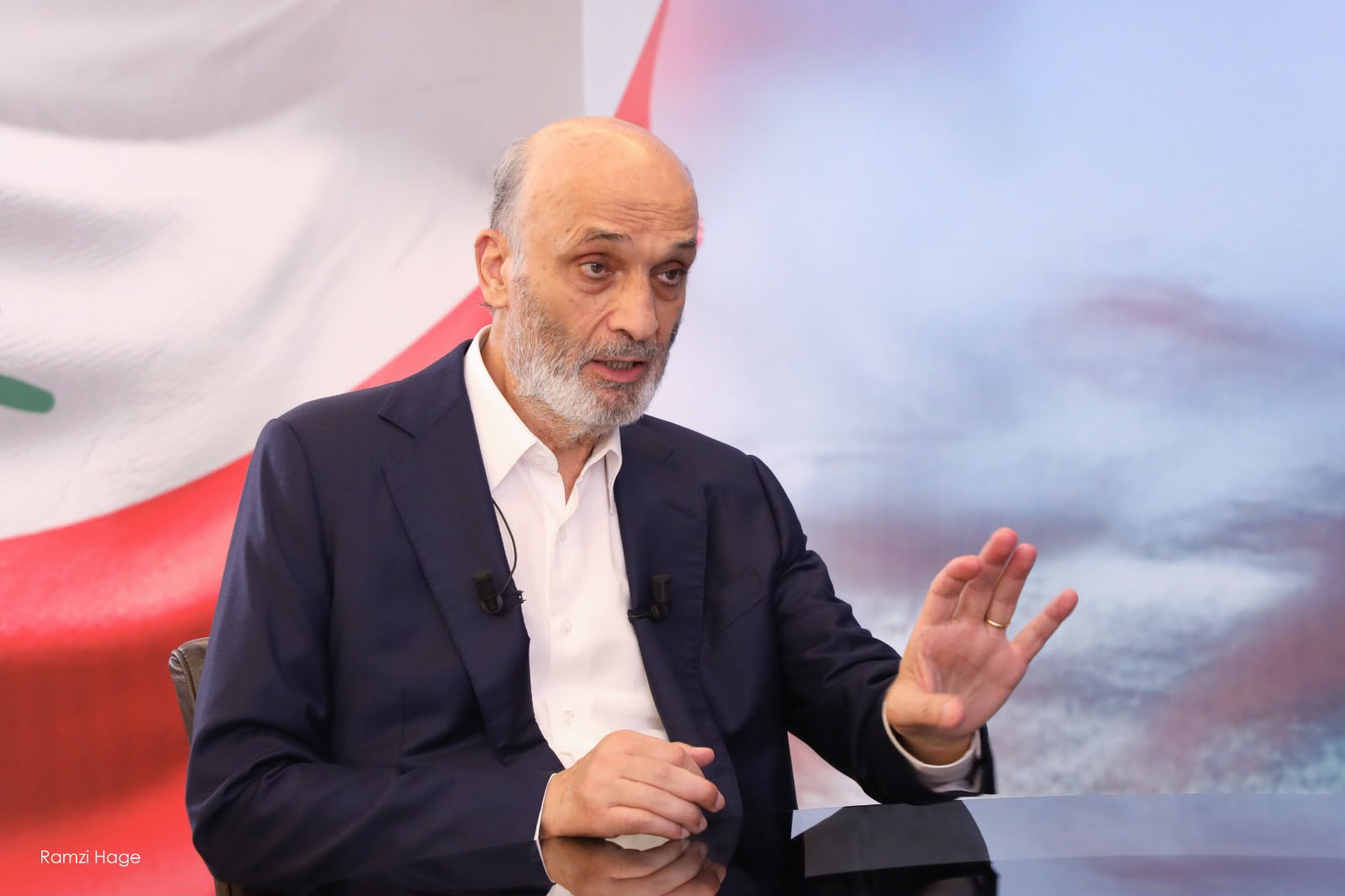
The head of the Lebanese Forces Party, Samir Geagea, considered that dissolving the security and military organization of Hezbollah is an urgent need, stressing that it is a Lebanese demand before it is an Israeli demand.
Geagea pointed out that the issue of Hezbollah weapons is not new, but has been accompanying the Lebanese for about forty years, stressing that confining it to the state is no longer an issue that can be postponed, noting that the Lebanese state is capable of imposing its authority and restricting weapons if there is political intention and seriousness.
In a press interview, Geagea recalled the government decisions taken on August 5 and August 7, which required the dissolution of the armed organizations, led by Hezbollah, stressing that “with his presence, he caused us what he caused.”
Geagea considered that the party would not move on its own to hand over its weapons, noting that it is linked to a regional ideology and strategy, in addition to its direct connection to the Iranian Revolutionary Guard.
Geagea explained that the party views the concept of profit and loss in a different way from the view of the Lebanese state and society, and therefore it will continue to cling to its weapons until the last moment.
Geagea rejected the statement that the state's move to restrict weapons might lead to a civil war, considering that the move of the army and legitimate institutions to implement state decisions cannot be considered a clash between two civil factions.
He stressed that the Lebanese army “is the army of all of us,” and stressed that Lebanon today possesses an authority that enjoys popular and legal legitimacy, from the House of Representatives elected in 2022 to the government that gained its confidence and the President of the Republic who was elected by the Council.
Geagea indicated that there is no problem with Hezbollah if it surrenders its weapons and turns into a political party, pointing out that there is a difference between Hezbollah as a political party and its military and security organization.
As for UNIFIL, Geagea said that he is not against the international force, but he called for an evaluation of its experience and results in southern Lebanon.
He added that UNIFIL has been in existence for about 15 years, while during this period Hezbollah was able to arm itself, dig tunnels, and build military facilities “under its watch,” and the Israelis also entered Lebanon, wondering about the practical feasibility achieved by the international force.
Geagea rejected the logic of each party waiting for the other to take the first step, stressing that “there is a Lebanese state that must end everything,” and that the state must determine the course of events and prevent both Israel and Hezbollah from imposing its agenda.
← Previous article
The US Embassy welcomes the adoption of the updated media law
Related Articles
The US Embassy welcomes the adoption of the updated media law
Geagea: Eliminating the path to recovery... What is required is the return of the accused from Syria
Salam and Manasseh from the south: Restoring sovereignty begins with Israel’s withdrawal