Salam and Manasseh from the south: Restoring sovereignty begins with Israel’s withdrawal
Fady Mahouly
11:27 · 21 August 2026
2 min read
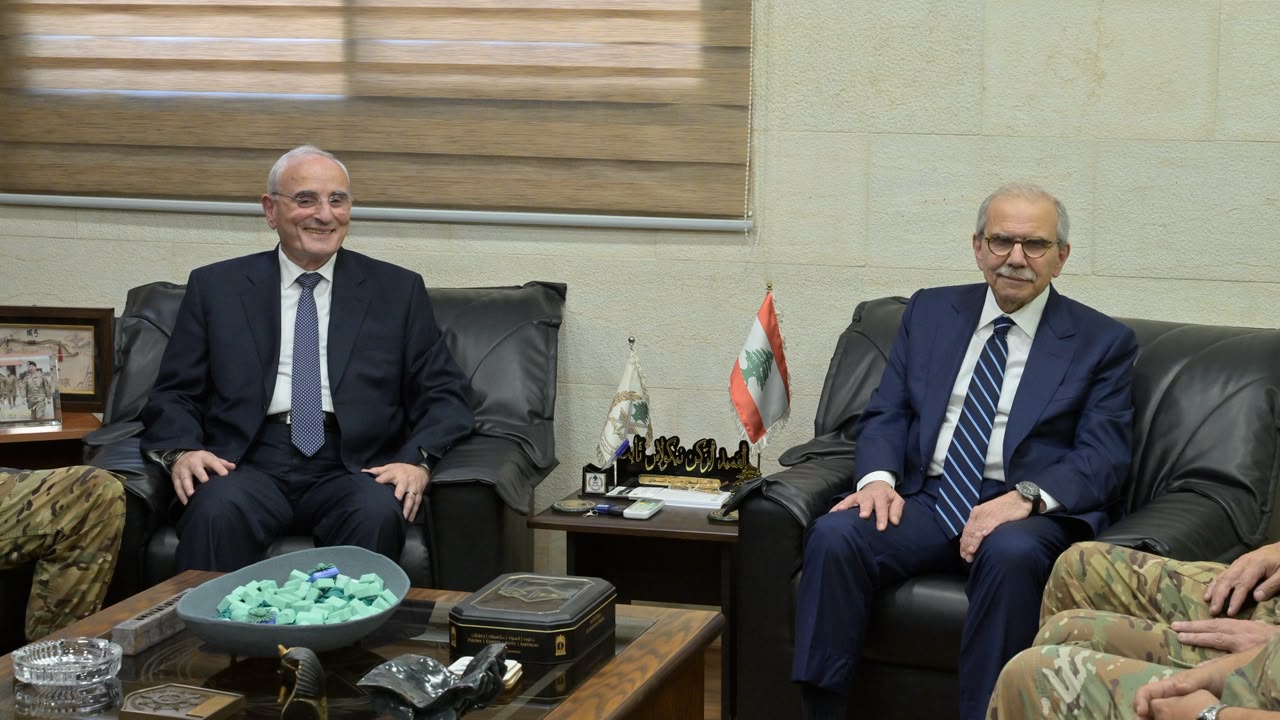
Prime Minister Nawaf Salam visited the Benoit Barakat Barracks in Tyre, accompanied by the Secretary-General of the Supreme Defense Council, Major General Mohamed Al-Mustafa, where he was received by the Minister of National Defense, Michel Mansi, the Chief of Staff, Major-General Hassan Odeh, and the Commander of the South Litani Sector, Brigadier General Nicolas Tabet.
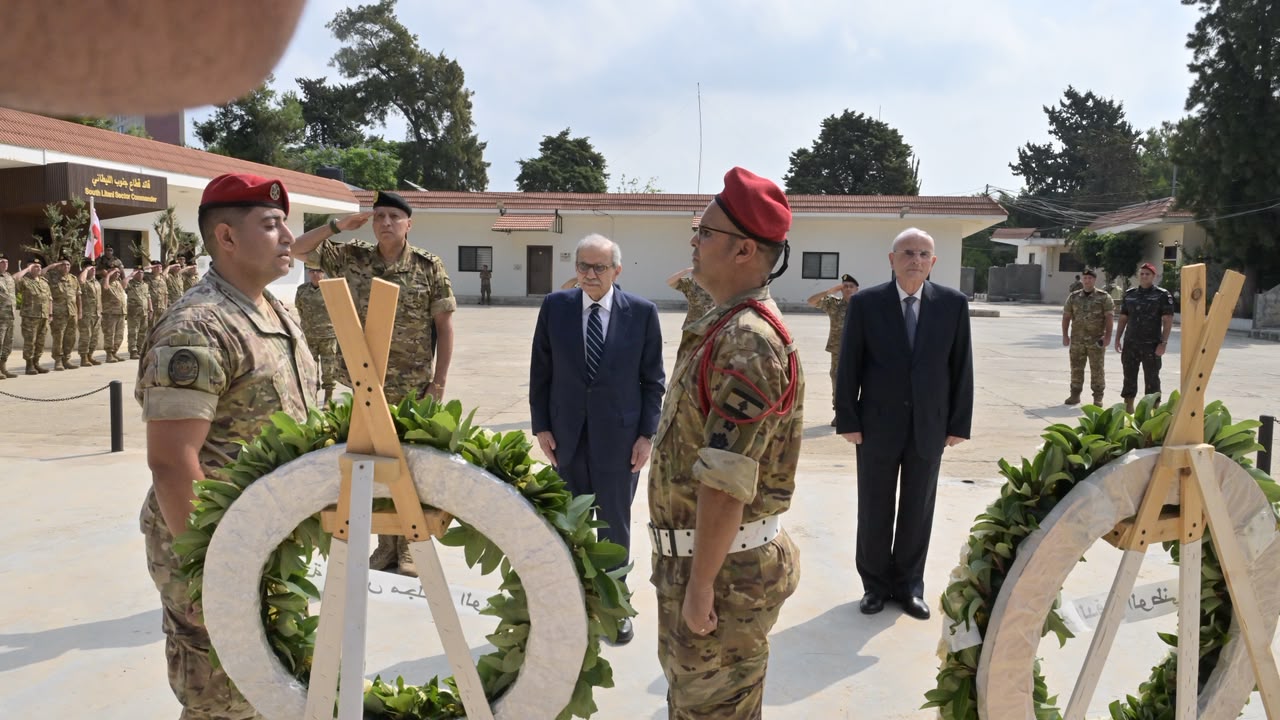
A reception ceremony and military honors were held for Salam, and he laid a wreath at the army martyrs’ memorial, before he and the accompanying delegation moved to the office of the South Litani Sector Commander.
Salam then moved to the briefing hall, where welcoming speeches were delivered before the officers from the Commander of the South Litani Sector and the Minister of Defense, followed by a speech by the Prime Minister and a briefing on the mission of the South Litani Sector.
Mansi stressed that the Lebanese army “was never anything but a unit,” stressing that “it never received a mission and accomplished it with great precision.”
He said that the position is firm in terms of restoring the state’s sovereignty and every inch of its territory, considering that the negotiations that Lebanon entered into “are the best solution to get out of this tunnel.”
Manasseh pointed out that the visit to the south “is not reconnaissance or inspection,” but rather comes to confirm the state’s supportive position seeking to restore its sovereignty over its lands and Israel’s withdrawal from the entire south.
He stressed the need for people to return to their towns and villages.
For his part, Salam stressed that the presence of the Lebanese army in the south “is not just a military deployment, but rather a presence of the state.”
He said that every site where the army is deployed is a site where the state regains its sovereignty, authority and prestige, considering that every Lebanese flag raised above any army site “is a symbol of the legitimacy of the state.”
He added: “We want this south, as well as all of Lebanon, to be under the authority of one state, and for the Lebanese citizen there to be safe because he has an army to protect him, and for the country to enjoy stability as the state and its constitutional institutions restore the decision of war and peace.”
Media
← Previous article
The flame of “Aab”... for how long?
Related Articles
Geagea: Eliminating the path to recovery... What is required is the return of the accused from Syria
The Minister of Defense received the Minister of Energy, thanking him for paying the accumulated amounts to Electricité du Liban
"Played in it"... Basil Laoun: Don't be satisfied with the stabbing