“Free Patriotic” about the electricity plan: Prepared by artificial intelligence
18:01 · 29 July 2026
6 min read
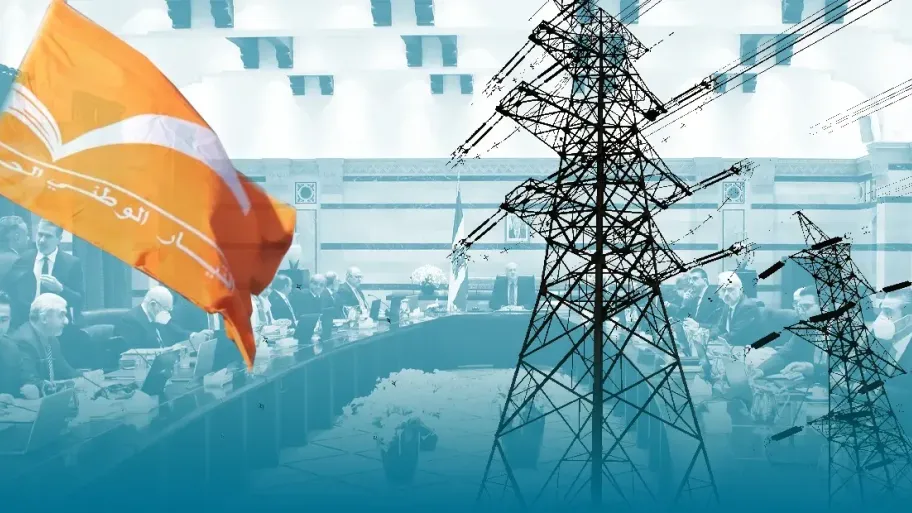
The Energy Advisory Committee in the Free Patriotic Movement announced in a statement that "following a scientific and objective review of what was called the electricity plan approved by the Council of Ministers in its last session and announced by the Electricity Regulatory Authority, where a large number of fallacies and errors were found, we suffice with recording the following observations:
1 – The issued paper is 76% prepared by an artificial intelligence program, and anyone can easily verify this matter as the program prepared for that is available to everyone.
2 – Law 462 reserved for the Minister of Energy the authority to issue the policy paper for the electricity sector, and granted the Electricity Regulatory Authority the powers to regulate the sector, privatize parts of it, and license electricity production, distribution, and sale. It is unfortunate that the Minister of Energy has relinquished the primary authority granted to him and left the matter to the Authority and the artificial intelligence program.
3 – The approved paper is not a plan at all, but can truly be described as a "non-plan" as it lacks any executive program, implementation calendar for specific projects, time schedule, or cost. All it contains is a distorted interpretation of Law 462 (and the Renewable Energy Law), which the minister himself had demanded in writing, when he was an advisor to the ministry regarding the corporatization of Electricité du Liban, to amend.
4 – A simple comparison of this paper with the 2010 electricity plan issued by the Ministry of Energy when it was headed by the Free Patriotic Movement, and subsequent plans, reveals that there is nothing new in the current paper except the issue of "micro-grids," which "we will return to." The current paper clearly lacks the necessary infrastructure projects such as electricity production plants, transmission lines, or distribution networks and how to finance them. Nor is there any mention of needs and their quantities, such as the volume of production or anything practical, save for repetitive rhetorical talk known to everyone.
5 – Very striking and surprising is the focus on the privatization of production under the name of "micro-grids," and this is nothing but the legalization of neighborhood generators, the partitioning of electrical zones of influence, and placing the citizen at the mercy of generator owners without any regard for electrical pollution and the exorbitant cost of such energy. This is the main project previously put forward to us by the Lebanese Forces party, and here it is now officially presenting it to the Lebanese.
The Movement has always been with the principle of constructive partnership with the private sector in production and distribution, while preserving the state's right to the transmission sector and its assets, rather than bankrupting it to sell it at the cheapest prices, and while keen on a low cost for the citizen without resorting to monopoly and partitioning, which leads to the madness of generator prices as is currently the case.
6 – The paper spoke of supporting vulnerable groups as the responsibility of the state, which must secure funding for this without burdening operators or distributors with any additional cost. Therefore, this matter completely contradicts everything the Lebanese Forces party and others said about the state's support for the electricity sector previously being waste and corruption. The truth is that support is a policy adopted by Lebanese governments since the mid-nineties and led to a large deficit in the state budget, which the Free Patriotic Movement was completely against and formulated its 2010 plan on the basis of zero deficit in the electricity sector and zero contribution by the state. Indeed, the aim was to achieve profits for the state just like the telecommunications sector, and this required raising the tariff, a matter that the Lebanese Forces repeatedly opposed and voted against in the Council of Ministers in a flagrant scientific contradiction in its stance between one phase and another, and between what is said in the media and practiced behind closed doors.
7 – The difference between the plan and the declaration of intent is vast. A plan is not a press conference, but rather includes figures, implementation phases, sources of funding, responsible entities, and scientific indicators, not a collection of general headings and rhetorical talk that does not produce a single megawatt of electricity nor increases a single minute of electricity supply. This is what the citizen needs to know a year and a half after the Lebanese Forces took over the electricity sector, having promised to secure it 24/7 within a period of six months. Where are the books of conditions? Where are the contracts? Where are the studies? Where are the maps? Where are the financing plans? Where are the private sector partnership files? Where are the names of private companies? Where are the names of international institutions? Where are the investment programs? Where are the transmission and distribution plans? Where is the plan to corporatize Electricité du Liban? Where are the gas pipelines, gas plants, and regasification plants? Where are the electricity production plants and their names and locations?"
It concluded by saying: "In the end, Samir Geagea was right when he said that the electricity currently present is 'Gebran Bassil's electricity,' meaning that what has remained standing after years of long crisis is what was accomplished by the Free Patriotic Movement's plan and the plants, stations, and distribution networks it established. Had they been allowed to complete the plan instead of disrupting it and halting its funding, the Lebanese would not have remained until today discussing the electricity crisis, but rather discussing how to rely more on renewable energy and modern technologies. But all the current minister of energy secretly desires is a return to power generation ships because they are the fastest and least costly for the state and the citizen, only for all he was allowed to do to be conducting a forensic audit of this file to discover anew what the judiciary previously discovered, namely that there was no theft or waste in this file by the responsible ministers, but rather substantial savings in favor of the treasury and citizens' pockets."
← Previous article
Trump threatens Iran: We will hit it hard
Related Articles

Regarding solar energy...this is what the Prime Minister’s Office announced

The Ministry of Energy in Lebanon clarifies the decision to regulate the installation of solar panels

Regarding solar panels... A new decision by Energy and Interior