Op-Ed
09:34 PM | 22 Mar 2026
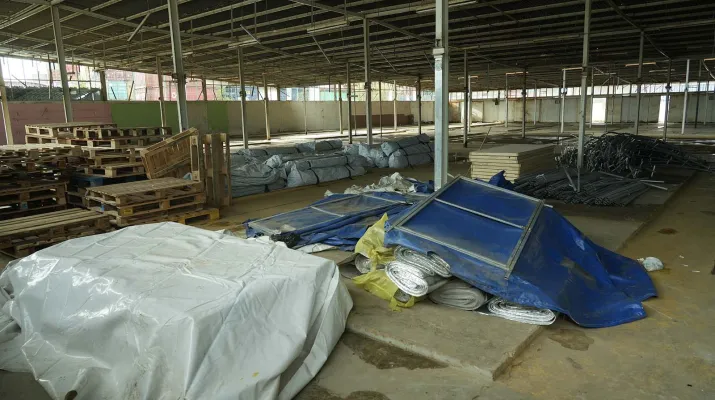
Shelter centers in Karantina: humanitarian or a new crisis?
Fady Mahouly
In light of the stifling crises that Lebanon is experiencing, and with the accelerating wave of displacement from the southern regions and the southern suburbs of Beirut, the issue of establishing a shelter center in Karantina has emerged as one of the most controversial and divisive issues. The discussion is no longer limited to the humanitarian dimension and the security reality only, but media and artistic positions have also entered into it, including the position of the artist Elissa, which sparked widespread interaction.
On the one hand, supporters believe that establishing the shelter center is a humanitarian necessity that cannot be postponed. Hundreds of families have become homeless, with shelter centers full and unable to accommodate more. For them, any delay in finding solutions, even if they are temporary, means exposing these people to more suffering. They stress that solidarity in such circumstances is a moral duty before it is a political choice.
On the other hand, concern is growing among opponents of the surrounding population, who see the project as a hasty step that lacks planning, and may turn into a new crisis instead of a solution. In this context, the artist Elissa expressed a clear position, considering that “empathy is a duty, but imposing a dangerous reality on the Lebanese people in their homes and on the roads they take daily is not humanitarian, but rather a violation of their most basic rights to safety and stability.” She also warned that “establishing random camps inside residential neighborhoods means exposing people to daily danger and creating an environment out of control.”
This position reflects a wide segment of the Lebanese who do not reject the principle of assistance, but they fear the absence of organization and the transformation of temporary solutions into a permanent reality. For them, the problem is not in sheltering the displaced per se, but in the way it is done, and in the absence of a clear plan to ensure that the situation does not worsen.
Between these two opinions, the Lebanese reality remains stuck between a humanitarian duty that cannot be ignored, and security and social concerns that cannot be underestimated. The crisis is no longer just a crisis of displacement, but a crisis of confidence and management, as citizens fear that they will once again pay the price for ill-considered decisions.
In conclusion, the issue of the Karantina shelter center reflects a sharp conflict between the logic of solidarity and the logic of anxiety. With influential voices like Elissa entering this debate, the pressure is increasing to find balanced solutions that do not turn the humanitarian crisis into a new internal crisis, and at the same time do not leave people to their fate in the street.