FIFA reveals the strangest scenes behind the scenes of the World Cup finals
09:27 · 17 July 2026
8 min read
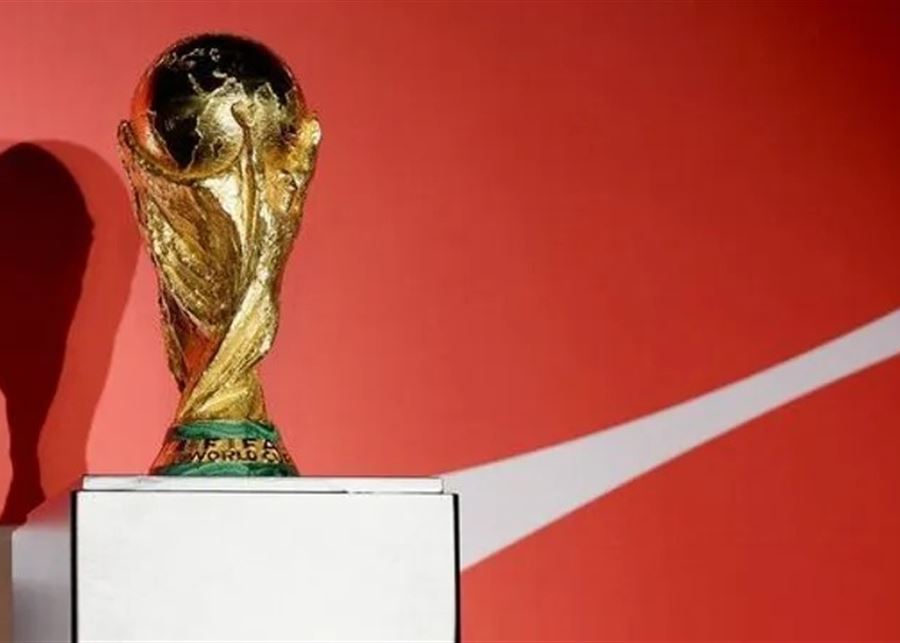
Hours before the start of the 2026 World Cup final between Spain and Argentina, the official website of the International Federation of Association Football (FIFA) reviewed the strangest stories witnessed in the biggest match in the world of the beautiful game.
1930
The national teams of Argentina and Uruguay made a decision before the tournament that each would play with its own ball, but when the two teams reached the final, a major dispute broke out. The Belgian referee, John Langenus, who officiated that showdown wearing a shirt, tie, formal jacket, and baggy trousers, said: "The great hostility between the two countries appeared when it was time to choose the ball, as each of the teams demanded to use its own ball."
Jules Rimet, the FIFA president at the time, intervened and decided that each team would use its ball for one half, and that apparently actually made a difference inside the rectangular pitch.
The Argentine team played with a ball imported from Scotland and ended the first half leading 2-1. As for the Uruguayan team, which played with a ball it obtained from England, it rose up in the second half and managed to win 4-2. The final goal for Uruguay was scored by Héctor Castro, known by the nickname "El Manco" (The One-Armed) due to losing his right hand at the age of 13 as a result of an accident caused by an electric saw.
1950
On the morning of the final match at the Maracanã stadium, which was built specifically for the tournament, the newspaper O Mundo published a picture of the Brazilian national team squad under the headline "These are the world champions," which provoked the anger of Uruguay's combative captain, Obdulio Varela. He bought 20 copies of the newspaper, placed them on the floor of the hotel toilet where the national team was staying, and wrote with chalk on the mirrors, "Step on these newspapers and urinate on them." He then asked his teammates to head to the toilet and follow his instructions.
Brazil only needed a draw, and they took the lead in the course of the match with an unanswered goal, but the visiting team drew inspiration from its vocal captain and managed to turn its deficit into a 2-1 victory and lift the golden trophy, stepping on the Brazilian newspapers and spoiling their hopes of winning the title on the same day.
As for Varela, despite the stern warnings not to do so, he headed to a Rio bar alone and said about that experience: "I ordered a drink, expecting no one to know me. For I thought they would kill me if they recognized me, but I was surprised that despite their shock [from the loss], they came up to me to offer congratulations and had a drink with me."
1954
German commentator Heribert Zimmermann had resigned himself to the idea that his job would be to describe Hungary's goals one after the other to millions of listeners over the radio. The "Magical Magyars" had swept West Germany 8-3 in the group stage, and they also entered the final on a 30-match unbeaten streak.
Just eight minutes into the start, Hungary had scored two goals, and Zimmermann said later that he was only hoping "the defeat would not be harsh." But West Germany came back in the score, and in the 84th minute the ball reached Helmut Rahn, so Zimmermann shouted: "Rahn shoots... Goal! Goal! Goal! Goal!"
Then the commentator fell silent for a full eight seconds trying to comprehend what had happened, while many across West Germany thought the broadcast had cut out. After that he shouted again: "Goal for Germany! Germany leads 3-2! Call me crazy... say that I've lost my mind!"
The German newspaper Kicker, the Italian La Gazzetta dello Sport, and the British The Guardian later ranked this commentary as the most famous in football history.
1970
Brazilian star Tostão spent the final 20 minutes of the final match against Italy crying bitterly, as the brilliant playmaker and owner of the number 9 shirt suffered a retinal detachment before the tournament and was told that his career in the football world was over.
But after emergency surgery in the American city of Houston and Pelé's plea to coach Mário Zagallo, Tostão was called up to the national team squad and continued his football career until the age of 26.
Regarding that experience, Tostão told the FIFA website: "After we scored the third goal, things were settled against Italy, and emotions overcame me. I started crying and was unable to stop. I was thinking of everything I had gone through in order to participate in that edition of the World Cup, and how I almost missed it."
He continued: "I traveled around the world to have an operation on my eye. And I was on the verge of missing the tournament without being called up. It was very difficult for me to get used to playing again, and when I realized we were going to become world champions, I couldn't stop crying."
After that final, Tostão left the pitch in his underwear, which the fans also tried to take, while the gold medal went to the eye doctor who treated him.
1986
José Luis Brown suffered a painful blow after scoring Argentina's opening goal with a header, falling to the ground following a collision with Diego Maradona, before suffering a dislocated shoulder a few minutes after the start of the second half. It seemed at that time that the match was over for him, or so everyone thought.
"El Tata" explained: "The pain was unbearable, but I told the doctor clearly: 'Don't even think about substituting me.' I bit down on my shirt until I made a hole in it, then I put my finger through it and used it as a sling to stabilize my arm."
Amazingly, Brown was off the pitch for only 28 seconds before returning to complete the match until the end, contributing to Argentina's 32 victory over West Germany.
1990
Lothar Matthäus had scored the only winning goal from a penalty kick against Czechoslovakia in the quarterfinals, but when West Germany got another penalty kick in the 85th minute of the final match, with the score still pointing to a goalless draw, it was surprising that Andreas Brehme stepped up to take it.
Matthäus explained the reason, saying: "The sole of my boot was damaged in the first half, and I didn't have a spare boot, so I had to wear the only spare pair that the equipment manager had, but it wasn't suitable for me, and I also preferred playing with the boots I was used to."
The retired German star pointed out: "When we got the penalty kick, I told Andy Brehme to take it. We had other options and outstanding penalty takers, but he was my roommate, and I knew he was the right man for this task."
Andreas Brehme, who had previously scored a left-footed penalty kick in the victory over Mexico in the quarterfinals of the 1986 World Cup edition, scored the only goal of the match in the final with his right foot, giving West Germany the World Cup title.
To this day, Brehme remains the only player in the history of the tournament to have scored penalty kicks with both feet, right and left.
The irony lies in the fact that Matthäus became, in the group stage match against Yugoslavia, the only player in World Cup history to score from outside the penalty area with both his feet: right and left.
1994
The Brazilian national team had not won the World Cup for 24 years, and a number of its players later admitted that tension was controlling them before the final. While the players were holding each other's hands after finishing prayer, defender Ricardo Rocha tried to lift his teammates' morale.
He told them: "We fought hard until we reached here, let's do like those Japanese. The Kawasaki!" But he confused Kamikaze, the famous Japanese pilots in World War II, with Kawasaki, the motorcycle manufacturing company.
Goalkeeper Cláudio Taffarel recalled that memory, saying: "No one could stop laughing. The atmosphere changed immediately, and we completely got rid of the tension." Indeed, the Brazilian national team entered the match with a different spirit and succeeded in defeating Italy on penalty kicks.
2018
Following France's 4-2 victory over Croatia in the 2018 World Cup final in Russia, the then-Croatian president, Kolinda Grabar-Kitarović, headed to the "Les Bleus" dressing room to congratulate the players who won the title, where she said to defender Adil Rami: "Nice mustache."
The Corsican defender replied: "Thank you, I like Mykonos."
Grabar-Kitarović simply thanked him politely and left, before Rami recounted what happened after that, saying: "Olivier (Giroud) looked at me and said: 'Are you stupid? Mykonos is in Greece.' I don't know why, but I always confused Greece and Croatia."
Then Rami concluded the story jokingly: "I told Olivier: I don't care, I am a world champion."

← Previous article
A new jump in fuel in Lebanon... How much have the prices of gasoline and diesel become?