Political Parties
09:36 PM | 22 Jun 2026
The movement warns: Lebanon is not an arena for settling scores
Fady Mahouly
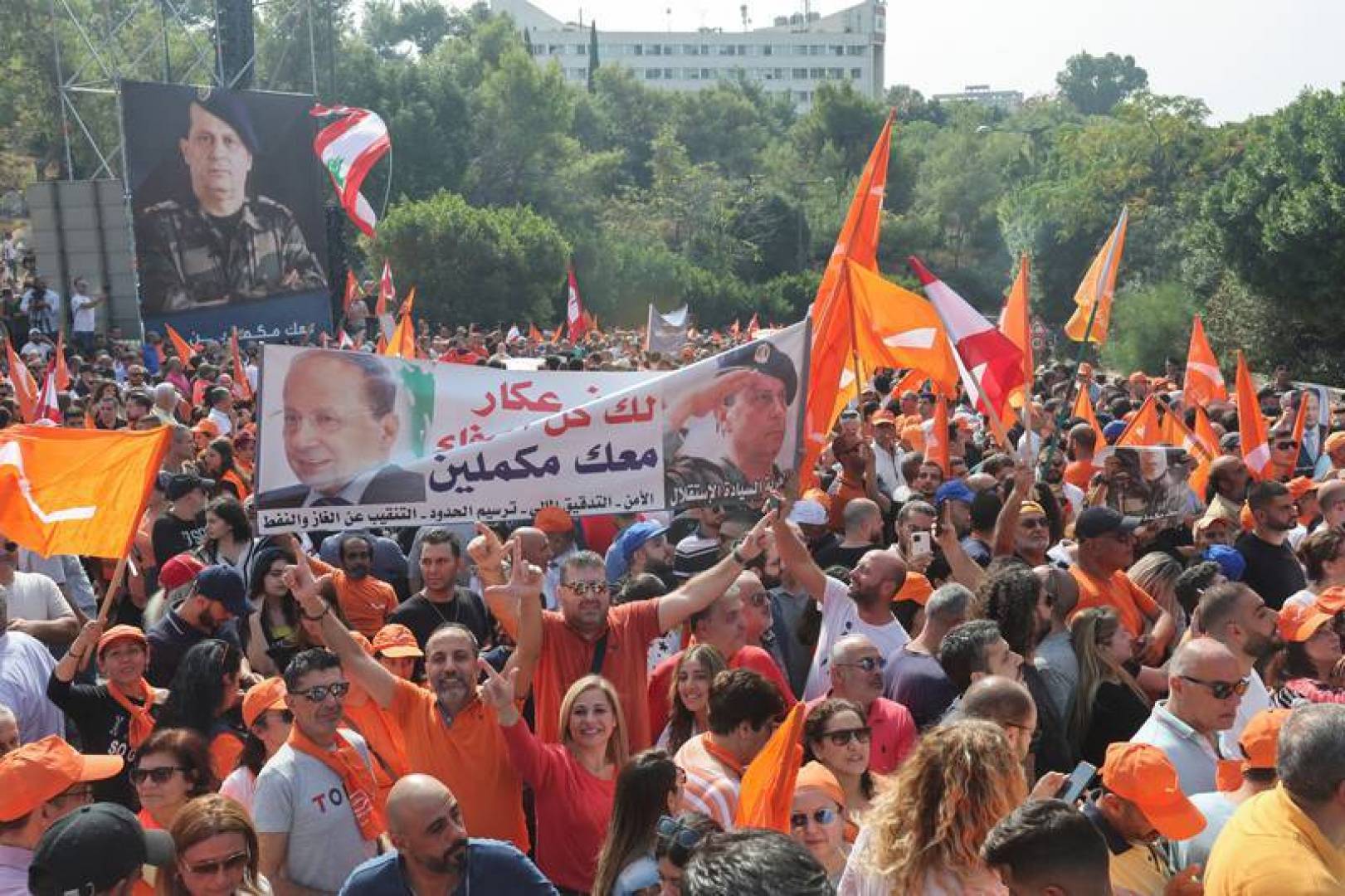
The Free Patriotic Movement indicated that it "closely followed the course of the Bürgenstock negotiations," and considered that "what was accomplished in Switzerland constitutes a shift in the structure of the regional conflict, even if its implementation details remain hostage to the tests of the next sixty days."
He explained, "What concerns us primarily is the item related to Lebanon, as the establishment of the Lebanese Coordination Cell came as an explicit international recognition that the ongoing Israeli violations of the ceasefire have become an obstacle that hinders the grand settlement itself, and this in itself is a significant gain."
The movement warned of “a scenario in which Lebanon was used as a pressure card in bargaining between external powers, without being an active party in shaping its fate,” considering that “Lebanon’s participation in the “working group” stipulated in the agreement is only meaningful if Lebanon is represented by a unified position expressed by the state and not by the separate parties,” pointing out that “here the first national responsibility falls on the authority.”
He stressed that "any arrangement to stop military operations in the south must end with a complete and unconditional Israeli withdrawal from the occupied Lebanese territories, paving the way for the return of the displaced, reconstruction, and the release of prisoners. Also, limiting the decision and weapons to the Lebanese state alone is a necessary condition that cannot be postponed, as no regional settlement can consolidate Lebanon’s stability while the sovereign decision remains outside the constitutional institutions."
He believed that "the reconstruction of Lebanon cannot wait for the agenda of a final agreement that may be extended, and he demands that any path of calm lead to direct international commitments to rebuild what was destroyed by the war."
He considered that "the economic breakthrough that led to the Bürgenstock negotiations must reflect positively on the entire region and not on one party alone. He demands that the Lebanese government invest in this new regional climate to reactivate economic relations with its Arab surroundings, open serious paths to attract investments, and reconnect Lebanon to the trade and energy exchange networks from which it has long been deprived as a result of years of closure and tension, and liberate its wealth," pointing out that "the desired security stability will not be complete." It means unless it is translated into an economic renaissance that restores the Lebanese’s confidence in his state.”
He concluded by saying, "As the movement follows these negotiations, it confirms that Lebanon is not an arena for settling scores between adults, but rather a sovereign state that deserves to have its own settlement built on the basis of the interests of its people and not on the margins of others' deals."
← Previous article
Aoun sends a condolence message to the Emir of Qatar: We stand by your side in this ordeal
Related Articles
Hezbollah: Israel's map confirms its ambitions... and the authority bears responsibility
Hezbollah: Environmental genocide in the south... and the authorities are negligent
Bassil on the anniversary of August 7: “Freedom has a price and dignity cannot be begged for.”