Government
11:00 AM | 12 Jun 2026
peace:
Fady Mahouly
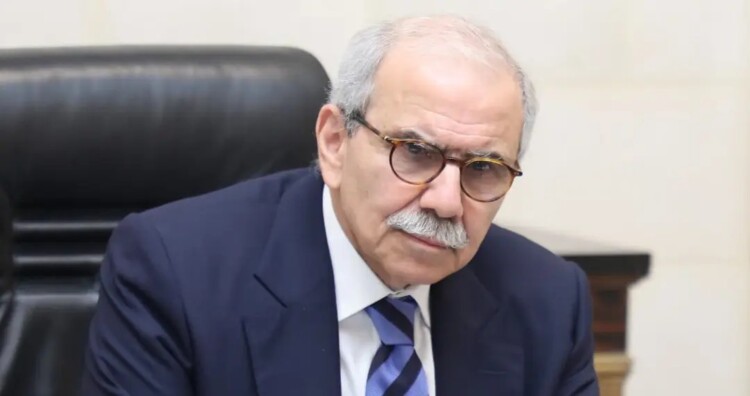
Lebanese Prime Minister Nawaf Salam indicated
Even Iran's rejection of the ceasefire agreement with Israel did not come out of nowhere, but rather to confirm that the real decision in Lebanon remains in the hands of Tehran alone.
He said in an interview with the British newspaper "The Times": "It is very clear why Iran rejected the ceasefire agreement. Iran wanted to tell the entire world that Lebanon is nothing more than a piece of paper in our pocket, and we are the ones who decide on behalf of Lebanon. We alone are the ones who make the final decision."
Salam considered that the Iranian rejection of the agreement, which came before Hezbollah announced its official position on it, clearly reflects the extent of the deep Iranian influence within the party, and shows the extent of its complete subordination to Iran.
Salam added: “If this rejection indicates anything, it is the enormous amount of control exercised by the Iranian Revolutionary Guard, not only over the military and security apparatus of Hezbollah, but also over the decision-making process within the party itself.”
The Lebanese Prime Minister spoke about the nature of the relationship between Hezbollah and Iran in two different stages, noting that “things were completely different during the era of the late Secretary-General, Sayyed Hassan Nasrallah,” adding: “Nasrallah was, to a large extent, an integral part of the decision-making process, and had his say and relative independence.”
Nawaf Salam saw that Iran is today exercising direct and decisive influence on Hezbollah, in an unprecedented way, and he continued, saying: “Certainly, the only party capable of mobilizing the necessary resources to rebuild what was destroyed by the war is the Lebanese state alone. Reconstruction can only take place through the state and its institutions, just as the Israeli withdrawal from the occupied territories can only be achieved through negotiations conducted by the Lebanese state.”
Regarding his future outlook on Lebanon despite all this war and challenges, Salam said with cautious optimism: “I am not pessimistic at all. In fact, I can say that I am optimistic, but I am not naive. I still truly and strongly believe that this country has enormous and very great potential, and we have no other choice but to follow the path of serious reform. If we really want to get the country back on its feet again, we have no other choice but this path.”