International
07:59 AM | 11 May 2026
Trump: The Iranian response is completely rejected
Fady Mahouly
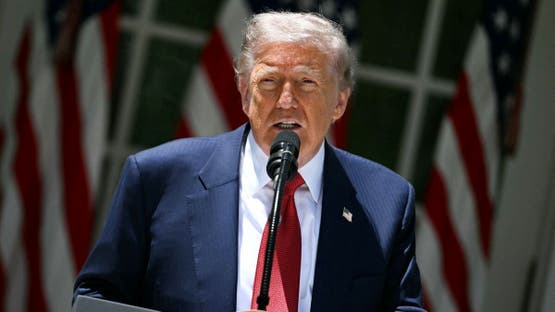
US President Donald Trump on Sunday rejected the response provided by Iran, through the Pakistani mediator, to Washington’s proposal to end the war in the Middle East, with tensions escalating in the Gulf.
This came on a day when the United States and Israel, which launched the war on February 28, reminded that the military option remains on the table, despite the ceasefire that has been in effect for about a month.
"I just read the response from the so-called representatives of Iran. I did not like it, completely unacceptable," Trump wrote on the Truth Social social media platform.
This came hours after the official Iranian IRNA news agency confirmed that the response was sent on Sunday, while the ISNA news agency reported that it focused “on ending the war and maritime security in the Persian Gulf and the Strait of Hormuz.”
While the two agencies did not provide details regarding the response, the American Wall Street Journal reported that “it does not resolve American demands for prior commitments regarding the fate of Iran’s nuclear program and its stock of highly enriched uranium,” and that Tehran proposed reducing the level of enrichment of some quantities of it, and transferring the remainder to a third country. The response also included a proposal to suspend uranium enrichment for less than 20 years.
Tehran also focused, according to the newspaper, on “ending the fighting and gradually reopening the Strait of Hormuz... with the United States lifting its blockade of Iranian ports and ships.”
The semi-official Iranian Tasnim news agency said on Sunday, quoting an informed source, that the Iranian response to the American proposal, which was sent to the United States through the Pakistani mediator, stresses the need to end the war on all fronts and lift the sanctions imposed on Tehran. The agency added that the proposal also calls for canceling the sanctions imposed by the US Office of Foreign Assets Control on Iranian oil sales within 30 days, and ending the naval blockade imposed on Iran.
According to the source, the Iranian proposal stipulates the need for an immediate halt to the war, and guarantees that an attack on Iran will not be launched again. The agency quoted the source as saying that Tehran's demands include "Iranian management of the Strait of Hormuz if the United States undertakes certain commitments," without the source specifying what those commitments are.
The situation in the Gulf waters and the Strait of Hormuz constitutes a major point of attraction between the United States and Iran, because of its impact on the movement of maritime shipping and the prices of energy resources globally. Iran controls this vital corridor for transporting oil, gas and fertilizers, and has established a payment mechanism to impose fees on ships that attempt to pass through it. Washington responded by blockading Iran's ports.